If you keep a sourdough starter, sooner or later you end up staring at a jar of discard and wondering whether it can become pizza instead of going into the trash. It can. But sourdough discard pizza dough makes a lot more sense once you stop thinking of discard as a special third kind of leavening. It is simply unfed sourdough starter. It still contains wild yeast and bacteria, but those organisms have already eaten through much of their available food, so the starter is usually sluggish, acidic, and less predictable than a freshly fed levain.
That leaves two practical ways to make pizza with it. You can use discard for flavor and add a tiny amount of commercial yeast for a dependable same-day dough, or you can use more discard and give the wild yeast enough time to wake back up and ferment the dough on its own.
Both work. They are just solving different problems.
What sourdough discard actually is
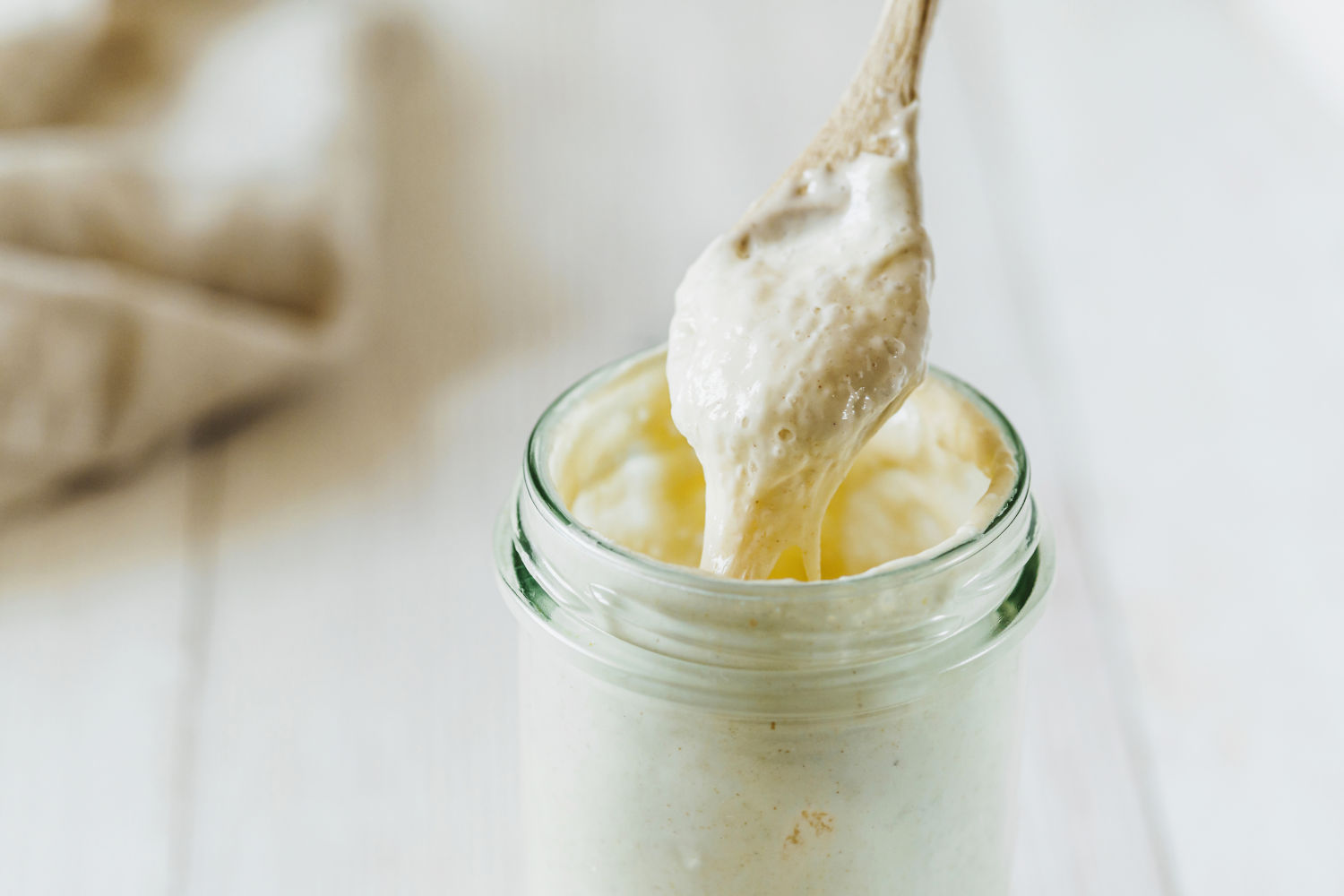
Discard is the portion of a sourdough starter you remove before feeding.
If you have 100 grams of starter and want to feed only 20 grams of it, the other 80 grams is what gets labeled "discard." There is nothing fundamentally different about it. Yesterday it may have been an active starter. It became discard because you decided not to feed it.
That distinction matters because feeding is what gives the microorganisms in a starter fresh flour to consume. A mature, recently fed starter can become very active, producing enough carbon dioxide to raise bread or pizza dough predictably. An unfed starter has fewer readily available nutrients and is often well past its peak activity.
The yeast is not necessarily dead. It is just hungry.
Meanwhile, the bacteria in the starter have been producing acids. That acidity is one of the reasons discard can be useful even when you do not trust it to raise the dough. It contributes the familiar fermented, slightly tangy flavor people associate with sourdough.
It can also change the dough itself. A moderate amount of acidity can make dough pleasantly extensible, but very acidic discard combined with a long fermentation can eventually weaken the gluten structure. Dump a huge quantity of old discard into a dough and then ferment it for another two days, and it will probably get increasingly slack and sticky.
There is another variable that discard recipes sometimes gloss over: not all discard is equally discarded.
Starter scraped into a jar this morning after a healthy feeding cycle may still have plenty of activity. A jar that has been sitting unfed in the refrigerator for two weeks may be much more acidic and much slower to ferment a fresh batch of dough.
That is why a discard-only recipe cannot honestly promise that every dough will double in exactly six, eight, or twelve hours. The condition of the starter matters.
The recipes below assume a typical 100% hydration starter, meaning it contains equal weights of flour and water. If your starter uses a different hydration, the flour and water numbers need to be adjusted. The PizzaLogic calculator has an advanced sourdough and levain option that handles that adjustment for you.
Two ways to make sourdough discard pizza dough
Think of discard pizza as a fork in the road.
| If you want... | Use... | What provides the rise? | Fermentation |
|---|---|---|---|
| Pizza today | A moderate amount of discard plus a pinch of instant yeast | Commercial yeast | Same day |
| No commercial yeast | More discard | Wild yeast still living in the discard | Long and variable |
The first approach is the one I would recommend to most people who simply want to use up discard.
The discard contributes flavor and, once it warms up in the fresh flour, some fermentation of its own, while a small amount of instant yeast removes most of the uncertainty. You do not have to hope today's discard is lively enough to raise the dough on time.
The second approach is closer to conventional sourdough baking. You use enough discard to introduce a meaningful population of wild yeast, then give it time to recover and reproduce in the fresh flour.
Given enough fermentation, discard pizza dough with no yeast basically becomes sourdough pizza dough made from a weak inoculation.
That is an important point. There is no mysterious third leavening system happening. The rise always comes from yeast, whether that is the commercial yeast you add, the wild yeast in the culture, or both working together.
Recipe 1: Same-day sourdough discard pizza dough
This is the version to make when you have discard in the refrigerator and want pizza for dinner.
The discard is mainly there for flavor, and its wild yeast will pitch in once it wakes up, but the small dose of instant yeast is what keeps the schedule dependable.
This formula makes about 1,000 grams of dough, enough for roughly three 330 gram dough balls or four 250 gram balls.
Baker's percentages
The percentages below are based on 600 grams of total flour, including the flour contained in the discard.
| Ingredient | Baker's percentage |
|---|---|
| Total flour | 100% |
| Total water | 65% |
| Salt | 2% |
| Instant yeast | 0.15% |
| Prefermented flour from discard | 10% |
Because the discard is 100% hydration, 120 grams of discard contains 60 grams of flour and 60 grams of water.
What to weigh
| Ingredient | Weight |
|---|---|
| Flour | 540 g |
| Water | 330 g |
| 100% hydration sourdough discard | 120 g |
| Salt | 12 g |
| Instant yeast | 0.9 g |
If your scale cannot reliably measure less than a gram, this is approximately a very small pinch of instant yeast. Adjust the exact amount depending on dough temperature, room temperature, and how long you have before baking. For a deeper look at that relationship, see my guide to how much yeast for pizza dough.
Mix the dough
Combine the water and discard first. It does not need to dissolve completely, but breaking it up makes the dough easier to mix.
Add the flour and instant yeast and mix until no dry flour remains. Let the dough rest for 15 to 20 minutes if convenient, then add the salt and knead or fold until it becomes reasonably smooth.
You are not looking for a perfect windowpane here. A few folds during the first hour of fermentation will continue developing the gluten.
Bulk ferment
Cover the dough and leave it at room temperature.
At a typical comfortable indoor temperature, expect a several-hour bulk fermentation, but watch the dough rather than the clock. You want obvious expansion, some bubbles beneath the surface, and a dough that feels lighter and more elastic than it did immediately after mixing.
The dough does not necessarily need to fully double.
If your kitchen is warm, it will move faster. If it is cool, it will take longer. Increasing or decreasing the instant yeast is another way to control the schedule.
Divide and ball
Divide the dough into the sizes appropriate for the pizzas you are making.
Shape each portion into a tight dough ball, cover it, and let it proof until relaxed and visibly aerated. Depending on the earlier bulk fermentation and room temperature, that might take another hour or two.
When a ball stretches easily without immediately snapping back, it is usually ready to make pizza.
Stretch and bake
Open the dough gently so you do not crush all of the gas created during fermentation. Top it normally and bake using whatever oven and pizza style you are working with.
This is still fundamentally a yeast-leavened pizza dough. The sourdough discard adds fermentation flavor, acidity, and some rise of its own, while the commercial yeast means you are not betting dinner on how active yesterday's starter happens to be.
Recipe 2: No-yeast discard pizza dough
To make pizza using no commercial yeast at all, increase the amount of discard and change your expectations about time.
This version also makes about 1,000 grams of dough.
Baker's percentages
| Ingredient | Baker's percentage |
|---|---|
| Total flour | 100% |
| Total water | 65% |
| Salt | 2% |
| Prefermented flour from discard | 20% |
With a 100% hydration discard, getting 20% prefermented flour means using 240 grams of discard.
What to weigh
| Ingredient | Weight |
|---|---|
| Flour | 480 g |
| Water | 270 g |
| 100% hydration sourdough discard | 240 g |
| Salt | 12 g |
There is no instant yeast in this formula.
Mix the dough
Mix the discard with the water, then add the flour.
Once everything is hydrated, let it rest briefly before adding the salt. Knead or fold until the dough begins developing a smooth, elastic structure.
A couple of folds during the early fermentation can help strengthen it.
Give the discard time to wake up
This is where you stop treating the clock as the authority.
The wild yeast in the discard now has a large supply of fresh flour. If the culture is healthy, it will begin reproducing and producing gas again, but the speed can vary dramatically depending on the discard.
Leave the dough somewhere comfortably warm and watch for fermentation.
Look for:
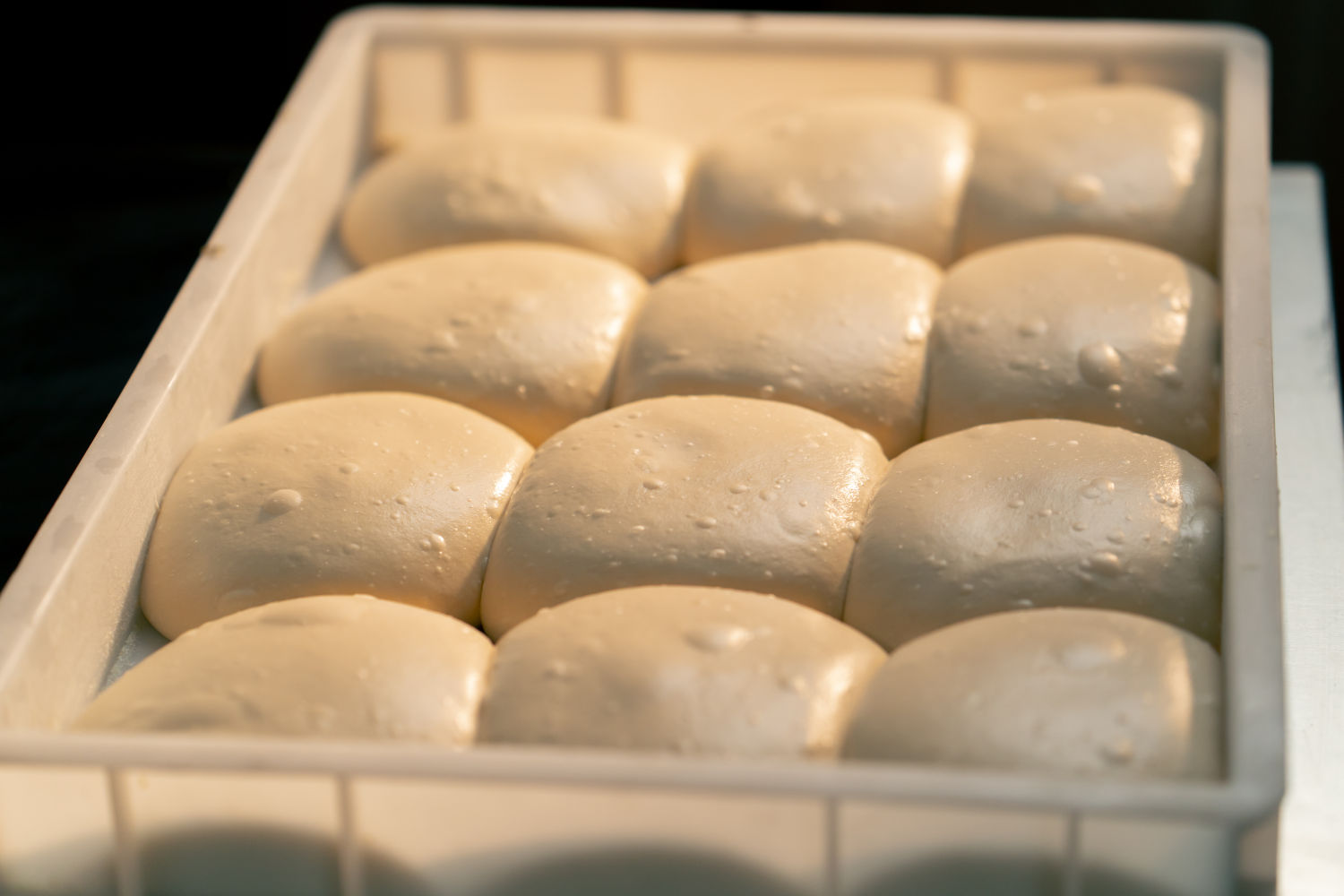
- Significant expansion, potentially approaching double its original volume
- Small bubbles visible along the sides or underneath the dough
- A slightly domed surface
- A soft, aerated texture
- Some jiggle when the container is moved
Fresh discard from an active starter might get there relatively quickly. Cold, old discard can take much longer.
If the dough has barely changed after a long warm fermentation, putting it in the refrigerator will not magically make the yeast more active. Cold temperatures slow fermentation further. In that situation, give it more warm time before moving on.
Use the refrigerator for flavor and scheduling
Once the dough is clearly fermenting, you can refrigerate it for a longer cold fermentation.
The refrigerator is useful for developing flavor and stretching the process over a more convenient schedule. It is not a substitute for establishing fermentation in the first place.
You can cold ferment the dough in bulk or divide and ball it first. Either works, though I usually like to have the dough balls made before the final proof so I can judge each one individually.
After refrigeration, the dough needs time at room temperature to warm up, relax, and finish proofing before baking.
Again, look at the dough rather than trying to hit a predetermined number of hours. A ready dough ball should feel light, slightly puffy, extensible, and alive.
If it is dense and resistant, it probably needs more time.
Getting a crisp crust (and avoiding a soggy one)
Neither recipe locks you into a specific oven, but a few things help discard dough bake well.
Bake as hot as your setup allows. In a home oven, that usually means a preheated stone or steel at 500 to 550°F, which crisps the bottom before the toppings overcook. A bare baking sheet works too, but expect a softer bottom and a slightly longer bake. Most home-oven pizzas at that temperature finish in roughly 6 to 12 minutes depending on thickness and toppings.
If the bottom keeps coming out pale, or the middle stays soft under wet toppings, par-bake the crust. Bake the stretched, sauced base for a few minutes on its own, then pull it, add the cheese and toppings, and finish baking. Adding the cheese partway through the bake instead of at the start helps too, because cheese traps steam and a later addition gives that moisture time to escape. This matters more for thicker, pan-style crusts than for thin ones.
And open the dough by hand rather than with a rolling pin. Pressing from the center out preserves the gas the fermentation created, which is what gives you a light, bubbled rim instead of a flat cracker.
Storing and freezing discard dough
Both doughs keep well, which makes them convenient to prep ahead. In the refrigerator, the dough holds for a few days once it starts fermenting, developing flavor as it sits. Just let it come back to room temperature and finish proofing before baking.
Freezing works the same as it does for any pizza dough, so my guide to freezing pizza dough covers the details. One thing specific to the no-yeast version: freezing knocks back some of the wild yeast, so a thawed no-yeast dough may need extra warm time to wake up again, or a fresh pinch of instant yeast if you are in a hurry.
When to build a levain instead
Recipe 2 works, but you may have run into its catch: the timing is unpredictable, because you are asking tired, unfed discard to wake up and raise an entire dough on its own. If that variability frustrates you, there is a more reliable route to a no-commercial-yeast pizza.
Instead of using discard directly, take some of it, feed it fresh flour and water, and let it become active before you mix the dough. In other words, build a levain.
A levain is simply a portion of sourdough culture intentionally fed for a batch of dough. It fills a role similar to other preferments such as poolish or biga, except its fermentation comes from a sourdough culture rather than commercial yeast. Once it is rising vigorously and predictably, you are starting the dough with an active population of yeast rather than hoping a tired jar of discard wakes up on schedule. That reliable, active-starter method is exactly what my sourdough pizza dough guide walks through.
Discard-only dough is still useful, because it turns something you already have into pizza with no extra steps. It just does not become more reliable simply because you make the fermentation harder than it needs to be. When timing matters, feed the discard and build the levain.
Sourdough discard pizza dough FAQ
Can I make sourdough discard pizza dough without any yeast?
Yes. Sourdough discard still contains wild yeast, so given fresh flour and enough time it can ferment pizza dough without commercial yeast. The tradeoff is predictability, since the activity of one jar of discard can be very different from another.
Can I make sourdough discard pizza dough the same day?
Yes, and adding a small amount of instant yeast is the most reliable way to do it. The discard provides sourdough flavor and some fermentation of its own, while the commercial yeast makes the schedule much easier to predict.
How much sourdough discard should I put in pizza dough?
It depends on what you want the discard to accomplish. For flavor in a yeast-leavened dough, a modest amount works well, such as the 10% prefermented flour in the same-day recipe above. If you expect the discard to provide all of the leavening, you generally need more of it and considerably more fermentation time.
Does sourdough discard need to be fresh?
Not necessarily, but fresher discard usually behaves more like an active starter. Older refrigerated discard tends to be more acidic and less predictable, so it is safer to use it primarily for flavor and rely on commercial yeast for the rise.
As with any fermented dough or starter, unusual discoloration, mold, or obvious spoilage is a different issue from normal sourness. If you are unsure, my guide to whether pizza dough can go bad walks through the warning signs.
My discard dough is too sticky to handle. What went wrong?
Some stickiness is normal, especially with a wet or very acidic discard. If it is genuinely unworkable, add flour a tablespoon at a time until it firms up, and give it a few folds during the first hour to build strength. Resist dumping in a lot of flour all at once, since that pushes the dough dense. A well-fermented discard dough should be soft and slightly tacky, not soupy.
Why didn't my discard pizza dough rise?
The most likely explanation is that the wild yeast was not active enough yet, especially if the discard had been refrigerated for a long time. Give the dough sufficient warm fermentation and look for actual signs of activity rather than relying on a fixed timetable. If it still will not budge, my guide to pizza dough that won't rise covers the other usual causes. And if dependable natural leavening is the priority, feeding the discard into an active levain first is the safer approach.
Sourdough discard is useful because it adds fermented flour, acidity, and flavor to dough that might otherwise go to waste. It just works better when you are clear about what is actually doing the leavening.