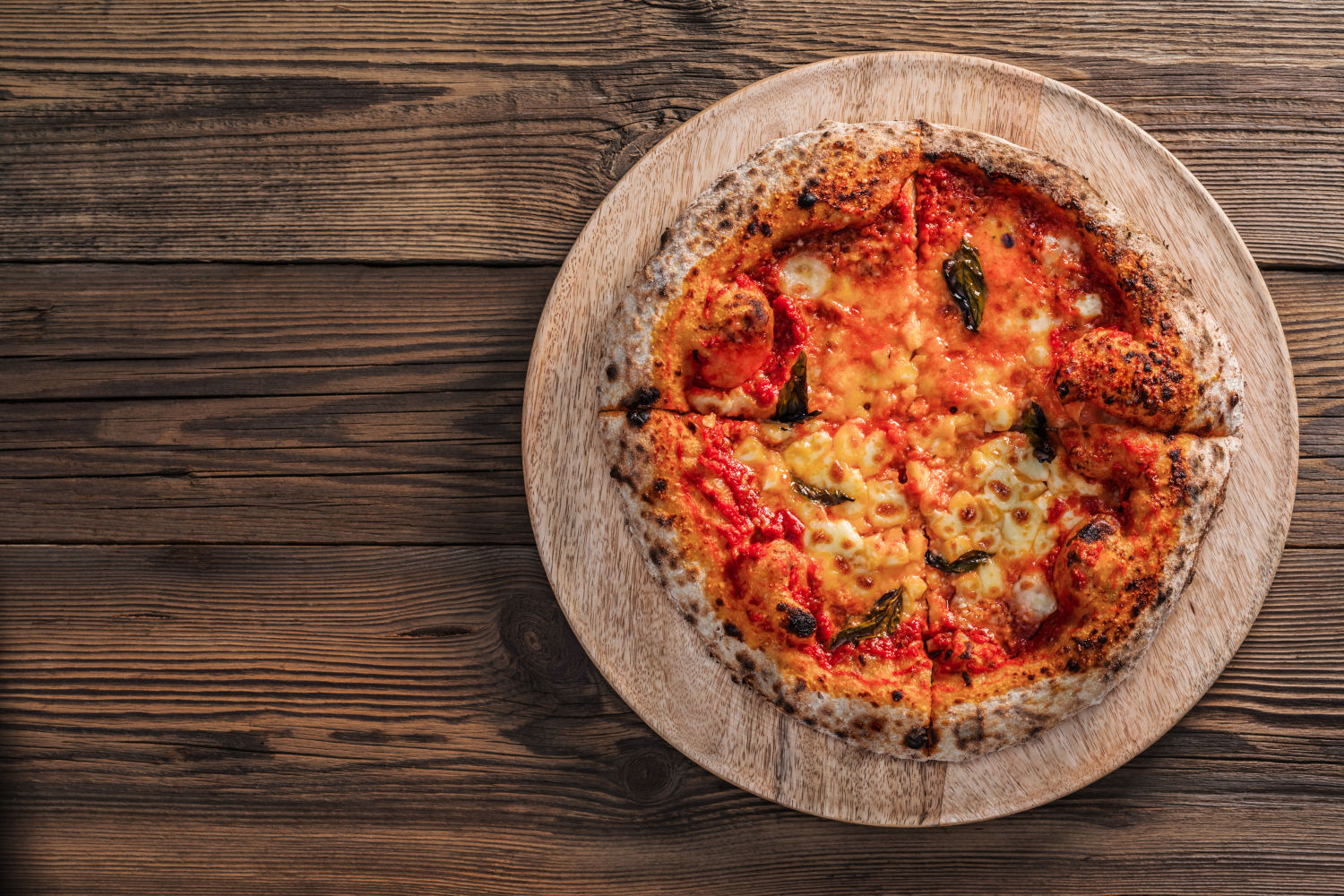
Sourdough pizza dough is pizza leavened entirely with an active starter, with no packaged yeast doing the work. Done well, it gives you the things you want from naturally leavened pizza: deeper flavor, a chewy but tender crust, good oven spring, and an open crumb. Longer fermentation can also make the dough feel easier to digest for some people. The tradeoff is that sourdough asks for two things commercial yeast does not: a ripe starter and enough time for it to work.
One thing worth clearing up first: sourdough is not a style of pizza. It is a leavening method. You can raise a Neapolitan, New York, Detroit, Sicilian, or pan dough with an active starter just as you would with commercial yeast. What changes from style to style is the hydration, the flour, and the format, not the fact that wild yeast is doing the lifting. The base formula and schedule below lean Neapolitan, but the method underneath them adapts to any style you like.
That is why it helps to stop thinking of sourdough pizza as one fixed recipe. The useful question is not just, "What ingredients do I use?" It is, "How much starter should I use if I want to bake at 6 p.m. tomorrow?" Once you connect starter amount with dough temperature and fermentation time, sourdough becomes much easier to plan.
What you need before you start
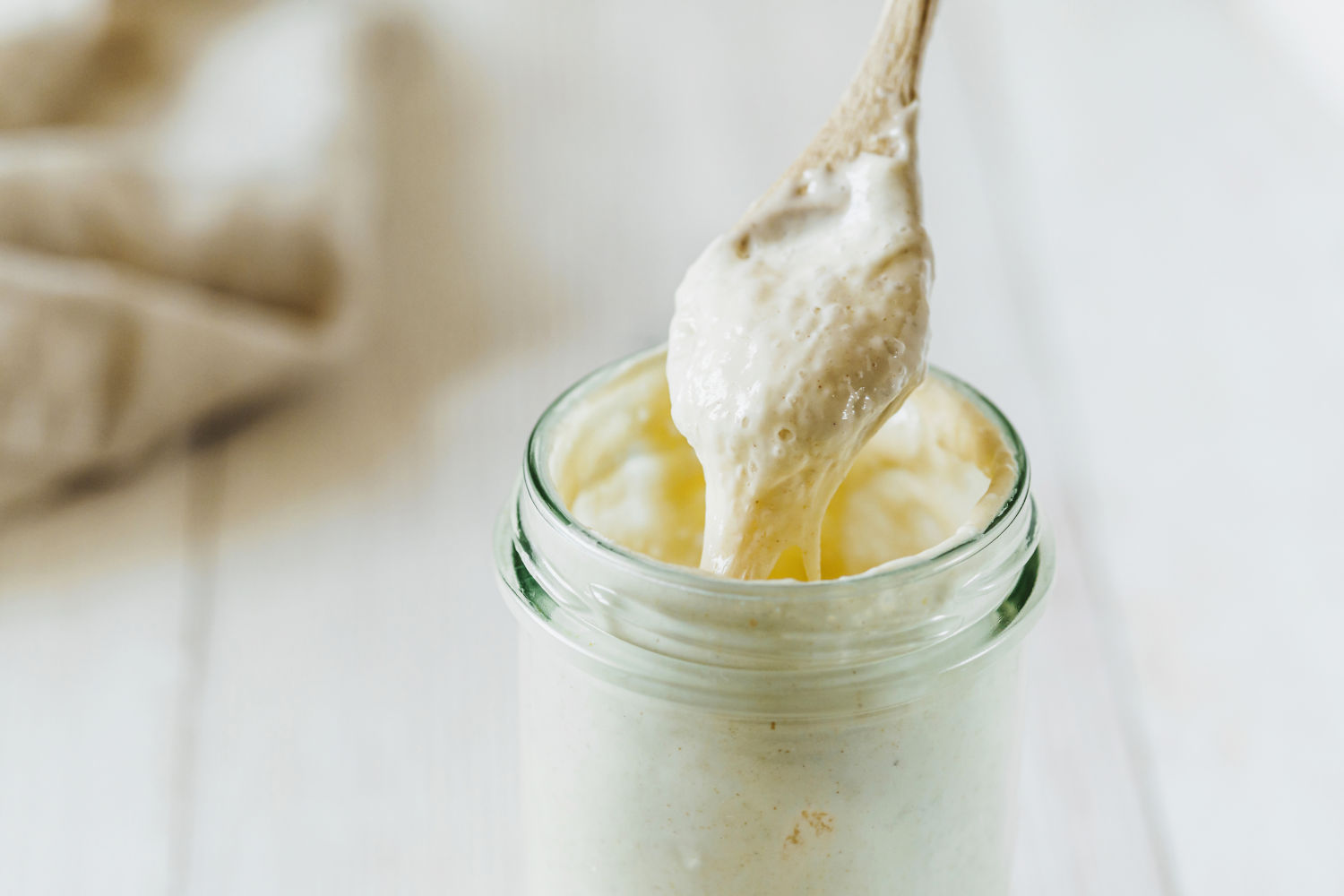
For this kind of dough, you want an active, ripe sourdough starter or levain, not unfed discard.
A healthy starter should rise predictably after feeding. Around its peak, it will usually have roughly doubled, look aerated through the sides, and have a slightly domed or just-flattening top. A spoonful may float in water, which is a useful sign that it is holding gas, though the float test is not a requirement. A starter can be ready even if it sinks.
What matters most is that it is active enough to raise dough on a predictable schedule.
If the jar in your refrigerator holds unfed, sluggish starter that has not been refreshed, that is a different ingredient. It can still make excellent pizza, but you handle it differently. See my guide to sourdough discard pizza dough.
Building a levain vs adding starter directly
There are two common ways to get sourdough into a pizza dough, and it helps to know which one a recipe is using, because the numbers look very different.
Adding starter directly means scooping ripe starter straight into the dough. Because that starter is already fully active, recipes using this method often call for a fairly small amount, sometimes only 3 to 5 percent of the flour weight.
Building a levain means taking a small spoonful of starter and feeding it a fresh mix of flour and water to build a dedicated preferment for this dough, then mixing that whole levain in once it is ripe. This is the same indirect method behind a poolish or a biga; the only difference is that the leavening comes from a sourdough culture instead of commercial yeast. See my preferment overview for the bigger picture.
I prefer the levain method, and it is how the PizzaLogic calculator handles sourdough, for three reasons:
- It is consistent with the other preferment paths. Levain is calculated the same way as biga and poolish, so once you understand one, you understand all three.
- It gives you exact numbers. Instead of "use some active starter," you get a precise weight of seed starter, added flour, and added water for the levain, plus the exact final-mix amounts.
- It does not waste starter. You build only the levain this dough needs from a small seed, rather than keeping a large starter alive or dumping a lot of mature starter into the bowl.
These two methods produce very different numbers, so don't compare them directly. A direct-starter recipe at 5 percent and a levain at 30 percent aren't measuring the same thing. The 5 percent is a scoop of ripe starter added to the dough; the 30 percent is the share of the total flour that gets pre-fermented inside the levain. A higher levain number is normal for this method, not a sign that something is off.
How much starter to use in sourdough pizza dough
This is the variable that controls the schedule more than anything else.
Instead of talking only about "grams of starter," it helps to think in terms of inoculation, the percentage of total flour that is fermented inside the levain. This is often called prefermented flour percentage.
If a formula contains 750 g total flour and 225 g of that flour lives inside the levain, the dough has 30% prefermented flour.
For a built levain in pizza, a useful working range is roughly 20% to 50% prefermented flour, and 30% is a solid default. The calculator uses this same range, with 30% as its sourdough starting point.
The relationship is simple:
More levain + warmer dough = faster fermentation.
Less levain + cooler dough = slower fermentation.
At the higher end, around 40% to 50% prefermented flour, the dough can move quickly at warm room temperature. That is the range to reach for when you want pizza the same day.
Around 30% is a good middle ground for an overnight or next-day dough, especially paired with some time in the refrigerator.
At the lower end, around 20% to 25%, you can stretch fermentation much longer, leaning on a long cold ferment to build flavor.
The flavor changes with the schedule too. A faster, warmer dough with more levain is usually milder. A lower-inoculation dough given a long cold ferment has more time to develop acidity and complexity, and some people find that longer-fermented dough easier to digest.
Temperature moves these ranges around dramatically. A dough with 30% prefermented flour may race in a warm summer kitchen and crawl in a cool winter room. Starter strength matters too. This is why a fixed instruction like "add 150 g starter and wait 8 hours" can work perfectly for one baker and fail for another.
The PizzaLogic calculator's sourdough option is built around this, and it lets you work backwards. Enter your schedule and it returns the exact seed starter, levain build, and final-mix amounts, accounting for the flour and water already inside the levain so nothing accidentally shifts your hydration. It keeps inoculation at the 30 percent default and adapts the seed starter to your timeline: a same-day dough calls for more seed and a faster build, a multi-day dough for less. Reaching for the higher 40 to 50 percent inoculation for same-day pizza, or dropping toward 20 to 25 percent for a long cold ferment, is a manual move in advanced mode, for when you want to push the schedule further than the default takes you.
A base sourdough pizza dough formula
Here is a flexible starting point that makes about 1,260 g of dough, enough for four roughly 315 g dough balls or five smaller ones. It uses the calculator's default sourdough numbers: 65% hydration, 3% salt, and 30% prefermented flour from a 100% hydration levain (equal weights of flour and water).
These numbers lean Neapolitan, a moderate hydration with a strong flour. For a wetter, airier New York or pan crust, or a drier bar-style dough, adjust the hydration and flour as covered in the flour and style notes below. The levain, the schedule, and every step that follows stay the same regardless of the style you are building.
Baker's percentages
| Ingredient | Baker's percentage |
|---|---|
| Total flour | 100% |
| Total water | 65% |
| Salt | 3% |
| Prefermented flour (in the levain) | 30% |
Build the levain
Mix and let it ripen at room temperature for about 6 hours, until doubled, bubbly, and passing the float test:
| Ingredient | Weight |
|---|---|
| Active starter (100% hydration) | 50 g |
| Flour | 200 g |
| Water | 200 g |
That gives roughly 450 g of ripe levain, which contains 225 g flour and 225 g water.
Mix the final dough
Combine the ripe levain with:
| Ingredient | Weight |
|---|---|
| Flour | 525 g |
| Water | 262 g |
| Salt | 22 g |
The finished dough contains 750 g total flour, about 487 g total water for 65% hydration, and 22 g salt.
That accounting matters. If you simply added 450 g of levain to a finished dough formula without subtracting the flour and water it carries, you would change both the dough size and the hydration. Doing that by hand for every batch is exactly the arithmetic the calculator removes.
For many pizzas, hydration in the low-to-mid 60% range is a good starting point. Lower hydration is easier to handle. Higher hydration can produce a lighter, more open rim, but it gets less forgiving. My pizza dough hydration guide goes deeper into that choice.
The fermentation schedule: how long sourdough pizza dough takes
There is no single correct fermentation time for sourdough. Starter amount, dough temperature, room temperature, flour, and starter strength all affect the clock.
Use the clock to plan. Use the dough to decide.
| Prefermented flour | Typical environment | Best fit | Rough timeline |
|---|---|---|---|
| 40% to 50% | Warm room temperature | Same-day pizza | About 5 to 8 hours |
| 30% (default) | Some room temperature, then chilled | Overnight or next-day | A few hours warm plus 12 to 24 hours cold |
| 20% to 25% | Room temperature start, long refrigeration | Multi-day cold ferment | About 24 to 72 hours total |
These are planning ranges, not promises. Wild yeast does not follow a stopwatch.
Same-day sourdough pizza
Same-day sourdough is possible, but you have to stack the conditions in your favor: a ripe, vigorous levain, a higher inoculation around 40% to 50% prefermented flour, and a warm fermentation environment.
After mixing, keep the dough warm and watch for visible fermentation. Once it has expanded noticeably, feels airy, and shows internal gas, divide and ball it. The balls then finish proofing until relaxed and extensible. Same-day sourdough usually tastes milder because it has had less total fermentation time. That is not a flaw. It is simply a different balance of flavor and schedule.
Overnight sourdough pizza
For an overnight dough, the 30% default works well. Mix in the evening, let bulk fermentation get started at room temperature, ball the dough, then refrigerate it.
The important part is not whether the dough spends exactly three hours on the counter. It is whether fermentation is clearly underway before you ask the refrigerator to slow it down. The next day, bring the dough out early enough to finish proofing, warm through, and relax before baking.
Multi-day cold-fermented sourdough pizza
For a longer cold ferment, lower the inoculation toward 20% to 25% and use the refrigerator as a brake.
You want some visible activity before the dough goes cold. If you refrigerate a sluggish dough immediately after mixing, it may take a very long time to regain momentum. If you let it nearly finish at room temperature and then refrigerate it for several days, you risk over-fermentation.
That is the balancing act behind cold fermentation. The fridge slows the culture. It does not stop it. Longer fermentation builds more acidity and complexity, but pushing dough too far costs strength and makes it sticky and difficult to stretch.
How to make sourdough pizza dough step by step
1. Build the levain
Feed a small spoonful of starter with fresh flour and water (the base formula above uses 50 g starter, 200 g flour, and 200 g water) and let it ripen until it is near peak: well aerated, expanded, and passing the float test. If your starter has fully collapsed and smells sharply acidic, feed it again rather than ask a tired culture to carry an entire dough.
2. Mix the dough
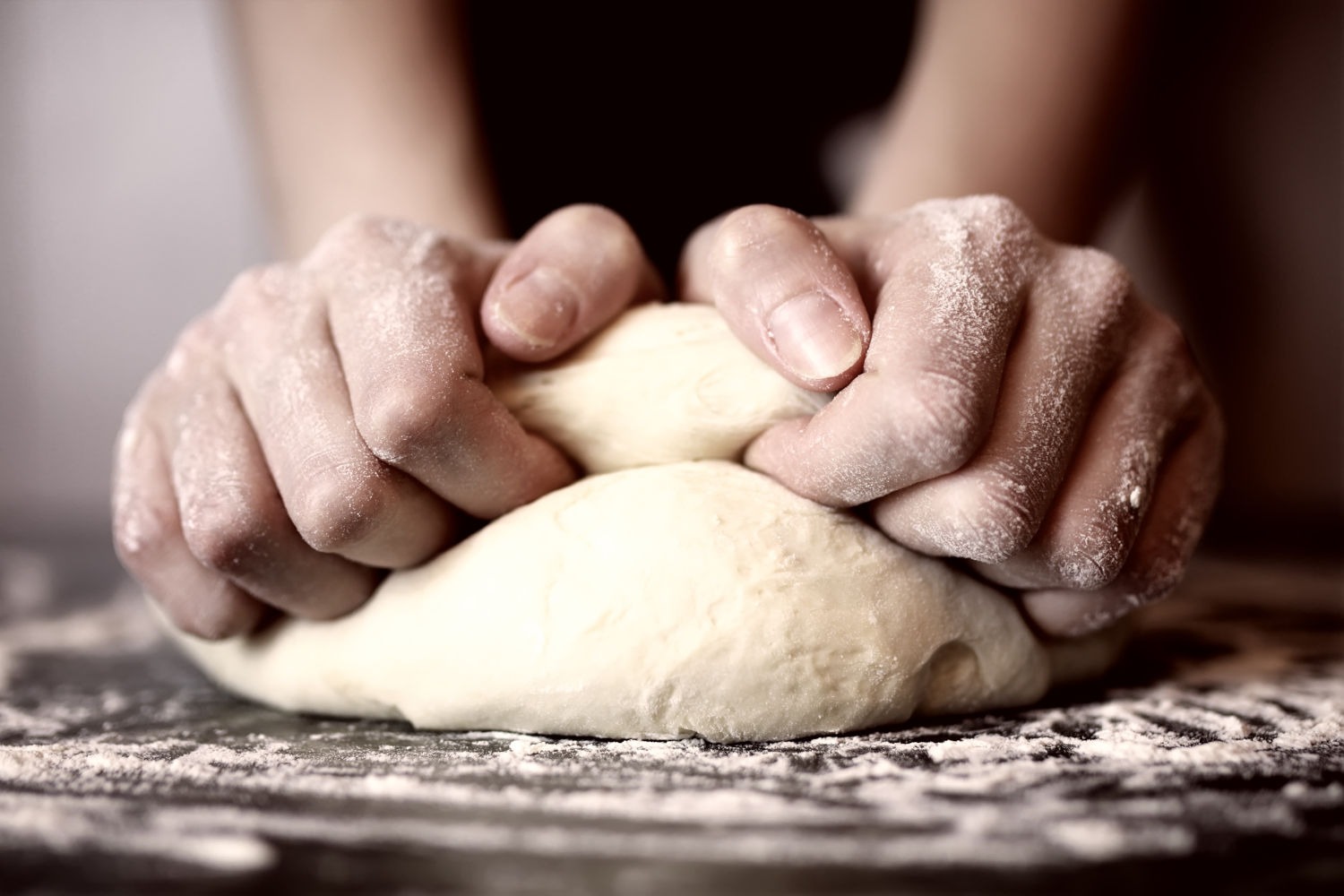
Combine the flour, water, ripe levain, and salt by hand or mixer. The goal is even incorporation and enough gluten development for a cohesive, elastic dough. You do not need a perfectly smooth dough immediately. A few rests and folds during early bulk fermentation can finish the job.
3. Bulk ferment with stretch and folds
Bulk fermentation starts when the levain enters the dough. In the first hour or two, give the dough a set of stretch and folds every 30 minutes or so: reach under one side, stretch it up, and fold it over the top, rotating the bowl a quarter turn each time. Three or four rounds builds real strength without heavy kneading.
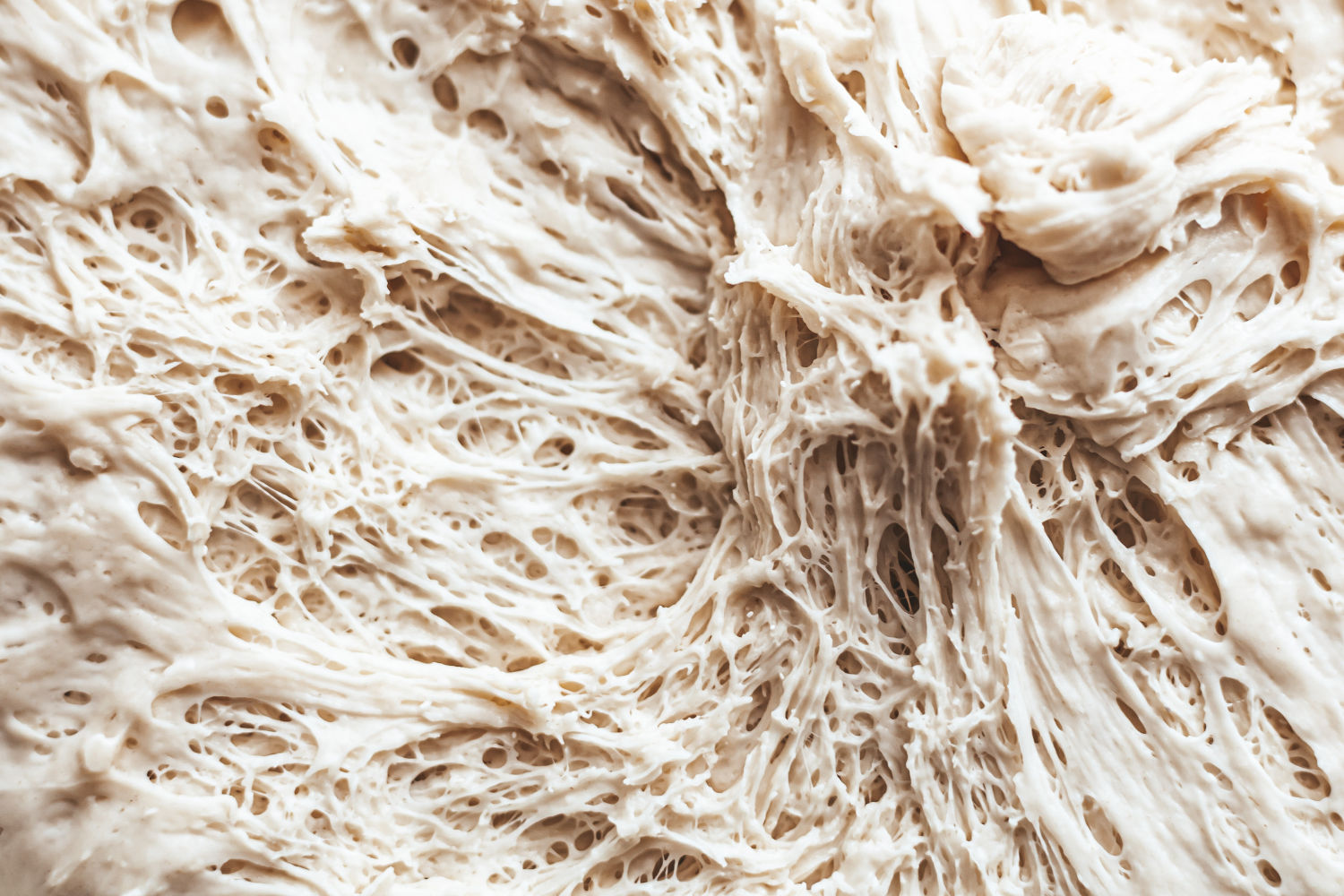
For pizza, you usually do not wait for the dough to double, especially if a cold ferment or long final proof is still ahead. Look for a noticeable rise, a smoother and slightly domed surface, bubbles along the container, and a lighter feel. Something like a 30% to 60% increase in volume is a useful visual target. Use the lower end when plenty of fermentation remains and the higher end when you are closer to baking.
A simple way to read that rise precisely is the aliquot jar: drop a small pinch of the mixed dough into a straight-sided jar, mark the level with a rubber band, and watch how far that sample climbs. Because it is the same dough in a clear container, it tells you the percentage rise far more reliably than squinting at the bulk.
4. Divide and ball
Divide the dough by weight and form tight balls. A little surface tension helps them hold shape, but avoid pulling so hard that the surface tears.
5. Cold ferment, if using
For an overnight or multi-day schedule, refrigerate the balls in covered containers with room to expand. Refrigerator temperature matters. A colder fridge slows fermentation much more aggressively.
6. Final proof
Before baking, let cold dough warm and finish proofing. The ball should spread slightly, feel soft, and stretch without fighting you. If it is still dense, cold, and springy, it probably needs more time.
7. Stretch and bake
Open the dough gently so you preserve gas around the rim, then top it and bake (see temperatures below).
Baking sourdough pizza: temperature, surface, and time
Sourdough crust rewards a hot start, so the baking surface matters as much as the oven.
Home oven (roughly 500 to 550°F): Bake on a thoroughly preheated stone or steel, giving it at least 45 minutes to an hour to fully store heat. At that temperature a thin sourdough pie usually bakes in about 6 to 8 minutes. A steel runs hotter at the surface than a stone and crisps the bottom faster. A bare baking sheet works in a pinch, but expect a softer bottom and a longer bake.
Broiler finish: If the top is lagging behind the bottom, switch to the broiler for the last minute or two to blister the rim without overbaking the base.
Pizza oven (roughly 750 to 900°F): In a dedicated pizza oven, a naturally leavened pie can finish in 60 to 90 seconds, so turn it frequently and keep a close eye on the floor temperature. Very hot bakes reward careful fermentation, because an under-fermented dough will not spring properly in the short time it has.
Reading the dough instead of the clock
This is the skill that makes sourdough much less mysterious.
Signs bulk fermentation is done
Look for several clues together:
- Noticeable increase in volume
- A smoother, slightly inflated surface
- Small bubbles along the sides or bottom of the container
- A lighter, more elastic feel
- Visible internal gas when the dough is folded or lifted
Not every sign has to be dramatic. You want a clear trend toward fermentation.
The poke test
The poke test is most useful on a proofed dough ball. Press a floured fingertip gently into the dough. If the indentation springs back immediately, the dough may still be under-proofed. If it returns slowly and leaves a slight dent, it is usually in a good zone. If it barely springs back and the dough feels fragile, it may be over-proofed. Cold or very wet dough can make the test less reliable, so pair it with the dough's overall feel.
Under-fermented sourdough
Under-fermented dough feels tight and dense. It snaps back during stretching, contains little visible gas, and may bake with a compact rim and heavy crumb. If the dough fights you, give it more time instead of forcing it wider.
Over-fermented sourdough
Over-fermented dough often feels very soft, sticky, and weak. It may spread excessively, tear during stretching, or lose gas as soon as you touch it. There is no perfect way to reverse over-fermentation. Gentle handling can still produce a good pizza, but prevention is much easier than rescue.
Storing and freezing sourdough pizza dough
Sourdough dough fits real schedules well, because the refrigerator both stores it and improves it. In the refrigerator, balled dough keeps for a few days once fermentation is underway, developing more flavor as it sits. Bring it back to room temperature and let it finish proofing before baking.
Freezing works the same as it does for any pizza dough, so my guide to freezing pizza dough covers the full process. The one sourdough-specific difference is that freezing knocks back some of the wild yeast, so a thawed ball often needs a longer, warmer final proof to wake up and reach full extensibility.
Flour and style notes
Bread flour: A strong bread flour is a forgiving choice for longer fermentation because it usually provides enough gluten strength for extended proofing and stretching.
00 flour: "00" describes milling, not one universal protein level. Choose the flour for your oven and pizza style rather than assuming every bag marked 00 is interchangeable.
Whole wheat: A partial whole wheat blend adds flavor and changes water absorption. Start modestly and adjust hydration as needed.
Higher hydration: More water can help create an airier rim, but it also magnifies fermentation and handling mistakes. A well-fermented 63% to 65% dough beats a struggling 70% dough just because the number sounds more advanced.
Neapolitan-style sourdough: Naturally leavened Neapolitan-style dough works well, but very hot bakes reward careful control of fermentation and flour choice. Treat it as its own tuning problem rather than simply swapping starter into a commercial-yeast formula.
Troubleshooting sourdough pizza dough
The crumb is dense
Under-fermentation is the first thing to check. The starter may have been weak, the dough too cool, or the inoculation too low for the available time. Rough shaping or an underheated baking surface can also contribute.
The center is gummy
A gummy center can come from underbaking, wet toppings, or a dough that is too thick for the bake. Severe under-fermentation can also produce a heavy, gummy texture.
The dough will not rise
Check the starter first. If it does not rise strongly after feeding, do not expect it to perform better inside pizza dough. If the starter is healthy, look at temperature and inoculation. A low-inoculation dough in a cool kitchen may simply need much more time.
The dough is too sour
Too much acidity often points to a long fermentation, an old acidic starter, or a levain used well past peak. For a milder dough, use a freshly ripened levain, shorten fermentation, keep the dough warmer, or increase inoculation so it reaches the desired rise sooner.
The dough tears or snaps back
Tearing can come from weak gluten, over-fermentation, or too much hydration for the flour. Snap-back more often means the dough is tight, cold, or under-proofed. If it keeps shrinking after you stretch it, give it more time to relax instead of fighting it.
Sourdough pizza dough FAQ
How much starter do I need for pizza dough?
It depends on the method. If you add ripe starter directly, a small amount, often 3% to 5% of the flour, is typical over a long ferment. If you build a levain the way the calculator does, think in terms of 20% to 50% prefermented flour, with 30% as a reliable default. More levain and warmth mean a faster dough; less levain and cold mean a slower, often tangier one.
Can I make sourdough pizza dough the same day?
Yes. Use a very active starter, a higher inoculation around 40% to 50% prefermented flour, and a warm fermentation environment. Same-day dough is usually milder than a long-fermented version, but it can still have excellent texture and plenty of sourdough character.
What hydration is best for sourdough pizza?
There is no single best number, but the low-to-mid 60% range is a practical starting point for many home pizza styles. Flour strength, oven type, and the texture you want matter more than chasing a particular percentage.
Can I cold ferment sourdough pizza dough overnight or for several days?
Yes. Lower the inoculation for longer schedules and make sure fermentation has started before the dough gets too cold. The refrigerator slows fermentation rather than stopping it, so watch for over-proofing during a multi-day cold ferment.
Do I need to feed the starter first?
For this method, yes. You want a recently fed starter or levain that is near peak activity when you mix. Unfed discard belongs in a different style of formula, which I cover in my sourdough discard pizza dough guide.
How do I know if sourdough pizza dough has gone too far?
If the dough is very slack, sticky, fragile, and difficult to shape, it may be over-fermented. If storage time is the bigger concern, see whether pizza dough can go bad.
Sourdough pizza gets much easier once you stop treating starter as a magic ingredient and start treating it as a timing control. Dial in the inoculation for the schedule, keep an eye on temperature, and let the dough tell you when it is ready.