
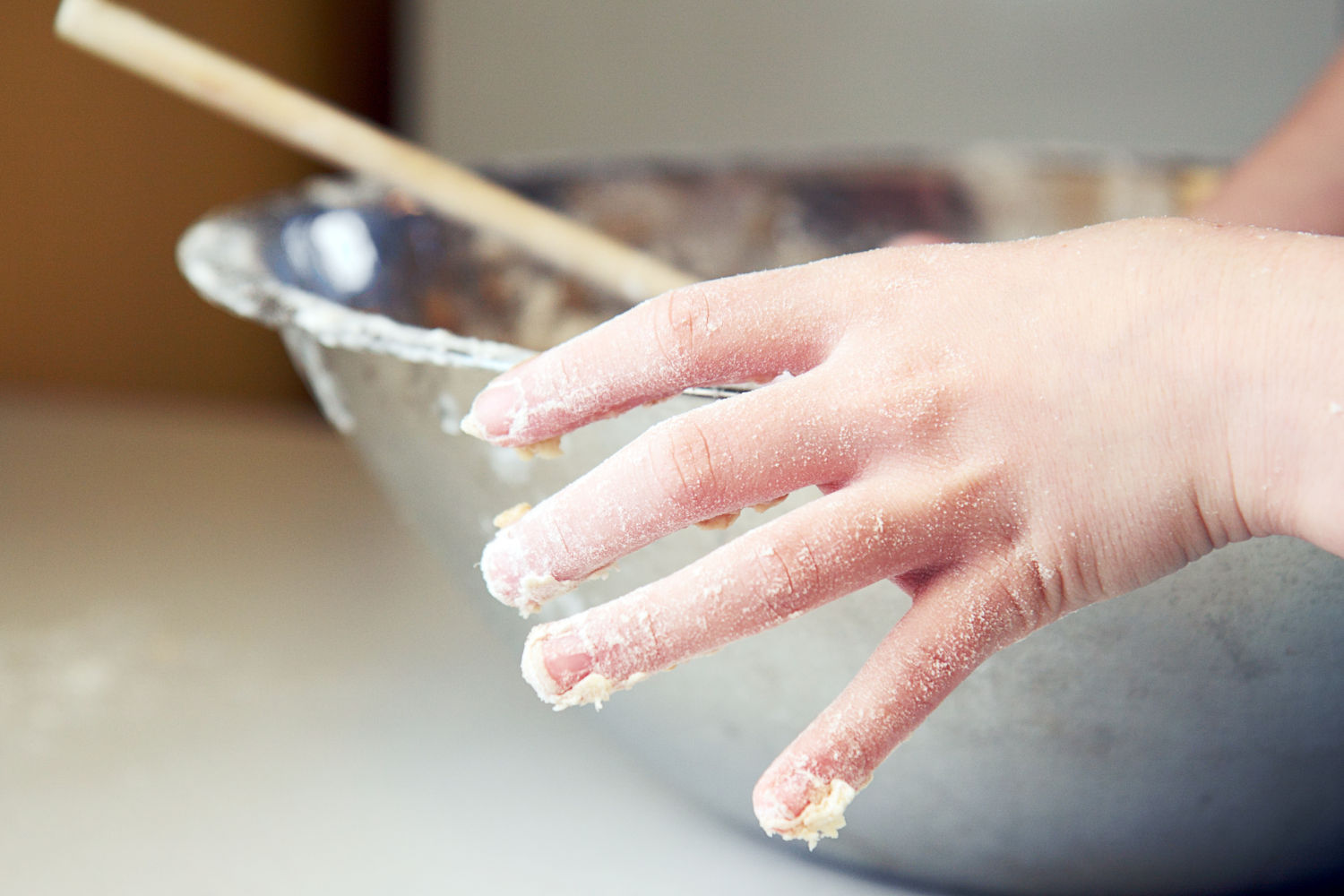
So your pizza dough is a gloopy, clingy disaster. It's stuck to your hands, the counter, the bowl - basically everything except the shape you want it to be. Deep breath. This is one of the most common problems in pizza making, and it's almost always fixable.
The trick is figuring out why it's sticky, because the cause determines the fix. Let's walk through the usual reasons and what to actually do about each one.
What Makes Pizza Dough Sticky in the First Place?
Stickiness isn't random. It's your dough telling you something about its hydration, its gluten structure, or how it's been handled. Here are the culprits, roughly in order of how often they're to blame.
Too Much Water (High Hydration)
This is the big one. In baking, "hydration" means the ratio of water to flour by weight. A 65% hydration dough contains 650g of water for every 1,000g of flour. Higher hydration doughs - anything above about 68-70% - are naturally stickier and demand more skill to handle. If you're intentionally working at these levels, my high-hydration pizza dough guide covers the full playbook.
It's also worth knowing that some pizza styles require high hydration to get the right texture. Detroit-style, Sicilian, and Roman-style pan pizzas typically run 70-80% hydration - that's what gives them their light, airy, almost focaccia-like crumb. If you're making one of those, a sticky dough isn't a mistake. It's the point. You just need to handle it differently (more on that below).
For round pizzas like Neapolitan or New York style, a lot of popular recipes online call for 65%+ hydration, and they don't always warn you that this is genuinely tricky to work with if you're still building your skills. If your dough feels unmanageable, there's no shame in dropping your hydration to 58-62% while you get comfortable. You'll still get a great crust. (For a deeper dive into hydration ranges by pizza style and how to adjust for different flours, see our Ultimate Guide to Pizza Dough Hydration.)
This is actually one of the reasons I built PizzaLogic. Plug in your desired hydration percentage and the calculator gives you exact gram weights for every ingredient - so you're not eyeballing water amounts and accidentally ending up with soup.
Under-Developed Gluten
Gluten is the protein network that gives dough its structure. When you haven't kneaded (or stretched and folded) enough, that network is weak and loose, so the water in your dough isn't being held in place. It migrates to the surface and you get that wet, sticky feeling.
A quick test: pull off a small piece of dough and gently stretch it between your fingers. If you can stretch it thin enough to see light through it without it tearing (the "windowpane test"), your gluten is well-developed. If it tears immediately, you need more kneading or folding time. (Using a stand mixer? Not all mixers develop gluten equally - the wrong one can leave you with under-developed dough.)
Wrong Flour for the Recipe
Flour protein content matters more than most people realize. Bread flour (12-14% protein) and Italian 00 flour (11-13% protein, finer grind) absorb more water and build stronger gluten than all-purpose flour (10-12% protein). If a recipe was developed with bread flour and you substitute all-purpose, the dough won't be able to absorb all the water, and you'll end up with a sticky mess. For a complete breakdown of flour types and which ones work best for each pizza style, check out my flour guide.
A few common flour options and their typical protein content:
- Bread flour (King Arthur, ~12.7%): Great all-around pizza flour, handles higher hydration well
- 00 flour (Caputo Pizzeria, ~12.5%): The classic Neapolitan choice, very finely milled
- All-purpose flour (Gold Medal, ~10.5%): Works fine at lower hydrations (55-62%), but gets overwhelmed above that
The Dough Hasn't Rested Yet
Flour doesn't absorb water instantly. If you've just mixed everything together and it feels sticky, that's completely normal - it hasn't had time to hydrate. Give it 15-20 minutes covered on the counter (bakers call this an "autolyse" when done with just flour and water before adding salt and yeast) and you'll often find the stickiness resolves on its own.
Over-Fermentation
This one catches people off guard. If your dough was fine when you shaped it into balls but turned into a sticky puddle after sitting in the fridge, it's probably over-fermented. The yeast has consumed too much of the starch structure, producing excess gas and alcohol, and the gluten network has started to break down.
Signs of over-fermentation: the dough smells strongly of alcohol, it's lost its elasticity and feels slack, and it tears easily instead of stretching. Unfortunately, there's no great fix for this one - prevention is the move. Use less yeast for longer cold ferments (0.1-0.3% instant dry yeast for a 48-72 hour cold ferment), and don't let your dough sit longer than your recipe calls for. Using a preferment like poolish or biga is another way to get deep flavor development without pushing fermentation times to the breaking point.
Warm Dough Temperature
Dough temperature affects everything. Warmer dough ferments faster, and the gluten relaxes more, making it feel stickier and harder to shape. If it's a hot day or your water was too warm, your dough can get ahead of itself.
Aim for a finished dough temperature of about 23-25°C (73-77°F) for most recipes. Using cold water (especially in summer) is an easy lever to pull. Some bakers even chill their flour in the fridge before mixing on really hot days.
Humidity
If it's a muggy day, your flour has already absorbed moisture from the air before you even start. The recipe that worked perfectly last week might be slightly too wet today. This is usually a minor factor compared to the others on this list, but it's worth knowing about - especially if your results seem inconsistent for no obvious reason.
What to Do If Pizza Dough Is Too Sticky
Alright, so you're mid-recipe and things have gone sideways. Here's how to recover.
Resist the urge to dump in more flour. This is everyone's first instinct and it's almost always wrong. Adding raw flour at this stage will create dry pockets, throw off your salt and yeast ratios, and give you a dense, tough crust. If you absolutely must add flour, do it a teaspoon at a time and knead thoroughly between additions.
Let it rest. Seriously, just cover the bowl and walk away for 15-20 minutes. This is the single most effective thing you can do. The flour continues absorbing water, the gluten starts organizing itself, and the dough usually comes together on its own. It feels like doing nothing, but it works.
Wet your hands, not your dough. Keep a small bowl of water nearby. Dip your fingers before handling the dough. A wet bench scraper works the same way - it moves dough without sticking. This is especially helpful when working with high-hydration doughs where some stickiness is just part of the deal.
Use the slap-and-fold technique. Traditional kneading doesn't work great with wet doughs because you're just pushing the stickiness around. Slap and fold is better:
- Pick up the dough with slightly wet hands.
- Slap it onto an unfloured counter, stretching it away from you as it hits.
- Fold the far edge back over toward you.
- Rotate 90°, pick it up, and repeat.
Do this for about 5-8 minutes. The dough will go from a shaggy, sticky mess to a smooth, cohesive ball. It's oddly satisfying.
A light coat of olive oil also works. Oil your hands or lightly oil the work surface. It prevents sticking without adding flour, and a small amount of oil won't meaningfully change your recipe.
Sticky Dough When You're Stretching and Launching
There's a whole separate category of stickiness that shows up not when you're making the dough, but when you're trying to turn it into an actual pizza. Your dough ball looked perfect, but now it's glued to the counter, tearing when you stretch it, or - worst of all - stuck to the peel with a fully topped pizza on it. Different problem, different playbook.
Use semolina, not just flour, for dusting. Regular flour absorbs into the dough quickly and stops doing its job. Semolina's coarser grind acts more like tiny ball bearings under the dough, keeping it mobile. A 50/50 blend of semolina and all-purpose flour is the sweet spot for most home pizza makers - you get the slide of semolina without the gritty texture of using it alone. Some people swear by rice flour for this, which works great too since it doesn't burn as easily at high temps.
Only take out one dough ball at a time. A cold dough ball fresh from the fridge is firm and relatively easy to handle. A dough ball that's been sitting on the counter for 45 minutes while you topped your first three pizzas is a warm, slack, sticky puddle. Pull each ball out about 30-60 minutes before you need it - enough time to take the chill off, but not so long that it turns into a mess.
Work the edges, leave the center alone. When you're opening a dough ball, press outward from the center to push air into the rim, then pick it up and let gravity do the stretching. Avoid pushing or pulling the center thin - that's where it's weakest and most likely to tear, stick, or develop holes that let sauce seep through and glue everything to your peel.
Flour your peel well and work quickly. Once your stretched dough hits the peel, you're on the clock. Give the peel a generous dusting of semolina or your semolina/flour blend before you lay the dough down. Add your sauce and toppings efficiently - every second the dough sits on the peel, moisture is defeating your flour barrier. Give the peel a little shake every 30 seconds or so while you're topping. If the dough is still sliding freely, you're good.
The shake test failed - now what? If you give the peel a shake and the dough isn't budging, don't panic and don't try to force-launch it (that's how you end up with a folded-over mess on your stone). Gently lift the stuck edge and toss some extra semolina or flour underneath. Work your way around the pizza, lifting and dusting. A thin spatula or bench scraper can help if it's really stuck. Once it's moving again, get it in the oven quickly before it re-sticks.
Over-fermented dough is the stealth killer here. If your dough balls have been in the fridge too long (72+ hours for most recipes), the gluten has started breaking down and the dough gets slack, wet, and nearly impossible to stretch without tearing and sticking. If your dough ball spreads flat like a pancake on its own instead of holding a dome shape, it's over-proofed. There's no real fix at this point - you can try using it for a pan pizza where you press it into an oiled tray instead of stretching it freehand, but for round pies, it's better to start with fresh dough.
How to Avoid Sticky Dough Next Time
Prevention is easier than triage. A few habits that make a big difference:
Weigh everything. Measuring cups are wildly inconsistent for flour - you can easily be off by 20-30% depending on how you scoop. A basic digital kitchen scale costs $10-15 and removes the guesswork entirely. Every serious pizza recipe uses weights in grams, and PizzaLogic's dough calculator generates precise gram measurements based on the number of pizzas you're making and your target hydration - so you can adjust for your specific flour and style without doing the math yourself.
Match your flour to your hydration. If you're using all-purpose flour, keep your hydration in the 55-62% range. Bread flour can comfortably handle 62-68%. Going above 70% is advanced territory regardless of flour type.
Hold back some water. When trying a new recipe, add about 90% of the water at first. Mix and assess. You can always drizzle in the rest if the dough feels too stiff - but you can't take water out once it's in.
Control your dough temperature. If your kitchen is warm, use colder water. In the summer, consider refrigerating your flour. A finished dough temperature of 23-25°C (73-77°F) gives you the most control over fermentation and handling.
Don't skip the bulk ferment. Giving your dough 1-2 hours at room temperature (or 24-72 hours in the fridge) before dividing into balls lets the gluten fully develop and the flour fully hydrate. Rushed dough is sticky dough.
A Little Stickiness Is Actually Good
Here's the counterintuitive thing: if your pizza dough isn't at all sticky, it's probably too dry. Slightly tacky dough - the kind that sticks to your finger for a moment and then releases - is exactly what you want. That moisture is what creates steam in the oven, giving you those beautiful air pockets and a light, open crumb.
The goal isn't to eliminate stickiness. It's to understand it and work with it. Once you get a feel for how properly hydrated dough should behave, you'll actually start to worry when your dough isn't a little clingy.
Happy baking. 🍕