
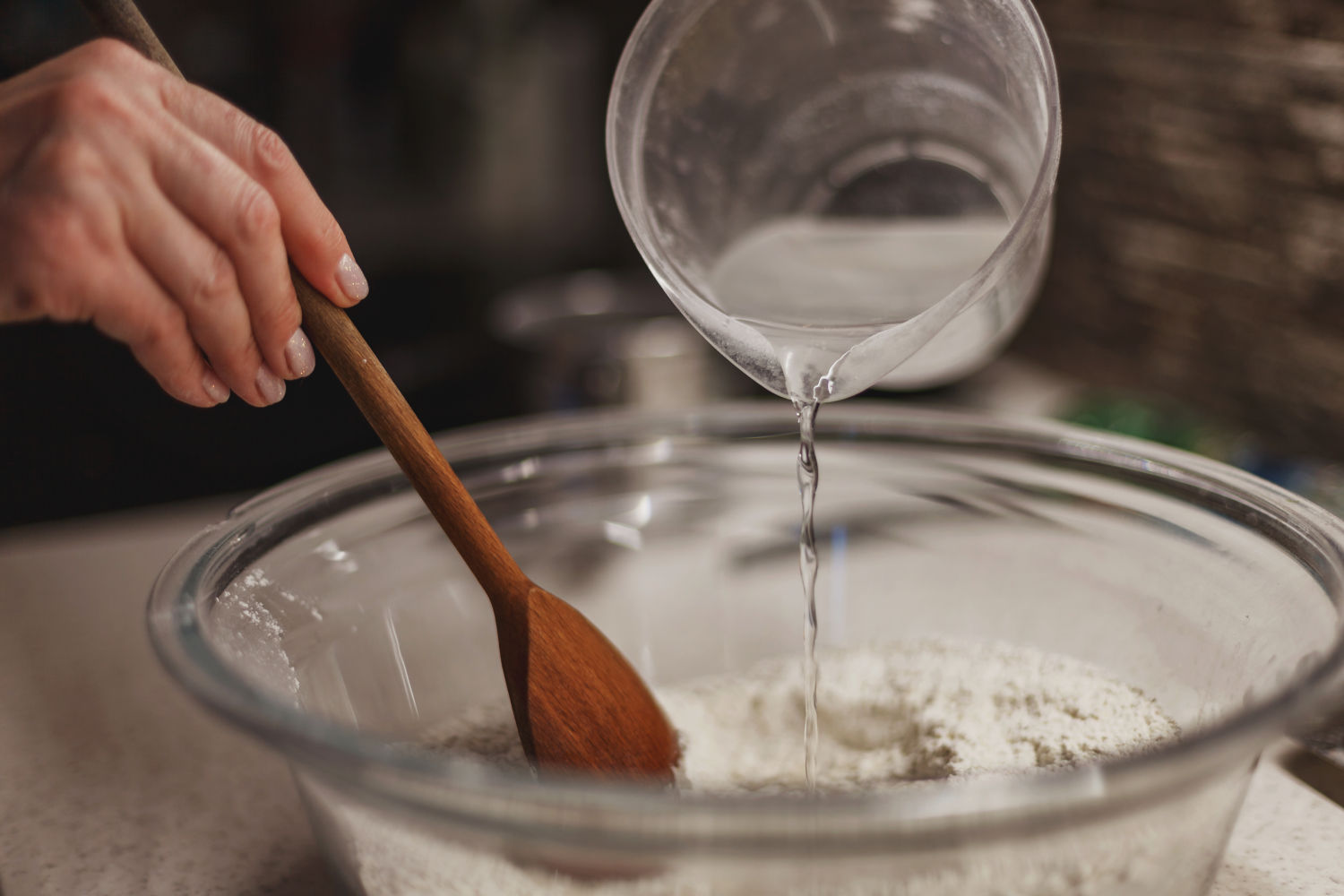
Whether you're chasing a crispy, foldable New York slice or a pillowy Neapolitan cornicione, one number matters more than any other: your hydration percentage.
Hydration for pizza dough isn't just about how much water you add - it's the single biggest lever you have over texture, rise, and crumb structure. Get it right and your dough practically shapes itself. Get it wrong and you're fighting a sticky mess or wrestling with a stiff disc that won't stretch.
This guide walks through what hydration actually means, how to calculate it, what ranges work for different pizza styles, and how to handle the tricky stuff once you push past 65%.
What Is Pizza Dough Hydration (and Why Does It Matter)?
Hydration is the ratio of water weight to flour weight in your dough, expressed as a percentage. Bakers call this Baker's Percentage - flour is always treated as 100%, and every other ingredient is measured relative to it.
A higher hydration means more water relative to flour. That extra water creates more steam in the oven, which opens up the crumb and gives you those big, irregular bubbles you see in a great Neapolitan rim. Lower hydration produces a tighter, denser crumb - think of the sturdy, chewy structure of a classic New York slice that holds up under a pile of toppings.
To understand why, it helps to know what water actually does inside the dough. Wheat flour contains two key proteins - glutenin and gliadin - that are essentially dormant when dry. When water hits them, they hydrate, bond together, and form the gluten network that gives dough its structure. Glutenin is responsible for elasticity (the snap-back when you stretch), while gliadin provides extensibility (the ability to stretch thin without tearing). The amount of water you add determines how tightly or loosely that network forms. More water means the protein strands sit further apart, creating a more relaxed, extensible dough that can trap larger gas bubbles during fermentation and baking.
But hydration doesn't just affect texture. It also changes:
- How your dough ferments. Water activates enzymes like amylase, which breaks down starches into the simple sugars that yeast feeds on. More water means more enzymatic activity and faster fermentation. A 75% hydration dough will ferment noticeably faster than a 60% dough at the same temperature, so your timing and yeast amounts need to adjust accordingly.
- How the dough handles. Low hydration doughs are forgiving and easy to shape. High hydration doughs require different techniques entirely (more on that below).
- How your crust bakes. Wetter doughs crisp differently - they tend to develop a thinner, crackly exterior with a more open, airy interior. The extra moisture also flashes to steam in a hot oven, which is what drives oven spring and creates an airy cornicione.
How to Calculate Pizza Dough Hydration
Ditch the measuring cups. Hydration math only works with weight, so grab a kitchen scale. The formula is simple:
(Water Weight ÷ Flour Weight) × 100 = Hydration %
So if your recipe calls for 500g of flour and 325g of water, that's a 65% hydration dough. Bump the water to 375g with the same flour and you're at 75%.
Baker's percentages aren't just useful for tracking hydration - they make it easy to scale any recipe up or down. If you know your formula percentages and your target dough ball weight, you can calculate exact ingredient amounts for any batch size. If you don't want to do that math every time, the PizzaLogic dough calculator handles it automatically - pick your pizza style and number of dough balls and it gives you exact weights for every ingredient, hydration included.
One thing worth noting: some recipes include other liquids like olive oil or eggs. Traditionally, only water counts toward your hydration percentage. Oil in particular doesn't hydrate flour the way water does - it coats the gluten strands rather than being absorbed by them, which is why it makes dough more tender rather than more extensible.
Hydration Ranges by Pizza Style
There's no single "correct" hydration - it depends entirely on what style you're making and what oven you're working with. Here's a practical breakdown:
Neapolitan (55%–62%)
Classic Neapolitan pizza hydration sits on the lower end of the spectrum. The dough needs to be soft and extensible enough to stretch thin in the center while still puffing up into that signature leopard-spotted cornicione. The relatively low water content works because Neapolitan pizza bakes at extreme heat (800°F+ / 430°C+) for just 60–90 seconds - there isn't time for the crust to dry out, so you don't need extra moisture to keep things tender. Traditional Neapolitan dough regulated by AVPN standards is designed specifically around this fast, high-heat bake. For a deeper, more complex flavor, some bakers use a sourdough Neapolitan approach with a natural levain instead of commercial yeast.
If you're using a true Italian 00 flour like Caputo Pizzeria, start around 58% and adjust from there. These fine-milled flours don't absorb water as aggressively as American bread flours, so a little goes a long way.
New York Style (60%–65%)
New York style pizza dough hydration lands in the middle of the range - wet enough to develop a good chew but dry enough to handle easily and hold up to a 500°F–550°F home oven with a longer bake time (7–10 minutes). This is the "workhorse" range that most home bakers should start with.
Because NY-style bakes at lower temps for longer, the crust has more time to dry out. The slightly higher hydration compared to Neapolitan compensates for that. Many NY-style recipes also include a small amount of sugar or malt, which helps with browning at these lower temperatures - something a 900°F Neapolitan oven doesn't need.
At 62%–63% with a strong bread flour (King Arthur or similar, around 12.7% protein), you'll get a dough that's easy to stretch by hand, holds its shape on a peel, and bakes up crispy on the bottom with a satisfying chew.
Detroit and Sicilian (70%–80%+)
Detroit and Sicilian are pan styles that use high hydration pizza dough - often 75% or higher. The extra water creates an extremely open, almost bread-like crumb with big air pockets. Since the dough bakes in an oiled pan, the pan itself mitigates the handling difficulties you'd normally face with a wet dough, and you get that incredible contrast between a light, airy interior and a fried, crunchy bottom and edges.
Detroit-style dough is typically pressed into the pan and then refrigerated for a long cold proof, which lets the high hydration dough relax and spread to fill the corners. Don't try to force it - let time and gravity do the work.
Contemporary / Napoletana Contemporanea (70%–85%)
Modern pizza styles like pizza contemporanea (including canotto) push hydration to the extreme. The goal is a "honeycomb" crumb in the cornicione - huge, irregular air pockets surrounded by thin, almost translucent walls of gluten. This requires advanced dough handling, long fermentation times, and strong flour.
One counterintuitive detail: despite being a descendant of Neapolitan pizza, contemporanea is often baked at slightly lower temperatures (around 700°F–750°F) for a longer time (2–3 minutes) compared to traditional Neapolitan. The reason is what some bakers call the "moisture paradox" - with so much water in the dough, you need enough bake time for the excess moisture to actually escape. Fire it too hot and too fast and you end up with a gummy, undercooked interior despite a charred exterior.
It's not where you want to start, but it's a rewarding challenge once you're comfortable with the basics.
Your Flour Choice Changes Your Effective Hydration
You can't swap flours without rethinking your water. Different flours absorb water at very different rates depending on their protein content, milling fineness, and whether they contain bran. Italian 00 flour is finely milled and typically made from softer wheat varieties, with protein usually in the 11.5%–12.5% range for pizza-specific blends. It hydrates quickly but doesn't absorb as much total water, which is why Neapolitan recipes work well at 55%–62%. Push a 00 flour to 70% and you'll likely have a slack, difficult dough.
American bread flour is coarser and higher in protein (12%–13%+), typically milled from hard red spring wheat. Those extra gluten-forming proteins are "thirsty" - they absorb and hold more water. A bread flour dough at 62% will feel noticeably stiffer than a 00 dough at 62%. Plan on adding 2%–5% more water with bread flour to achieve a comparable feel.
One thing to be aware of with harder wheats and coarser milling: they tend to have more starch damage - microscopic fractures in the starch granules caused during the milling process. Damaged starch absorbs water very aggressively at first, which can make a dough seem fine during mixing. But as those granules break down further during fermentation, they release that water back, and your dough gets progressively stickier over time. If you've ever had a dough that felt perfect when you mixed it but turned into a sticky mess after a long ferment, starch damage is often the culprit. (For more on diagnosing and fixing sticky dough, see our guide to why pizza dough gets sticky.) Whole wheat and high-extraction flours contain bran particles that soak up water like a sponge. But bran doesn't just absorb water - it also physically cuts through gluten strands as you mix, weakening the network. If you're blending in whole wheat (even at 20%–30% of your total flour), bump your hydration by at least 5% or the dough will feel dry and tear when you stretch it. Pure whole wheat doughs often need 75%+ hydration.
The takeaway: hydration is not a fixed number you can copy between recipes that use different flours. Always adjust based on what's in your bag. If you're switching flours, start with 2%–3% less water than you think you need, then add more gradually during mixing until the dough feels right. For a deeper guide to choosing the right flour for your style and oven, see my complete flour guide.
How to Handle High Hydration Dough
Once you push past 65%–68%, traditional kneading doesn't really work anymore - I go deep on this in my complete guide to high-hydration pizza dough. The dough is too wet and sticky to develop gluten on a countertop the way you would with a stiffer bread dough. (If you're using a stand mixer, not all handle high-hydration dough equally.) Here's what actually works: Autolyse first. Before you add salt or yeast, combine just the flour and water and let the mixture sit for 20–60 minutes. This does two things: it gives the flour time to fully absorb the water, and it allows protease enzymes in the flour to gently start relaxing the protein structure, improving extensibility before you've even started working the dough. When you come back to add the remaining ingredients, the dough will already be noticeably smoother and stronger. This single step makes more difference than any fancy kneading technique.
Use stretch-and-fold instead of kneading. With wet hands, grab one side of the dough, stretch it up, and fold it over the top. Rotate the bowl 90° and repeat. Do a full set of four folds every 30 minutes during the first 2 hours of bulk fermentation. Each set aligns the gluten strands into a stronger, more resilient network without deflating the dough or making a mess on your counter. (Watch a quick video demo.) Adding bench flour to a high-hydration dough would lower your effective hydration and tighten the crumb - the opposite of what you want.
Wet your hands, oil your containers. When shaping or moving high hydration dough, keep a bowl of water nearby and wet your hands frequently. For storage, lightly oil individual airtight containers for each dough ball. This prevents the surface from drying out and forming a skin, which would restrict the dough's ability to expand during proofing. (Here's a deeper look at dough ball storage and cold fermentation.)
Use semolina on your peel, not flour. When it's time to launch, dust your peel with coarse semolina rather than all-purpose flour. The coarse grains act like tiny ball bearings underneath the dough, letting it slide off cleanly. Regular flour absorbs moisture from the dough and turns gummy, especially with high hydration - which is how pizzas get stuck to peels. Some bakers also use the "inversion technique": when pulling the dough ball out of its container, they flip it so the wetter bottom side (which was touching the container) becomes the top of the pizza, leaving the drier surface on the peel side for a cleaner launch.
What Happens During Cold Fermentation (and Why It Matters for Hydration)
We mentioned cold fermentation above, but it deserves its own section because the interaction between hydration and time is where a lot of the magic happens - and it's where higher hydration doughs really come into their own. (For a day-by-day breakdown of what happens during cold fermentation, see our guide to how long pizza dough lasts in the fridge.) Hours 0–24: Hydration and enzyme activation. During the first day in the fridge (ideally around 38°F–40°F), the main event is slow, thorough hydration. Water migrates into the center of every starch granule and fully saturates the protein network. Meanwhile, the cold temperature slows yeast metabolism to a crawl - the dough isn't over-proofing, but the enzymes (amylase and protease) are still active, quietly breaking down starches into sugars and relaxing the gluten. This is why a 24-hour cold-fermented dough is so much easier to stretch than a same-day dough.
Hours 24–72: Peak flavor and structure. By the second and third day, those enzymes have converted enough starch into simple sugars to meaningfully affect your bake. Those sugars caramelize in a hot oven to produce the "leopard spotting" - the dark, blistered patches on a great Neapolitan crust. At the same time, lactic acid bacteria (present naturally in flour) produce organic acids that subtly tighten the gluten bonds, giving the dough a pleasant "bounce" and improved oven spring. For most home bakers, the 48–72 hour window is the sweet spot for both flavor and handling.
Beyond 96 hours: Diminishing returns. Past about four days, protease enzymes have broken down too many protein bonds and the gluten structure starts to collapse. The dough becomes fragile, tears easily, and loses its ability to hold gas. If your schedule demands a longer hold, reduce your yeast amount to slow things down, or freeze the dough balls after 48 hours. (More on freezing and long-term storage here.)
Your Oven Setup Matters Too
The final expression of hydration happens in the oven, where heat transforms all that water into the steam that drives oven spring and crumb structure. Your baking surface plays a bigger role in this than most people realize. Baking steels are especially effective for high hydration doughs. Steel conducts heat much faster than ceramic stone, delivering a rapid surge of energy to the bottom of the pizza. That quick blast causes the water in the dough to flash to steam almost immediately, puffing up the crust before it has a chance to flatten or stick. For home ovens that can't match the radiant heat of a commercial wood-fired oven, the conductive power of steel is the closest shortcut to professional-level aeration.
Pizza stones work well too, but they transfer heat more gradually. They're better suited to longer bakes (NY-style, Sicilian) where you want a steady, even crisp rather than an explosive rise.
Steam in the oven is another variable. In a professional wood-fired oven, the dough generates enough steam on its own. In a home oven, the environment is much drier. Some bakers introduce a burst of steam during the first minute or two of baking - a pan of water on a lower rack, or a few ice cubes tossed onto the oven floor - to keep the crust surface pliable long enough for the cornicione to reach its full volume before the exterior sets and hardens.
Environment Matters: Humidity, Altitude, and Seasonal Adjustments
Your kitchen isn't a laboratory, and conditions change. The same recipe can feel different depending on where you live and what time of year it is.
Humidity plays a real role. In dry climates or during winter when indoor air is particularly dry, your flour loses moisture just sitting in the bag - store it in an airtight container to minimize this. You may still need to add 2%–3% more water than a recipe written in a humid coastal kitchen would suggest. Conversely, in very humid conditions, flour absorbs ambient moisture and your dough may feel wetter than expected at the same hydration level.
Altitude affects both hydration and fermentation. At higher elevations (3,000+ feet), lower atmospheric pressure means leavening gases expand more rapidly, so dough rises faster and can over-proof if you're not watching it. The drier air also means your flour holds less moisture, so bumping hydration up by 2%–5% compared to sea-level recipes is common. If you're baking at altitude, keep a closer eye on your bulk ferment timing and consider using slightly less yeast or a cooler fermentation temperature to compensate.
Your water can make a subtle difference too. Hard water with a high mineral content strengthens gluten slightly (minerals tighten the network), while very soft water can produce a slacker dough. Most tap water in most places is fine, but if your results are inconsistent and you've ruled out everything else, it's worth considering.
Seasonal flour variation is something most home bakers don't think about, but it matters. Flour milled from winter wheat behaves differently than flour from spring wheat, and protein content can shift by half a percentage point or more between batches. If your "usual" recipe suddenly feels off, the flour may have changed - not your technique.
The point is: treat your hydration percentage as a starting target, not a rigid rule. Learn what the dough should feel like at each stage, and adjust the water to get there.
Putting It All Together
If you're new to thinking about hydration, start here:
- Pick a style. New York at 62%–63% is the most forgiving place to learn.
- Weigh everything. A kitchen scale (affiliate link) is non-negotiable for consistent results.
- Use the PizzaLogic calculator to dial in your recipe. Choose your pizza style, set your desired hydration, and get exact ingredient weights with no guesswork.
- Bake, take notes, adjust. Move your hydration up or down by 2% at a time until you find the texture you love.
- Then experiment. Once you own your base recipe, try pushing hydration higher, extending your cold ferment, adding a poolish or biga preferment, or switching flours to see how each variable changes the final product.
Hydration is the foundation - but it's only one piece of the puzzle. Your fermentation schedule, shaping technique, baking surface, and oven setup all interact with it. The more you bake, the more intuitive it gets. And if you're completely new to making pizza at home, my beginner's guide to homemade pizza covers the full picture - ingredients, equipment, techniques, and a simple recipe to get you started.