
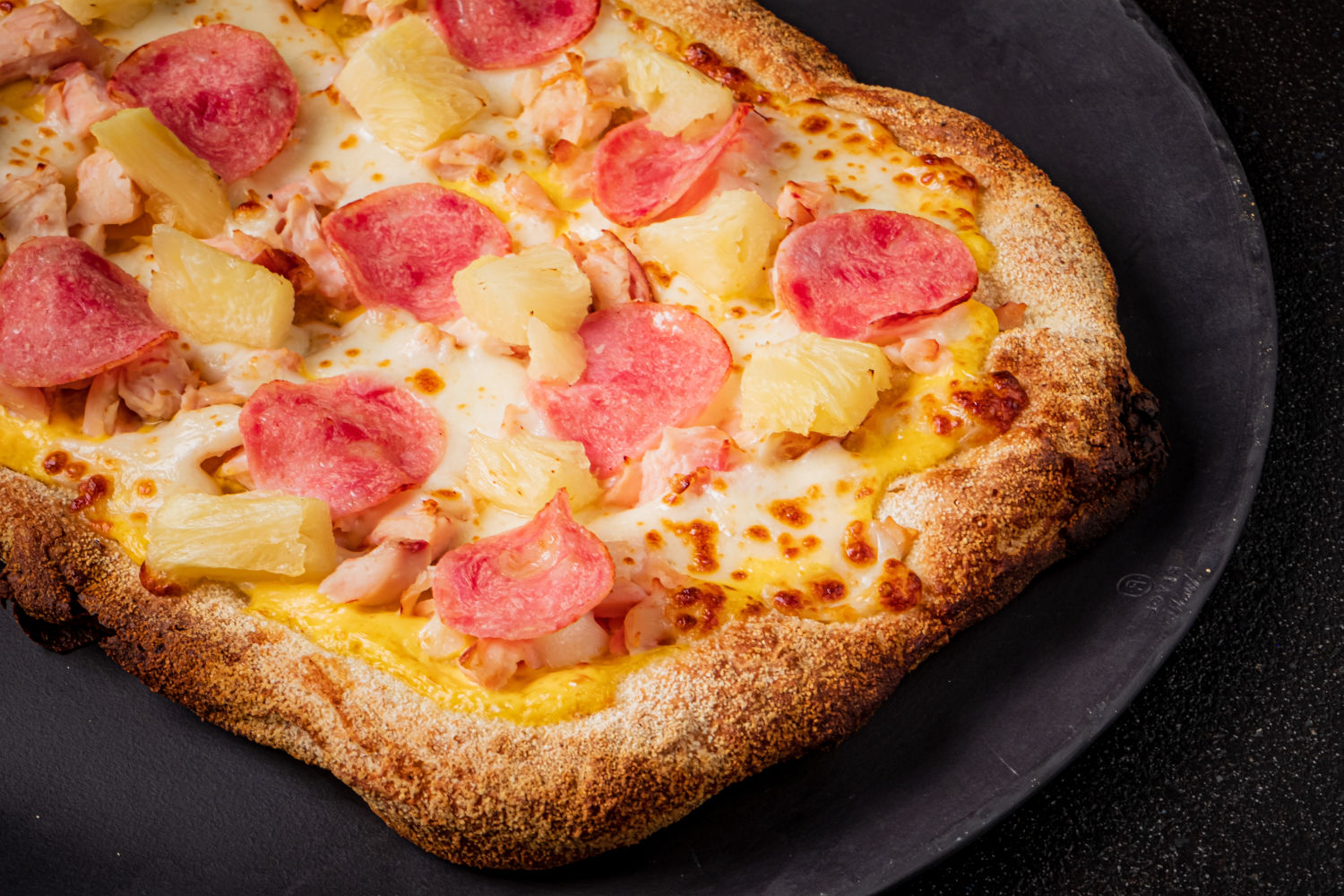
It might be the most fought-over question in all of food: does pineapple belong on pizza? It has ended friendships, divided families at the dinner table, and even triggered a minor international diplomatic incident involving the president of Iceland. Whether you think Hawaiian pizza is a tropical masterpiece or an unforgivable crime against Italian cuisine, one thing is certain - pineapple on pizza isn't going anywhere.
But here's the thing most people get wrong about this debate. It was never really about whether fruit belongs on pizza. Tomatoes are fruit. Figs have appeared on Italian flatbreads for centuries. The real question - especially if you're making pizza at home - is whether pineapple can be executed well enough to earn its place on a properly made pie.
Between the history, the science, and the techniques that actual pizzaioli are using to elevate this divisive topping, there's a lot more to the pineapple debate than most people realize. Let's lay out both sides of the argument and give you everything you need to decide for yourself.
Where Did Pineapple on Pizza Originate?
The origin story of Hawaiian pizza is one of the most wonderfully random tales in food history.
Despite the name, it wasn't invented in Hawaii. It was created in 1962 by Sam Panopoulos, a Greek immigrant who had settled in Chatham, Ontario, Canada, where he ran the Satellite Restaurant with his brothers. The restaurant served typical American diner fare - burgers, fries - along with Chinese-Canadian dishes that commonly mixed sweet and savory flavors. When pizza started gaining popularity in the area, Panopoulos began experimenting.
One day, he grabbed a can of pineapple and tossed it on a pizza with some ham. "We just put it on, just for the fun of it, see how it was going to taste," he told the BBC in 2017. "We were young in the business and we were doing a lot of experiments."
He named it "Hawaiian" - not after the state, but after the brand printed on the canned pineapple. He never trademarked or patented the creation; as he later told CBC Radio, "it was just another piece of bread cooking in the oven" for him.
Author John Green once summed up the dish's absurd cosmopolitan DNA perfectly: it was invented in Canada by a Greek immigrant, inspired by Chinese cuisine, to put a South American fruit on an Italian dish - and it went on to gain its greatest popularity in Australia. TIME Magazine later ranked it #1 on its list of the 13 Most Influential Pizzas of All Time.
It's also worth noting that pineapple and pork are not strangers outside of pizza. Tacos al pastor - one of Mexico's most beloved street foods - traditionally features pork cooked on a vertical spit with pineapple. A printed recipe pairing ham and pineapple appeared in the United States as early as 1925. Panopoulos didn't invent the flavor combination; he just put it on a pizza.
There's even evidence the concept may predate Panopoulos. A 1957 ad for a short-lived Portland, Oregon pizzeria called Pizza Jungle listed a "Hawaiian Pizza" with pineapple, papaya, and green pepper on the menu - five years before Panopoulos's creation. The restaurant closed within a year, and its contribution was lost to history until a researcher unearthed the ad decades later.
Is It Illegal to Put Pineapple on Pizza in Italy?
This is one of the most searched questions around the topic, so let's put it to rest: no, it is not illegal to put pineapple on pizza in Italy. There are no laws, no decrees, and no pizza police enforcing a ban on tropical fruit toppings.
The myth gained traction partly from a 2017 incident where Iceland's president, Guðni Th. Jóhannesson, jokingly told a group of high school students that he'd ban pineapple on pizza if he had the power. The comment went viral, Hawaiian pizzas were sent to the Icelandic Embassy in London in protest, and Canadian Prime Minister Justin Trudeau jumped in to defend the creation on Twitter. Jóhannesson later walked it back, clarifying he wouldn't want to live in a country where a leader could ban things they personally disliked.
In Italy, saying something is "illegal" is a common, tongue-in-cheek way of expressing strong cultural disapproval - the same way Italians say "it's illegal to order a cappuccino after 1 p.m." You won't find pineapple on most Italian pizzeria menus, but that's tradition, not legislation.
And even that tradition is starting to shift.
Sorbillo Changes the Game in Naples
In January 2024, Gino Sorbillo - one of the most respected pizzaioli in the world, a third-generation pizza maker with 21 outlets globally - did what many Italians considered unthinkable. He added a pineapple pizza to his menu on Via dei Tribunali in Naples. This is the most famous pizza street in the city that invented pizza.
His creation, called "Margherita con Ananas," isn't anything like the standard Hawaiian you'd get from a delivery chain. Here's what makes it different:
It's a pizza bianca - no tomato sauce at all. Sorbillo explained to CNN that tomato is a "redundant acidic element" that clashes with pineapple. You'd never add tomato to prosciutto and figs, he reasoned, so why pair two competing acids?
The pineapple is prebaked in the oven and then cooled before going onto the pizza, where it bakes a second time. This double-cooking process drives off excess moisture and creates a caramelized depth of flavor. He tops it with smoked provola (a cow's milk cheese from Campania), extra virgin olive oil, and fresh basil. As a finishing touch, he scatters "micro shavings" of two different smoked cacioricotta cheeses - one from Sardinian goats, one from buffalo in the Cilento area south of Naples.
His reasoning? "I wanted to combat food prejudice," he told CNN. "People follow the crowd and condition themselves according to other people's views."
The reaction in Italy was volcanic. It was debated on national television. Insults flew on social media. One Instagram commenter simply wrote, "I have unfollowed you." But the pizzeria now sells about 50 pineapple pizzas a day - a small slice of the 1,000+ pies they bake daily, but proof there's real demand even in the heart of pizza tradition.
Sorbillo isn't alone among Italian chefs, either. Franco Pepe in Caiazzo wraps pineapple in San Daniele prosciutto and tucks it into fried pizza dough. Pier Daniele Seu in Rome uses a carpaccio of dried pineapple. The walls are cracking.
Why Do People Hate Pineapple on Pizza?
Let's be fair to the opposition. There are legitimate reasons why pineapple doesn't belong on pizza - or at least, why it so often goes wrong:
The moisture problem is real. Raw pineapple, and especially canned pineapple in syrup, releases a ton of liquid during baking. That moisture seeps into the dough and you end up with a soggy, undercooked center. This is probably the single biggest reason people have bad experiences with pineapple pizza. It's not that the concept is flawed - it's that the execution usually is.
Warm pineapple isn't for everyone. An Adobe survey of 3,000 people found that 54% of adults who dislike pineapple on pizza say their main objection is simply not enjoying warm pineapple. For younger respondents (Gen Z and Millennials), the texture was the primary complaint.
It breaks tradition. For pizza purists - and there are many of them, especially in Italy - pizza is a savory dish built on a foundation of tomato, cheese, and quality cured meats or vegetables. Putting a tropical fruit on it feels like a violation of what pizza is supposed to be.
The celebrity opposition doesn't help. Gordon Ramsay's tweet declaring "Pineapple does not go on top of pizza" was retweeted over 100,000 times. When one of the world's most famous chefs takes a side, it gives people permission to dig in.
Why Pineapple Belongs on Pizza (The Case For)
If you're wondering whether pineapple on pizza is good, consider the science and the culinary tradition that supports it.
Sweet and savory contrast is one of the most fundamental flavor principles in cooking. It's the reason salted caramel exists, why we pair prosciutto with melon, why blue cheese goes with port, why peanut butter meets jelly, and why fries taste better with ketchup. The sweet-salty-tart interplay stimulates multiple taste receptors simultaneously, creating a more complex and satisfying eating experience. Pineapple on pizza is just another expression of this principle.
Pineapple is more flavorful than people give it credit for. It's not just "sweet." Fresh pineapple contains citric acid (tartness), fruity esters (aromatic complexity), plus vanillin and eugenol - compounds that taste like vanilla and clove. According to IFLScience's breakdown of pineapple's chemistry, the fruit also has oxygen-containing carbon rings that create caramel and sherry-like overtones. When you heat pineapple, its natural sugars undergo caramelization, producing volatile compounds that deepen and transform its flavor profile entirely.
Bromelain does interesting things. Pineapple contains bromelain, an enzyme that breaks down protein. It's the reason pineapple is used as a meat tenderizer in cuisines around the world. On pizza, bromelain can subtly tenderize accompanying meats and even interact with cheese to make it feel slightly creamier. (A caveat: bromelain is largely deactivated above about 158°F, so most of its enzymatic action happens during prep, not in the oven.)
Traditional Italian pizza already uses sweet elements. Figs, honey, balsamic glaze - these have all appeared on pizza in Italy for years. The idea that pizza must be exclusively savory doesn't hold up against its own history.
The professionals are coming around. Chris Bianco of Pizzeria Bianco (widely considered one of America's best pizzerias) told Esquire: "I don't use it, but I'm not against it." Joe Beddia of Pizzeria Beddia in Philadelphia said he'd use pineapple if he ever had a pizzeria where the fruit grows locally. And Khampaeng Panyathong loved the idea so much he opened Ananas Pizzeria in Seattle in 2023, building an entire concept around the fruit.
How Many People Like Pineapple on Pizza?
What percentage of people like pineapple on pizza? More than the internet discourse would have you believe.
A comprehensive YouGov survey found that 22% of Americans love pineapple on pizza and another 37% like it - putting the total positive sentiment at roughly 59%. Only 18% dislike it and 19% hate it. The pro-pineapple camp is actually the majority.
That said, the divide has a demographic dimension. Pineapple pizza is notably more popular on the West Coast and among adults 18–34 (15% rank it as a top-three topping) compared to just 9% of those 55 and older. Northeasterners tend to be the most skeptical.
Globally, the numbers are even more lopsided in pineapple's favor. In Australia, pineapple pizza was at one point the single most popular style, accounting for 15% of all pizza sales. A 2018 Domino's study found 2.2 million Australians wanted more pineapple on their pizza, versus just 185,000 who wanted it removed. In the UK, pineapple pizza is the most widely available variety at takeout restaurants, offered at nearly 4,000 pizzerias. And during 2020, GrubHub reported a staggering 689% spike in Hawaiian pizza orders in the United States.
So if you like pineapple on pizza, you're far from alone.
How to Actually Make Pineapple Pizza Good
Here's where we stop debating and start cooking. If you've been on the fence, or if you've had bad pineapple pizza in the past, chances are the problem wasn't the concept - it was the execution. Here's how to do it right.
Start With Fresh Pineapple (Seriously, Ditch the Can)
This is the single most important upgrade you can make. Canned pineapple - especially the kind packed in heavy syrup - is too sweet, too wet, and too soft. It's the reason so many people think pineapple doesn't work on pizza. Fresh pineapple has a brighter flavor, better texture, and far less excess moisture.
If you must use canned, go for pineapple in its own juice (never syrup), drain it thoroughly, and always pre-cook it before topping.
Pre-Cook Your Pineapple
This is the step that separates forgettable pineapple pizza from something genuinely great. Every serious pizzaiolo who works with pineapple cooks it before it goes on the dough. Here's why: pre-cooking drives off excess moisture (solving the soggy crust problem), concentrates flavor, and triggers caramelization - that browning reaction that transforms simple sugars into deeper, more complex, slightly nutty and toasty flavors.
Pan Caramelize (My Favorite Method) Slice fresh pineapple thin - not chunky. Heat a skillet over medium-high with a little butter, olive oil, or if you're cooking bacon for the same pizza, use some of the rendered bacon fat. Lay the pineapple in a single layer and let it cook undisturbed for 2–3 minutes per side until you see brown, sticky, caramelized edges. You can add a pinch of brown sugar to speed the process, but it's not necessary with ripe pineapple. The goal is pineapple that's chewier, less wet, slightly salty, and deeply flavored.
Ooni's approach skips the sugar entirely and caramelizes thinly sliced fresh pineapple in just olive oil and salt, cooking it briefly in their pizza oven for flame-kissed char. Their take: pair it with pepperoni and pickled jalapeños.
Oven Roast Spread pineapple chunks on a sheet pan and roast at 450°F for about 5 minutes. Quick, hands-off, and effective for driving off moisture. This is essentially the approach Sorbillo uses - prebaking the pineapple and cooling it before it goes on the pizza for its second bake.
Grill If you're already firing up the grill for a pizza night, throw pineapple rings directly over high heat until they're well-browned and tender. Roughly chop after grilling. The smokiness adds a whole new dimension.
Quick Pickle This is an underrated technique. Ooni's pickled pineapple method uses a simple warm brine of vinegar, salt, and black peppercorns poured over fresh sliced pineapple. No sugar needed - the pineapple provides its own sweetness. The result is a tangy, complex topping that's miles away from the one-note sweetness of raw fruit. Paulie Gee's in Brooklyn uses pickled pineapple on their "Bubba Guy" pie with crispy bacon and fresh jalapeños.
Dehydrate For zero moisture and intense concentrated flavor, try dried pineapple. Pier Daniele Seu in Rome uses a carpaccio of dried pineapple on his pizzas. At home, dehydrate thin slices at 135°F for 10–15 hours. The result is chewy, candy-like, and packs a punch of flavor without a drop of excess liquid.
Slice Thin, Not Chunky
This is a subtle but important detail. The Esquire article on pineapple pizza noted that serious pizzaioli are "breaking down fresh pineapple into razor-thin cuts" rather than using the big chunks you'd find on a delivery Hawaiian. Thin slices caramelize faster and more evenly, distribute flavor across the pizza instead of creating isolated sweet pockets, and cook more proportionally to the other toppings.
Get Your Dough Right
A well-made crust is non-negotiable when working with a moisture-heavy topping like pineapple. You want a dough that can handle the heat and produce a crispy base that stands up to whatever you throw on it.
This is where PizzaLogic's dough calculator comes in. Dial in your hydration percentage, flour type, and fermentation schedule to get a dough recipe tailored to your exact setup. If you're working with a home oven, a slightly lower hydration (around 60–63%) can help ensure a crisper base - I go deeper on this in my hydration guide. If you've got a pizza oven that hits 800°F+, you can push the hydration higher and rely on the intense heat to set the crust fast before the pineapple releases its juices.
A long, cold ferment (24–72 hours) also helps here - the fermentation develops complex flavors in the dough itself, giving it enough character to stand alongside a sweet topping rather than getting lost beneath it. I cover the science and timing of extended fermentation in my cold fermentation guide, and if you want to go even further, a pre-ferment like a poolish or biga adds another layer of complexity to the crust.
What Goes Good With Pineapple on Pizza?
The key to a great pineapple pizza is balance. You need salt, heat, and fat to counteract the sweetness. Here are the pairings that work best.
Meats that deliver: Crispy bacon is the most popular modern upgrade over basic ham. Pepperoni adds spice. Prosciutto brings elegance - it crisps beautifully in the oven and its saltiness plays perfectly against pineapple. For something unexpected, try thinly sliced Spam (Houston's Nonno's Pizza Tavern does this on their "Maui Wowee") or chorizo.
Heat is essential: This might be the single best tip for converting pineapple skeptics. Jalapeños - fresh or pickled - are the go-to, and for good reason. The spice cuts through the sweetness and adds a third dimension to every bite. Red pepper flakes work in a pinch. A drizzle of hot honey after the pizza comes out of the oven is the current trending move, and it's legitimately great - the heat, sweetness, and floral honey notes tie everything together.
Cheese choices matter: Standard mozzarella is fine, but consider Monterey Jack for its creamier melt, feta for a salty tang that pushes back against the sweetness, smoked provola (Sorbillo's choice) for depth, or goat cheese for a tart, creamy contrast.
Rethink your sauce: One of the most interesting lessons from Sorbillo's approach is that tomato sauce may not even be the best base for pineapple pizza. The acidity of tomato competes with the acidity of pineapple. A garlic oil base, BBQ sauce, or going sauce-free (pizza bianca) lets the pineapple's flavor come through more cleanly.
My Favorite Build: The Fancy Hawaiian
If you want my favorite pineapple-on-pizza recipe give The Fancy Hawaiian a try.
Dough: Use the PizzaLogic calculator to dial in your dough. A 62% hydration with a 48-hour cold ferment works beautifully here - you want a crust with enough structure and flavor to hold its own. I also love making a toppings-heavy version of this pizza on a par-baked Sicilian style crust.
Sauce: Light tomato sauce or leave the sauce off and brush the stretched dough lightly with garlic-infused olive oil.
Toppings:
- Fresh pineapple chunks, roasted at 450°F for 5 minutes (or caramelized in a skillet)
- Shredded prosciutto (tear it into rough strips - it'll crisp up beautifully in the oven)
- Crumbled goat cheese
- Fresh mozzarella as a base layer
Optional finishing touch: A generous drizzle of hot honey after the pizza comes out of the oven.
The roasted pineapple brings caramelized sweetness without the moisture. The prosciutto adds salty crunch. The goat cheese provides a tangy, creamy counterpoint. And the hot honey ties it all together with warmth and floral complexity.
The Verdict
Is pineapple on pizza good? That's ultimately a personal call. But from a culinary science perspective, the sweet-savory-tart combination is sound - the same principles that make countless beloved flavor pairings work across every food tradition on earth.
What I can say with confidence: if you've only ever had pineapple pizza made with soggy canned chunks on a delivery pie, you haven't really had pineapple pizza. The gap between that experience and a properly executed version - with caramelized fresh fruit, thoughtful pairings, and a well-made crust - is enormous.
Even the masters in Naples are starting to come around. If Gino Sorbillo can put pineapple on a pizza on Via dei Tribunali and sell 50 of them a day, maybe it's worth one more shot.
Fire up your oven, dial in your dough, and make up your own mind.