
Active Dry vs. Instant Yeast: Which One Should You Use for Pizza?
This is the question that drives most of the confusion, and it's simpler than most articles make it sound. When comparing active dry vs instant yeast, you're really looking at the same organism (Saccharomyces cerevisiae) processed two different ways. Both will make great pizza. The differences are in convenience and how they behave in your dough.
Instant Dry Yeast (IDY)
Instant yeast has finer granules than active dry, which means it absorbs water faster and starts working almost immediately. You don't need to "proof" it in warm water first - just toss it in with your flour and go.
What a lot of pizza articles don't mention is that instant yeast actually makes your dough slightly more extensible. That's a fancy way of saying it relaxes the gluten a bit, making the dough stretchier and easier to open by hand. If you've ever fought with a dough ball that keeps snapping back when you try to stretch it, instant yeast can genuinely help with that. This happens because instant yeast releases a compound called glutathione during rehydration, which softens the gluten network.
Instant yeast is also significantly cheaper if you buy it in bulk (a 1-pound bag of SAF runs about $7-8 and lasts hundreds of bakes), and it stores well in the freezer for over a year.
Where instant shines for pizza: Same-day doughs, cold fermentation, and any time you want a straightforward, no-fuss process.
Active Dry Yeast (ADY)
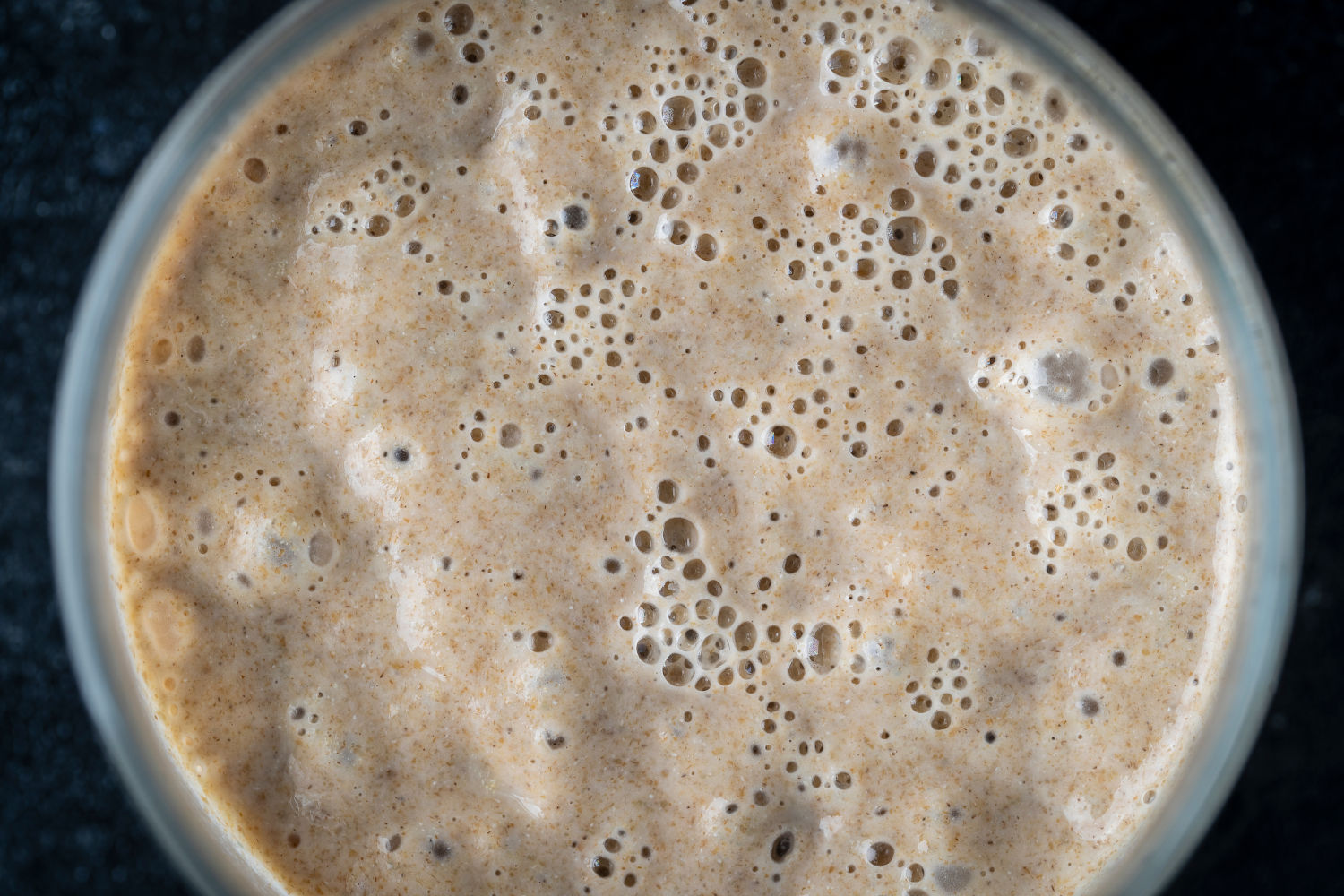
The main difference with activated yeast vs instant yeast is that active dry yeast traditionally needs to be dissolved in warm water (~110°F) for 5-10 minutes before you add it to your dough. You're looking for it to get foamy and bubbly - that's your visual confirmation the yeast is alive and ready to work. (Side note: many modern ADY products technically don't require proofing anymore, but doing it anyway is cheap insurance against a dead batch.)
ADY is a touch slower to get going. In a short 1-2 hour rise, you'll notice instant yeast dough pulls ahead. But in a longer ferment - anything over 3-4 hours - that head start becomes irrelevant. The two end up in basically the same place.
Some bakers swear ADY gives a slightly deeper, more "bready" flavor. There's actually a reason for this: active dry yeast contains a higher proportion of dead yeast cells compared to instant, and those dead cells release different flavor compounds during fermentation.
Where ADY shines for pizza: When you want the peace of mind of seeing your yeast foam before committing to a batch. Also worth noting that ADY can perform slightly better in refrigerated doughs according to some experienced bakers, though the difference is subtle.
The Practical Bottom Line
If a recipe calls for one type and you only have the other, don't stress. They're interchangeable with a small adjustment: use about 25% less instant yeast when substituting for active dry, or about 33% more active dry when substituting for instant. So if a recipe calls for 1 teaspoon of instant, use about 1¼ teaspoons of active dry. That's it.
If you want to skip the mental math, the PizzaLogic Dough Calculator lets you toggle between IDY, ADY, and fresh yeast and recalculates the amounts automatically.
Fresh Yeast and Sourdough: Going Beyond the Packet
Once you've got a handle on the dry yeast basics, there are two other options worth knowing about - especially if you're chasing a specific style or flavor.
Fresh Yeast (Cake Yeast)
Fresh yeast comes in soft, crumbly blocks that look a bit like modeling clay. It's what you'll find in most traditional Neapolitan pizzerias in Italy, and it's what the AVPN (Associazione Verace Pizza Napoletana) historically required for "authentic" Neapolitan pizza.
The appeal is that fresh yeast produces a very strong dough structure, and many bakers believe it gives a slightly richer flavor than dry yeast - though PizzaBlab's science-based research suggests the flavor difference has more to do with fermentation conditions than the yeast format itself. What's not debatable is that fresh yeast performs better in frozen dough, since its intact cell structure survives freezing more reliably than dried yeast.
The downsides are real, though. Fresh yeast only lasts about 1-2 weeks in the fridge, it's not available at most grocery stores (you may need to ask at a local bakery), and you need roughly 3x the amount by weight compared to instant dry yeast. For casual home pizza makers baking once a week or less, the short shelf life makes it impractical unless you freeze portions.
Sourdough Starter (Wild Yeast)
A sourdough starter isn't just for crusty loaves - it makes genuinely fantastic pizza. The crust you get from a sourdough pizza tends to be crispier on the outside with a more open, airy interior, and it has that signature tang that commercial yeast can't replicate.
There's also a digestibility angle. The long fermentation involved with sourdough breaks down more of the complex carbohydrates and can reduce gluten sensitivity for some people. If regular pizza dough gives you that heavy, bloated feeling but sourdough pizza doesn't, this is why.
The trade-off is time and commitment. You need to build and maintain a starter (7-10 days to get one going from scratch, then regular feedings to keep it active), and sourdough pizza doughs generally need longer, more unpredictable fermentation times. It's a rewarding rabbit hole, but it's definitely a rabbit hole. If you're interested, I cover the full process in my guide to prefermented pizza dough.
Best Yeast for Neapolitan Pizza
If you're specifically making Neapolitan-style pizza - thin base, puffy leopard-spotted cornicione, baked fast and hot - the yeast conversation gets more specific.
Traditional Neapolitan dough is dead simple: flour, water, salt, yeast. No sugar, no oil. The official STG (Specialty Tradition Guaranteed) guidelines call for compressed fresh yeast, and that's what most pizzerias in Naples use to this day. The dough ferments for anywhere from 8 to 24+ hours, and because of that long timeline, you use surprisingly tiny amounts of yeast - often in the 0.2 to 1 gram range for a batch making several pizzas. Measuring amounts that small accurately basically requires a precision scale (0.01g resolution), which is why a dough calculator is so helpful for getting the math right.
But here's the thing: you absolutely do not need fresh yeast to make excellent Neapolitan pizza at home. Instant and active dry yeast both produce outstanding results. World-champion pizza maker Johnny Di Francesco has published Neapolitan recipes using standard dry yeast.
The Premium Pick: Caputo Lievito
If you want to go a step further, Caputo Lievito is worth trying. It's a dry active yeast made in Italy using Saccharomyces cerevisiae strains that have been used in the Naples region for generations. The yeast is grown on Italian molasses, which gives it a noticeably different character than standard supermarket bread yeast.
In practice, dough made with Caputo Lievito tastes less "yeasty" and more refined - the flavor of the flour and the fermentation come through more clearly. It also handles long fermentation (24-72 hours) more gracefully than regular bread yeast, which can sometimes cause dough to collapse or over-proof during extended cold ferments.
A 100g container costs around $10, but that's roughly 1,000 pizzas worth of yeast at Neapolitan quantities. A penny a pizza.
How Much Yeast to Use in Pizza Dough
Using too much yeast is probably the most common mistake in home pizza making. More yeast doesn't mean more rise - it means faster rise, which usually means your dough over-proofs before you're ready, collapses during baking, and never develops the complex flavors that come from slow fermentation.
The general rule: the longer your ferment, the less yeast you need. Here's a starting-point reference chart using instant dry yeast as a baker's percentage of flour weight:
| Fermentation Time | Room Temp (~75°F) | Cold Ferment (~38-42°F) |
|---|---|---|
| Quick (2-4 hrs) | 0.5% - 1.0% | N/A |
| Same-Day (6-8 hrs) | 0.2% - 0.5% | N/A |
| Overnight (12-16 hrs) | 0.1% - 0.2% | 0.3% - 0.5% |
| Long (24 hrs) | 0.05% - 0.1% | 0.1% - 0.3% |
| Extended (48-72 hrs) | Not recommended | 0.05% - 0.15% |
Using active dry yeast? Multiply these numbers by 1.33. Using fresh yeast? Multiply by 3.
If you're planning a multi-day cold ferment, my guide to cold fermentation timing covers what to expect day by day.
A good default starting point that works for both room temperature and cold fermentation is around 0.1% instant dry yeast - that's just 0.5g for 500g of flour. It sounds like almost nothing, and it is, but the yeast has plenty of time to do its work during a long ferment. And when it comes to yeast, under-doing it is almost always better than over-doing it. Too little yeast just means a slower rise. Too much yeast means a blown-out, flavorless dough with no way to fix it.
The PizzaLogic Dough Calculator takes the guesswork out of this - plug in your fermentation time, temperature, and yeast type, and it calculates the right amount for your specific bake.
Yeast Conversion Chart
If you're following a recipe that calls for a different yeast type than what you have on hand, here are the standard conversion ratios:
The ratio to remember: Fresh : Active Dry : Instant = 3 : 1.2 : 1 (by weight)
| Converting From → To | Multiply By |
|---|---|
| Fresh → Active Dry | × 0.4 |
| Fresh → Instant | × 0.33 |
| Active Dry → Instant | × 0.75 |
| Instant → Active Dry | × 1.33 |
| Active Dry → Fresh | × 2.5 |
| Instant → Fresh | × 3.0 |
Quick example: A Neapolitan recipe calls for 3g of fresh yeast. You have instant dry on hand. Multiply 3 × 0.33 = about 1g of instant yeast. Done.
Best Yeast Brands for Pizza Dough
Not all yeast is created equal, and brand does matter - especially for long-fermented doughs. Here are the ones worth knowing about:
SAF Instant Yeast (Red Label)
This is the workhorse. SAF Red has been a test kitchen staple at King Arthur Baking for decades, and it's the most recommended instant yeast in serious baking and pizza communities. It activates quickly, performs consistently, and works well in everything from quick same-day doughs to multi-day cold ferments. Buy the 1-pound bag, store it in an airtight container in the freezer, and you're set for a year or more of baking. At about $7-8 per pound, it's a fraction of the cost of buying individual packets.
SAF Gold is their osmotolerant version designed for sweet/enriched doughs - you don't need it for pizza.
Fleischmann's
The most widely available brand in US grocery stores. Their standard Active Dry and RapidRise (instant) products are perfectly solid choices. Fleischmann's also makes a Pizza Crust Yeast that contains L-cysteine, an amino acid that relaxes the dough so it's easier to press and shape without snapping back. It's designed for quick, no-rise-time pizza - make the dough and bake immediately. Useful for a fast weeknight pizza, but it won't give you the flavor complexity of a properly fermented dough.
Red Star
Another reliable grocery store brand with active dry, quick-rise, and instant options. They also offer a Certified Organic yeast, which is a nice option if that matters to you. Generally a bit more affordable than Fleischmann's, especially in value packs.
Caputo Lievito
The specialist pick. If you're making Neapolitan-style pizza with long fermentation times, this is purpose-built for the job. More expensive up front, but the per-pizza cost is essentially nothing, and the difference in flavor and fermentation stability is real.
Storing Yeast (and How to Tell if It's Dead)
Yeast is a living organism, and it does expire. Here's how to keep it alive and how to test it if you're not sure.
Unopened dry yeast lasts 12-24 months in a cool, dry pantry. Check the date on the package.
Opened dry yeast should go in an airtight container (a mason jar works great) in the fridge for up to 6 months, or the freezer for a year or more. You don't need to thaw it before using - instant yeast can go straight from the freezer into your flour.
Fresh yeast lasts only 1-2 weeks in the fridge. You can freeze it for a few months, but it gradually loses potency.
The "Is It Still Alive?" Test
If your yeast has been sitting around for a while, test it before committing to a batch:
- Stir a teaspoon of yeast into ¼ cup of warm water (~110°F) with a pinch of sugar.
- Wait 10 minutes.
- If it's foaming and bubbly, you're good to go.
- If it just sits there doing nothing, toss it and grab a fresh supply.
Common Yeast Mistakes in Pizza Dough
A few pitfalls that trip people up, especially early on:
Water temperature matters more than you think. Water over 120°F will kill yeast. If you're proofing ADY, aim for 105-115°F - warm to the touch but not hot. When in doubt, use a thermometer. If you're using instant yeast mixed directly into flour, your water can be a bit cooler since it won't contact the yeast directly at full strength.
Don't let salt and yeast touch directly. Salt can damage yeast cells on contact. The traditional Neapolitan method dissolves the salt in the water first, then adds a portion of flour as a buffer before mixing in the yeast. It's a small detail, but it matters when you're working with the tiny amounts of yeast used in long-fermented doughs.
Don't dump instant yeast into ice water. This is a less obvious one. When instant yeast rehydrates in very cold water, it releases excess glutathione, which over-relaxes the gluten and gives you a sticky, slack dough that's a pain to work with. If your recipe uses cold water (common in long fermentation recipes), mix the instant yeast into the flour first and then add the water, rather than dissolving the yeast in the water directly.
More yeast ≠ better pizza. The urge to add extra yeast "just to be safe" usually backfires. Extra yeast accelerates fermentation, which means your dough can over-proof before you're ready and the crust ends up tasting flat and one-dimensional instead of complex and slightly tangy. Trust the small amounts, give the dough time, and let fermentation do the heavy lifting on flavor.
Pulling It All Together
Here's the honest truth: you can make excellent pizza with any type of yeast. The "best" yeast for your pizza dough depends on your style, your schedule, and how deep you want to go.
Just starting out? Grab a packet of instant yeast (or active dry - either one) from the grocery store and make some pizza. My complete beginner's guide to homemade pizza has a simple same-day recipe and everything you need to know. The best pizza is the one you actually make.
Getting more serious? Pick up a 1-pound bag of SAF Red Instant Yeast, experiment with overnight and cold fermentation, and start paying attention to your yeast percentages. Use the PizzaLogic Dough Calculator to nail your ratios and take the guesswork out of scaling recipes up or down.
Going all-in on Neapolitan? Try Caputo Lievito, invest in a precision scale, and start experimenting with 24-72 hour cold ferments. Or build a sourdough starter and open up a whole new world of crust flavor.
Whatever path you take, the real secret isn't the yeast - it's giving your dough enough time to ferment. A cheap packet of Fleischmann's with a proper 24-hour cold ferment will beat expensive yeast in a rushed 2-hour dough every single time.
FAQ
What is the best yeast for pizza dough? For most home pizza makers, instant dry yeast is the best all-around choice. It's convenient (no proofing required), affordable in bulk, and works well for everything from quick same-day doughs to multi-day cold fermentation. SAF Instant Red Label is the most widely recommended brand among serious home bakers.
Is active dry yeast or instant yeast better for pizza? Both work great for pizza. Instant yeast is more convenient and gives dough a slightly more extensible (stretchy) quality, which helps with hand-stretching. Active dry yeast gives you the reassurance of visually confirming the yeast is active before you mix your dough. For long fermentation times (12+ hours), the performance difference between the two is negligible.
What yeast do they use in Naples for Neapolitan pizza? Traditional Neapolitan pizzerias primarily use fresh compressed yeast (also called cake yeast or brewer's yeast). For home bakers, Caputo Lievito is an Italian-made dry active yeast specifically designed for Neapolitan-style pizza with long fermentation times. Standard instant or active dry yeast also produces excellent Neapolitan-style results.
How much yeast should I use in pizza dough? It depends entirely on your fermentation time and temperature. For a quick 2-4 hour room temperature dough, around 0.5-1% of flour weight in instant yeast. For a 24-hour cold ferment, as little as 0.1-0.3%. The PizzaLogic Dough Calculator can calculate the exact amount based on your specific recipe and timeline.
Can I substitute active dry yeast for instant yeast in pizza dough? Yes. Use about 33% more active dry yeast than the recipe calls for in instant yeast (so 1 tsp instant ≈ 1¼ tsp active dry). You'll also want to dissolve the active dry yeast in warm water for 5-10 minutes before adding it to your dough, and your rise time may be about 15-20 minutes longer.