
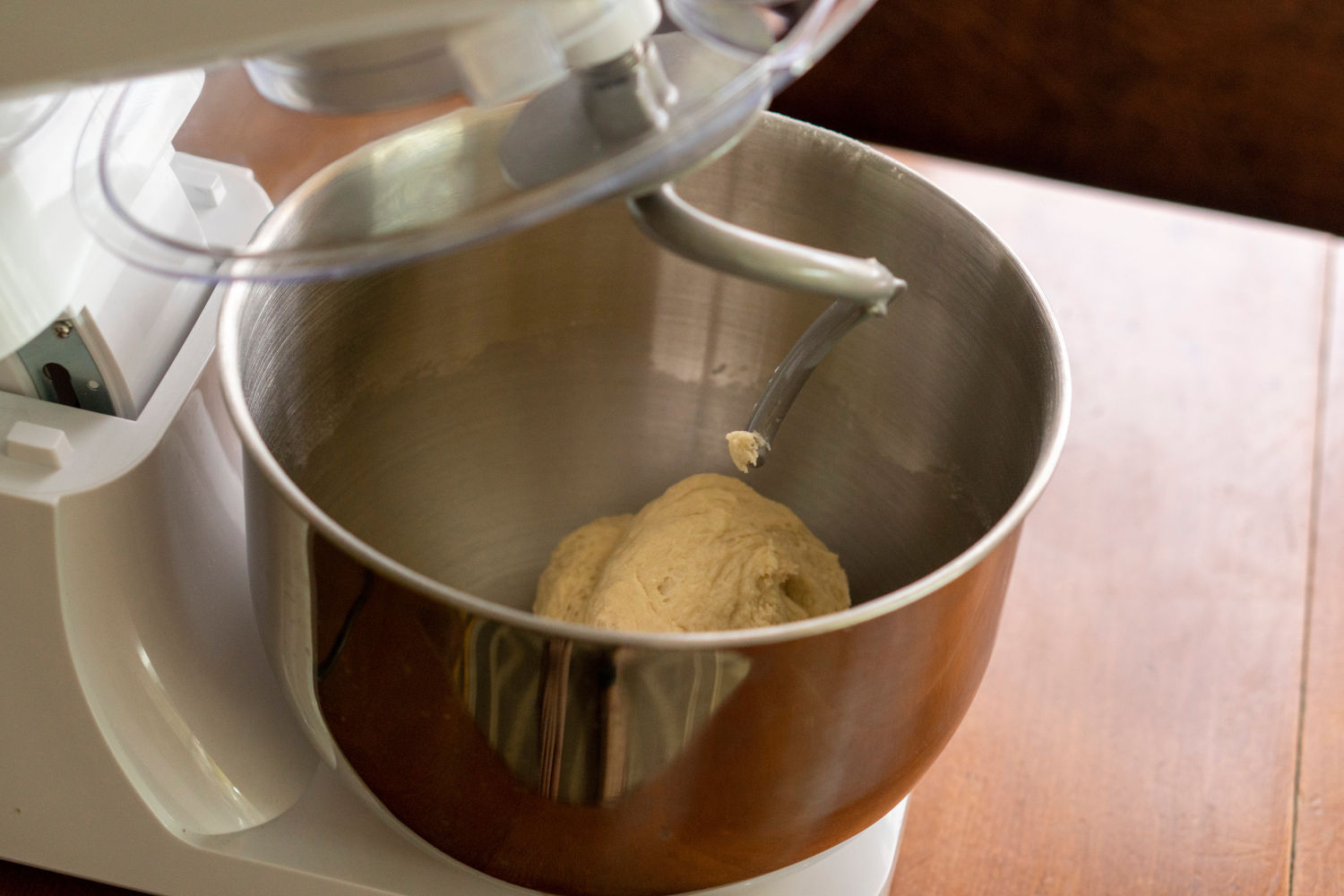
If you've ever wrestled a stiff ball of Neapolitan dough by hand for 15 minutes, you already know the appeal of a stand mixer. Your arms burn, your countertop is a mess, and you're not even sure you developed enough gluten. A stand mixer takes that guesswork - and punishment - out of the equation.
But here's the thing most reviews won't tell you: the mixer that works great for cookie dough or cake batter might actually be terrible for pizza dough. Pizza dough is dense, elastic, and fights back. It punishes weak motors and exposes cheap gears. So before you drop a few hundred dollars based on an Amazon star rating, let's talk about what actually matters when choosing the best stand mixer for pizza dough.
What Makes Pizza Dough So Hard on a Mixer?
Two words: torque and heat.
A typical pizza dough at 58–62% hydration is thick and resistant. When your mixer's dough hook tries to push through that mass, it's working against serious mechanical resistance - way more than a batch of bread dough at 70%+ hydration. That resistance does two things. First, it demands raw low-speed torque from the motor. Second, all that friction generates heat, which can warm your dough past the point where fermentation stays controlled.
If you've ever pulled dough out of a mixer and it felt warm to the touch, that's a problem. Overheated dough means the yeast starts working too fast, and you lose the slow fermentation that builds real flavor. This is especially critical for styles like Neapolitan, where a long cold ferment is the whole point. Pro tip: if you're using a planetary mixer (which includes most home stand mixers), start with ice-chilled water to offset the friction heat. You're aiming for a final dough temperature around 23–26°C (73–79°F). If your dough comes out warmer than that, the mixer is working against you.
If you're planning a multi-day cold ferment, our dough calculator can help you dial in the right yeast amounts so your dough doesn't over-proof in the fridge.
AC Motors vs. DC Motors - And Why Wattage Doesn't Tell the Whole Story
Here's where a lot of people get tripped up when shopping for the best stand mixer for heavy dough: the wattage number on the box measures power consumption, not power output. A 500W mixer doesn't necessarily knead harder than a 300W mixer - it might just be less efficient. What you actually care about is torque, the rotational force the motor delivers to the dough hook.
Most consumer mixers, including the majority of KitchenAids, use AC motors. These deliver their peak power at higher speeds, which means at the low speed you need for kneading, they're already straining. A DC motor delivers maximum torque right from the start - at speed 1 or 2, where you'll spend all your time with pizza dough. DC motors also run cooler, which circles back to the heat problem above.
It's worth noting that not all KitchenAids are equal here. The 7-quart Pro Line and the 8-quart Commercial Series use high-efficiency DC motors, which puts them in a completely different performance category from the AC-powered Artisan and standard Professional models. If you're committed to staying in the KitchenAid ecosystem, those DC models can handle heavy dough work without the thermal shutdowns or smoking that cheaper models are known for. They're also priced accordingly - expect $500–$800+.
The Dough Hook Matters More Than You Think
The standard C-shaped dough hook that ships with most KitchenAids does an okay job, but it tends to push dough around the bowl rather than truly knead it. You'll often find the dough just wrapping around the hook and going for a ride. A spiral hook actually cuts through and folds the dough, developing gluten faster with less heat buildup.
KitchenAid does sell a spiral hook accessory for their bowl-lift models, and it's a worthwhile upgrade if you're sticking with a KitchenAid. But it doesn't solve the motor issue on AC models.
The KitchenAid: Where It Works and Where It Doesn't
Let's be fair - the KitchenAid is a fine mixer for most kitchen tasks, and for occasional pizza making with smaller batches (one or two dough balls), it'll get the job done.
Within the KitchenAid lineup, there's a real hierarchy. Tilt-head models like the Artisan use a hinge mechanism that introduces a structural weak point - under the torque of heavy pizza dough, the head can bounce and vibrate, leading to gear misalignment over time. Bowl-lift models lock the bowl into a three-point cradle with a stationary head, which gives you the rigidity you need for kneading without the machine walking across your counter.
The Achilles' heel across most KitchenAid models is the nylon worm gear - a sacrificial gear designed to strip before the motor burns out. It's essentially a built-in fuse. The most common cause of stripping? Running the mixer above Speed 2 during kneading. This is in the manual, but almost nobody reads the manual. If you're using a KitchenAid for pizza dough, keep it on Speed 2 or below, and periodically check the hook height with the "dime test" (a dime placed on the bowl bottom should just barely be nudged by the hook - if the hook is too high, it's not kneading efficiently; too low and you're grinding metal).
There are metal gear replacement kits available, but installing one voids your warranty and just transfers the stress elsewhere in the drivetrain.
If you make pizza once a month, a KitchenAid Bowl-Lift is perfectly fine. If you're making dough every week for pizza nights and don't want to spring for the DC-powered Pro Line, it's worth considering a KitchenAid mixer alternative that's designed for the job.
The Best KitchenAid Stand Mixer Alternatives
If you've decided the standard KitchenAid isn't cutting it, you're not alone - it's one of the most common upgrades home pizza makers eventually make. Here are the KitchenAid mixer alternatives worth your money, each with a different strength.
Ankarsrum Assistent Original
This Swedish machine takes a completely different approach. Instead of a hook spinning inside a stationary bowl, the bowl rotates while a roller and scraper work the dough against the bowl wall. It mimics the stretching and folding motion of hand kneading more closely than any planetary mixer can.
The Ankarsrum excels with high-hydration doughs - think 65%+ for styles like Detroit, Roman, or sourdough pizza. It handles wet, sticky doughs that would climb the hook of a planetary mixer and make a mess. It's also remarkably gentle; dough temperatures stay low because there's less aggressive mechanical action. Of all the non-spiral mixers, the Ankarsrum consistently produces the lowest final dough temperatures.
The downside? It has a learning curve. The roller and scraper positions need to be adjusted for different dough types, and it can be finicky with very small batches. For stiffer Neapolitan-style doughs below 60% hydration, it works but isn't necessarily the best mixer for heavy dough. One maintenance note: the plastic scraper edge can shed small fragments if it gets misaligned or worn, so inspect it periodically and replace it when it starts to look chewed up. Replacement parts are easy to find.
Expect to pay around $700–$850. If you're searching for the most durable stand mixer you can buy, the Ankarsrum belongs in the conversation - the worm-gear transmission and all-metal base are built to last decades. There are units from the 1960s and 70s still running in Swedish kitchens. It's the kind of purchase you make once.
Bosch Universal Plus
If you regularly make large batches - say, enough dough for 8–12 pizzas at once - the Bosch Universal Plus is hard to beat. Its bottom-drive motor and unique bowl design let it handle up to 14 pounds of dough, which would stall most other consumer mixers. For anyone who needs a heavy duty bread mixer that doubles as a pizza dough workhorse, the Bosch earns its reputation.
The Bosch uses a bottom-mounted motor that drives the tools from below, so the weight of the dough actually helps the kneading process rather than fighting gravity. The open-top bowl makes it easy to add ingredients mid-mix and visually check your gluten development. It handles stiff, low-hydration doughs without breaking a sweat, and the motor runs cool even during extended kneading sessions.
The trade-offs are real, though. Small batches are a problem - you need a minimum of about 3–4 pounds of dough for the tools to grab enough mass to work it properly. And with high-hydration doughs (above 70%), the dough tends to climb the center column of the bowl and can potentially seep into the drive shaft if you're not watching it. Not a dealbreaker, but something to be aware of. It's also not going to win any beauty contests sitting on your counter - this is a utilitarian machine.
Price-wise, the Bosch comes in around $350–$450, which makes it one of the best values on this list.
Kenwood Chef XL Titanium
More popular in Europe than in the US, the Kenwood is a belt-driven planetary mixer that handles heavy doughs better than the KitchenAid largely because of that belt drive. The belt absorbs the shock of dense dough hitting the hook, acting as a buffer between the dough and the motor. Where a direct-drive mixer might stall or strip a gear, the Kenwood's belt just flexes.
Kenwood models typically run higher wattage (750W to 1500W) with larger bowl capacities (up to 7 liters), and they handle sustained heavy mixing without sounding like they're about to die. It's a solid all-rounder that does pizza dough well while still being a capable general kitchen mixer. Around $400–$600 depending on the model and accessories.
A Budget Note: Cuisinart SM-70
If you want a planetary mixer that can handle bread and pizza dough at a lower price point than the KitchenAid Professional, the Cuisinart SM-70 is worth a look. It's a 7-quart bowl-lift design with a motor that handles stiff dough reasonably well. It's not going to match the Bosch or Kenwood for heavy-duty work, but as a budget KitchenAid mixer alternative, it's a capable step up from the Artisan at a more accessible price.
Going Pro: Spiral Mixers
If you've caught the pizza bug badly enough that you're baking multiple times a week or hosting regular pizza parties, a dedicated spiral mixer is a different category entirely. These are the same basic design used in pizzerias around the world.
A spiral mixer has a fixed spiral-shaped hook, a rotating bowl, and a breaker bar - a stationary vertical rod that prevents the dough from just spinning with the bowl. As the bowl turns, the breaker bar cuts the dough mass and forces it into the path of the hook. This three-part system develops gluten efficiently while generating minimal heat. In a good spiral mixer, your dough comes out at roughly the same temperature it went in, and you can achieve a full gluten window in as little as 8–12 minutes.
One important caveat: spiral mixers are one-trick ponies. A Famag can't whisk egg whites, cream butter, or make a meringue. If you need an all-purpose kitchen mixer and a pizza machine, you're buying two appliances. For a lot of people, that trade-off doesn't make sense. But if pizza is your thing and you've already got a hand mixer or food processor for everything else, a spiral mixer is transformative.
Famag IM-5S - Italian-made with a chain-driven transmission (not a belt - chains don't slip or stretch), this is the one you'll see recommended most often in serious home pizza communities. It handles 5 kg of dough, features variable speed control, and offers a tilting head with removable bowl for easy cleanup. The chain drive means virtually zero maintenance. One thing to know: it can struggle with very small batches under 500g of flour, where there isn't enough dough mass for the hook and breaker bar to work properly. Also, make sure the breaker bar mounting screws are tightened firmly - some users have reported the bar tipping under the pressure of very stiff doughs if it's not secured. Around $1,200–$1,500.
Sunmix Sun6 - Often described as overbuilt, the Sunmix is a Taiwanese-made spiral mixer with a cult following. It features a wider, shallower bowl compared to the Famag, which some bakers find more effective for high-hydration doughs since the dough spreads out rather than climbing the hook. It lacks the removable bowl option but is renowned for its silent operation and tank-like construction. Similar price range to the Famag.
Häussler Alpha - A German option that offers both fixed-speed and variable-speed models. The variable-speed version gives you more control over gluten development, which is nice if you work with multiple dough styles.
Ooni Halo Pro - The newest entry in this category, designed specifically for the home pizza market. It's belt-driven rather than chain-driven (like the Famag), and includes digital timers with precision speed control up to 345 RPM. The consumer-friendly design is a nice step up from the industrial look of the Famag or Sunmix. The trade-off is that its lighter build means more vibration and noise compared to those heavier machines - a consequence of prioritizing portability over sheer mass. It typically runs a bit less expensive than the Famag, though availability has been spotty since launch.
Matching Your Mixer to Your Pizza Style
The right mixer depends a lot on what kind of pizza you're making, and that starts with your dough recipe. Different styles call for dramatically different hydration levels, flour types, and fermentation schedules - and each puts different demands on your mixer.
For Neapolitan-style dough (58–62% hydration, long cold ferment), you need the best mixer for heavy dough you can get - something that handles stiff, resistant dough without overheating it. The Bosch, Famag, Sunmix, or a DC-powered KitchenAid Pro Line all shine here.
For Detroit or Roman-style (70%+ hydration, often with olive oil in the dough), the Ankarsrum's gentle stretching action is ideal since you're not trying to build maximum gluten structure - you want extensibility. Spiral mixers with variable speed also work well at lower speeds.
For New York-style (62–66% hydration, moderate gluten development), almost any of these mixers will work well. This is the sweet spot where even a KitchenAid Bowl-Lift does a respectable job.
If you're experimenting with different styles and want to figure out the right flour, hydration, and yeast ratios for each, PizzaLogic's dough calculator lets you plug in your target style and dough ball weight to get precise measurements - including adjusted yeast amounts for different fermentation temperatures and times. It takes the math out of recipe development so you can focus on technique.
The Bottom Line
Don't overthink this. Finding the best stand mixer for pizza dough is really about matching the machine to how often you bake and what styles you make. If you make pizza a few times a month, a KitchenAid Bowl-Lift (ideally with the spiral hook accessory) is a perfectly capable starting point - just keep it at Speed 2 and use cold water. If you make pizza weekly and want a heavy duty bread mixer that'll last without babying it, the Bosch Universal Plus is the best value. If you're deep into the hobby and want a buy-it-for-life machine, the Ankarsrum (for high-hydration styles) or a Famag/Sunmix spiral mixer (for Neapolitan) is where the serious home pizzaiolos end up.
Whatever mixer you go with, the real key is starting with a solid recipe and understanding your dough. Nail down your hydration, fermentation time, and yeast quantities first - then let the mixer do the heavy lifting.