
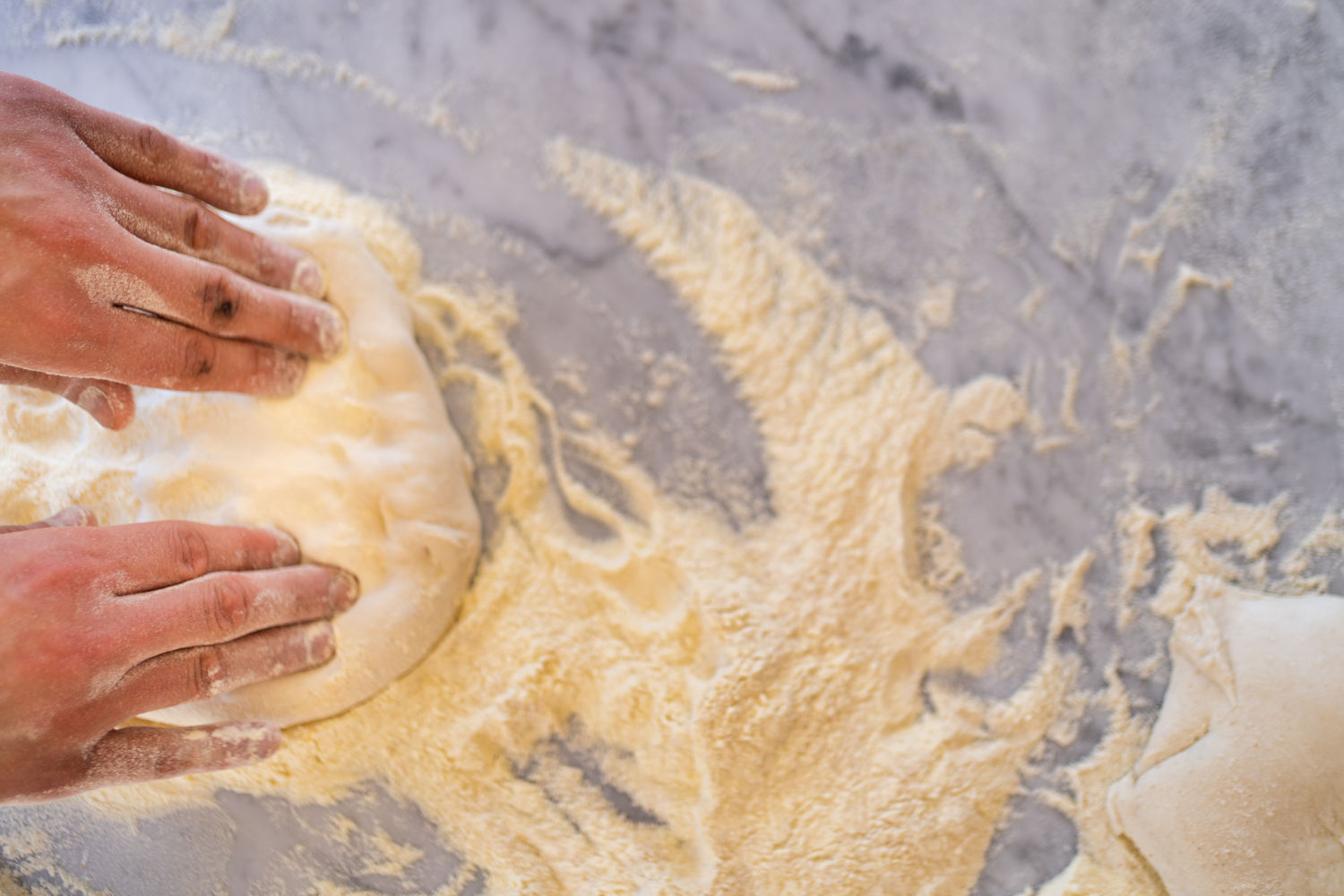
If you've spent any time making pizza at home, you've probably encountered semolina in one of two contexts: as an ingredient in your dough, or as a dusting flour under your dough. Maybe both. And if you've ever had a pizza stick to your peel and dump its toppings onto a 500°F stone while you watched in horror, you already know why this topic matters.
This guide covers everything you need to know about semolina and pizza - from the science of why it works so well as a launch flour, to how it changes the texture and flavor of your crust when you bake it into the dough itself.
What Is Semolina, Exactly?
Semolina is the coarsely ground endosperm of durum wheat (Triticum durum), a high-protein, hard wheat variety that's also the primary grain used in dried pasta production. It's that golden-yellow flour you see in bags at the grocery store, often from brands like Bob's Red Mill or Caputo.
There's an important distinction to understand here. When pizza makers say "semolina," they could mean a couple of different products:
- Coarse semolina - gritty, sand-like texture. This is what most people picture and what works best as a dusting/launch flour.
- Fine semolina (semola rimacinata) - literally "re-milled semolina" in Italian. This has been ground a second time to a finer consistency and is more commonly used as an ingredient in dough or fresh pasta.
- Durum flour - ground even finer than semola rimacinata, essentially the same grain milled to the consistency of regular flour.
The terminology can be confusing because "semolina" and "semola" are used interchangeably (semola is simply the Italian word for semolina). In Naples, Caputo Semola is one of the most widely used products for dusting peels, and it sits in that fine-to-medium range that works well for both dusting and dough applications.
Part 1: Semolina as a Dusting and Launch Flour
This is where semolina really earns its reputation. If you've been using regular all-purpose flour to dust your pizza peel and have struggled with sticking, burning, or a raw-flour taste on the bottom of your crust, semolina is likely the upgrade you need.
Why Regular Flour Causes Problems
Plain all-purpose flour can work as a peel dust. Plenty of great pizzerias use it. But it has a much smaller margin for error, and here's why:
It absorbs water fast. All-purpose flour is finely milled, which means it has a high surface-area-to-volume ratio at the particle level. More surface area means more contact points with the moisture in your dough, and faster absorption. When the flour hydrates, it becomes sticky - essentially turning into a thin paste between your dough and the peel. This is the same principle that makes a roux or papier-mâché work. Great for thickening soup. Terrible for launching pizza.
It creates too much contact. Fine flour particles fill in all the microscopic gaps between the dough and the peel surface, which actually increases friction rather than reducing it. Instead of the dough floating on the flour, it's essentially gripping it.
It burns easily in excess. When you inevitably overcompensate by using more flour (because the dough keeps sticking), that excess flour chars on the pizza stone or oven floor. The result is bitter-tasting black spots on the bottom of your crust and a smoky oven that needs constant sweeping.
It leaves a raw taste. Even when it doesn't burn, a thick coating of white flour on the bottom of a pizza can leave a dusty, starchy, uncooked-flour flavor that most people don't enjoy.
If any of these problems sound familiar, you're not alone. They're the most common complaints from home pizza makers, and they're all related to the same root cause: particle size.
The "Ball Bearing" Effect - Why Semolina Works
This is the key concept, and it comes down to basic physics.
Coarse semolina granules are significantly larger than all-purpose flour particles. When you dust your peel with semolina, those granules sit between the dough and the peel surface like thousands of tiny ball bearings. The dough rests on top of the granules rather than settling into them. This dramatically reduces friction and allows the pizza to slide freely.
The science behind this involves a concept called surface-area-to-volume ratio. As PizzaBlab explains in their excellent breakdown of dusting flours, larger particles have a smaller surface area relative to their volume. Think of a large ice block versus crushed ice - the block melts much more slowly because less of its surface is exposed. The same principle applies to flour particles and water absorption: coarse semolina granules absorb moisture from the dough far more slowly than fine flour particles, so they stay dry and functional for longer.
This gives you a wider window to top your pizza, adjust it on the peel, and launch it into the oven without the dough bonding to the surface beneath it.
Does Semolina Actually Burn Less?
This is a common claim, and it's worth addressing directly. Semolina and regular wheat flour have similar burning (smoking) points - there's no significant difference in heat tolerance between durum wheat and common bread wheat.
So why does semolina seem to burn less in practice? Because you use less of it, and less of it sticks to the dough. The coarser granules don't coat the dough surface as completely as fine flour does, so there's simply less material sitting on the oven floor to char. When people say semolina "doesn't burn," what they're really observing is that less semolina ends up in the oven in the first place. It's a practical advantage, even if the underlying chemistry isn't different.
What the Pros Use
The late Tom Lehmann, longtime director of bakery assistance for the American Institute of Baking and a legendary pizza industry consultant, was a well-known advocate for thoughtful peel dust selection. Writing for PMQ Pizza Magazine, he described semolina as a good compromise between regular flour and cornmeal - coarser than flour so it doesn't absorb moisture as quickly, but without the heavy grit that cornmeal can leave behind.
His personal go-to was a blend of equal parts cornmeal, semolina, and regular pizza flour. As he put it, it gave him the confidence to peel dressed dough into the oven knowing it would release every time.
America's Test Kitchen has also endorsed semolina as their recommended peel dust, noting that it doesn't char as readily as all-purpose flour and that almost any amount will provide reliable release without leaving too much gritty residue.
King Arthur Baking also specifically recommends semolina over cornmeal for dusting peels, explaining that flour is mostly starch that becomes sticky when wet, while semolina and cornmeal are composed of larger milled grain pieces that resist water absorption and keep dough floating on the peel.
Semolina vs. Cornmeal vs. Rice Flour: A Quick Comparison
You'll hear people recommend all three of these as alternatives to plain flour. Here's how they stack up:
Semolina (durum wheat) Best all-around option for most pizza styles. Coarse enough to provide the ball-bearing effect, fine enough to not leave heavy grit. Adds a subtle nutty flavor that complements pizza dough well. Widely used in Neapolitan pizzerias. The main downsides are slightly higher cost and availability, though a single bag lasts a very long time.
Cornmeal Very effective for preventing sticking - arguably the most forgiving peel dust available. However, it can burn at the high temperatures used in pizza ovens (particularly wood-fired ovens running above 700°F), leaving bitter black spots and an unpleasant gritty texture. It also has a distinct "corny" flavor that's desirable in some styles (like New York pan pizza) but out of place in others. Excess cornmeal that falls off the pizza needs to be swept out of the oven regularly.
Rice flour A sleeper pick that's gaining popularity. Rice flour has extremely low water absorption because it's gluten-free and has minimal damaged starch. This means it stays dry even longer than semolina. It's excellent for dusting a pizza peel. The drawback is that its fine particle size means it coats the dough very completely, which can leave a visible white film on the baked crust. It's best used as a peel dust (not bench flour) or blended 50/50 with semolina or regular flour.
Blends Many experienced pizza makers - including Tom Lehmann - swear by custom blends. Popular combinations include 50/50 semolina and all-purpose flour, or a three-way blend of semolina, cornmeal, and flour. Blending lets you dial in the exact balance of non-stick performance, clean flavor, and minimal residue that works for your particular dough and oven setup.
Best Practices for Using Semolina on Your Peel
Based on the collective wisdom of professional pizzaiolos and baking experts:
-
Stretch your dough in semolina. Rather than just dusting the peel, open and stretch your dough ball on a surface dusted with semolina. This ensures all the sticky spots on the underside get coated before the dough ever touches the peel.
-
Shake off the excess. Once the dough is stretched, give it a shake to remove loose semolina before transferring to the peel. This gives you enough coverage to prevent sticking without dumping excess into the oven.
-
Use a light, even layer on the peel. A thin coating spread evenly across the peel surface is all you need. If you can see bare wood through the dusting, that's fine. You don't need a thick layer.
-
Do the shake test. After placing your dough on the peel and before adding toppings, give the peel a quick back-and-forth jiggle. The dough should slide freely. If it doesn't, gently lift the edge and toss a bit more semolina underneath.
-
Work quickly. Regardless of what you're using as a dust, time is the enemy. The longer dough sits on a peel, the more moisture transfers to the surface below. Top your pizza and get it into the oven without unnecessary delay.
-
Use a wooden peel for launching. Wood absorbs some moisture from the dough and has a slightly rough grain that holds dusting flour better than metal. Save the metal peel for turning and retrieving.
-
Contain the mess. Fair warning: coarse semolina is basically kitchen sand. It will end up on your floor. A bench scraper makes cleanup much easier, and it's worth designating one area of your counter as your launch station rather than dusting semolina across the entire kitchen.
PizzaLogic Tip: If you're dialing in dough hydration with the PizzaLogic dough calculator, keep in mind that higher-hydration doughs (above 65%) are naturally stickier and more likely to bond to the peel. Semolina is especially helpful for these wetter doughs because of its slow moisture absorption. If you're running a 70%+ hydration dough, semolina should be your default launch flour.
Part 2: Semolina as a Pizza Dough Ingredient
Now let's talk about the other side of the equation - actually incorporating semolina (or durum flour) into your dough recipe. This is a different use case with different goals, and it meaningfully changes both the behavior of your dough and the character of your finished crust.
What Semolina Does to Your Dough
Durum wheat has some distinct properties compared to common bread wheat, and these show up clearly when you add it to pizza dough:
Higher protein content, but different gluten behavior. Durum wheat typically has 12–16% protein, which is comparable to or higher than bread flour. But more protein doesn't mean better pizza dough - it depends on what kind of strength that protein provides. Gluten has two components that matter here: elasticity (the snap-back force that makes dough spring back to its original shape) and extensibility (the ability to stretch without tearing). Bread flour gives you a good balance of both. Durum wheat is heavy on elasticity but short on extensibility - the dough has plenty of snap but less willingness to stretch. In practice, this means a semolina-heavy dough may fight back more when you try to open it, shrinking back toward the center instead of holding the shape you gave it. A longer rest after balling and before stretching helps relax the gluten and makes it more cooperative.
Chewier, denser crumb. This is probably the most noticeable effect. Semolina dough produces a crust with more "tooth" - a satisfying chewiness that's distinctly different from the light, airy chew of a 00-flour Neapolitan crust. The crumb tends to be tighter and more compact.
Nutty, earthy flavor. Durum wheat adds a warm, slightly sweet, nutty flavor that many people find more interesting than plain bread-flour dough. The intensity scales with the percentage of semolina used.
Golden color. Durum wheat has a natural yellow pigment that gives the dough and baked crust a warmer, more golden appearance.
Crispier bottom. When used in moderate amounts, semolina can contribute to a crispier bottom crust, especially on thin-crust pizzas. On thicker pizzas, the effect is less pronounced.
Potential Downsides
PizzaBlab's analysis of durum wheat in pizza dough identifies several technical considerations:
Gluten interference from coarse particles. If you're using coarse semolina in the dough (as opposed to fine semola rimacinata or durum flour), the sharp edges of the larger granules can physically cut developing gluten strands during kneading. This weakens the dough structure.
Slower hydration. Coarse semolina takes longer to absorb water, so the dough may feel gritty or inconsistent if you don't give it time. An autolyse (resting the flour and water together before adding salt and yeast) helps the granules fully hydrate before kneading begins.
Tougher crust as it cools. Durum gluten sets up firmer than bread wheat gluten. A semolina pizza is best eaten hot - as it cools, the crust can become noticeably tougher and chewier, which isn't always desirable.
Grittiness. If you use a high percentage of coarse semolina, the finished crust can have a slightly gritty mouthfeel that some eaters find off-putting.
For these reasons, most experts recommend using fine semolina (semola rimacinata) or durum flour rather than coarse semolina when adding it to your dough.
How Much Semolina to Use
There's no single right answer, but here are some common ratios used by home bakers and recipe developers:
10–20% semolina, 80–90% bread or AP flour - A subtle addition. You'll get a hint of color and flavor without dramatically changing the dough's handling characteristics. This is a good starting point if you're experimenting for the first time. Many experienced home bakers on The Fresh Loaf report excellent results with about 20% semolina and 80% strong bread flour.
30–40% semolina - A middle ground that gives you noticeable nutty flavor, golden color, and increased chewiness while still maintaining good workability and rise.
50/50 semolina and bread flour - This is the ratio that many dedicated semolina pizza recipes use. It produces a distinctly different crust - crispy, chewy, and flavorful, but denser and less airy than an all-bread-flour dough. Multiple recipe developers have landed on this ratio independently as their sweet spot.
100% semolina - Possible but not recommended for most pizza styles. The dough will be very stiff, difficult to stretch, and the crust will be extremely dense and chewy. Some flatbread and cracker-style applications use high semolina percentages, but for a pizza you want to rise and develop any kind of open crumb, you need regular wheat flour in the mix.
Tips for Working with Semolina Dough
- Use fine semolina or semola rimacinata for the best results in dough. Save the coarse stuff for dusting.
- Consider an autolyse if using a significant percentage of semolina. Mix your flour and water and let it rest for 20–30 minutes before adding salt and yeast. This gives the semolina time to hydrate.
- You may need slightly more water. Semolina absorbs water differently than AP flour. Start with your usual hydration and adjust up if the dough feels too dry or stiff.
- Knead a bit longer. Durum gluten is more resistant and takes more work to develop.
- Expect a stiffer dough. This is normal. It won't feel as soft and pillowy as an all-AP dough, but it should still be smooth and workable.
PizzaLogic Tip: When using the PizzaLogic dough calculator for a semolina blend, enter your total flour weight as usual. You might want to bump your hydration up by 2–3% from your usual level to account for semolina's different absorption characteristics. Start there and adjust based on how the dough feels.
Putting It All Together
Here's the bottom line: semolina is one of the most useful ingredients a home pizza maker can keep on hand, and it serves two completely different purposes depending on how you use it.
For dusting and launching: Coarse semolina is hard to beat. It creates the ball-bearing effect that prevents sticking, absorbs moisture slowly so you have time to work, and doesn't burn as readily as plain flour. If you've been struggling with sticking, this is the single most impactful change you can make.
For dough: Fine semolina or semola rimacinata added at 20–50% of your total flour produces a crust with more flavor, color, chew, and crunch. It's a different style of pizza crust - heartier and more substantial - that's worth trying, especially for thin-crust pizzas.
And of course, you can do both at once. Make a semolina-blend dough, then use coarse semolina as your bench and launch flour. That way you get the flavor and texture benefits in the crust and a clean, reliable launch every time.
One storage note: Durum wheat has a slightly higher fat content than highly refined all-purpose flour, which means semolina can go rancid over time. If you're only making pizza every couple of weeks, store your semolina in a sealed container in a cool, dark place - or even the freezer. A bag lasts a long time, but only if it doesn't go stale on you first.
Sources and Further Reading
- PizzaBlab - "Which Is the Best Pizza Dusting Flour?" - Excellent deep-dive into the science of particle size, water absorption, and dusting flour options.
- PizzaBlab - "Using Durum Wheat in Pizza" - Technical analysis of how durum flour and semolina affect dough behavior and crust texture.
- PMQ Pizza Magazine - "Here's How to Prevent Pizzas from Sticking to the Peel" - Tom Lehmann's expert advice on peel dust selection.
- King Arthur Baking - "The Stress-Free Way to Load Your Pizza in the Oven" - Practical guide to peel technique and flour selection.
- America's Test Kitchen - "A Better Dust for Your Peel: Semolina" - ATK's recommendation and testing notes on semolina as a peel dust.