
I built the PizzaLogic pizza dough calculator because I wanted a better way to calculate dough ingredients. But before you need a calculator, you need to know what you're doing and why - and that's what this guide is for.
The short version: Get a $15 kitchen scale. Weigh your ingredients instead of using cups. Use the simple same-day recipe below. Preheat your oven way longer than you think. When you're ready for a real upgrade, try cold-fermenting your dough overnight - it'll change everything. All of the other details and upgrades can be learned over time.
Here's the thing about homemade pizza: your very first attempt will beat any frozen pizza. That's a low bar, sure. But within a few tries, you'll be giving your local delivery spot real competition. And once you actually get comfortable with dough? You'll wonder why you ever paid $25 for a mediocre pie.
This guide takes you from zero to confidently making pizza at home - and gives you a clear path forward when you're ready to level up. I'll cover a dead-simple beginner recipe, the "why" behind each ingredient, the tools that actually matter, and the techniques that separate "pretty good" from "wait, you made this?"
Let's get into it.
What You Actually Need to Get Started
Here's the good news: the barrier to entry is almost nothing. Oven, baking sheet, grocery store. You can make pizza tonight. That said, a few inexpensive items will make your life dramatically easier - and your pizza dramatically better.
The Essentials (You Probably Already Own These)
A standard kitchen oven. That's it. A conventional home oven set to its highest temperature (usually 500–550°F) makes perfectly good pizza. Everything else is an upgrade, not a requirement.
A baking sheet or cast iron skillet. If you don't have a pizza stone or steel yet, a preheated inverted baking sheet or a cast iron skillet works surprisingly well. The key is getting that surface screaming hot before the pizza hits it.
A mixing bowl and your hands. You don't need a stand mixer to make pizza dough. Hand kneading works beautifully, especially for small batches. It also teaches you what properly developed dough actually feels like - something a machine can't do for you. Basic pantry ingredients: flour, water, salt, yeast, and optionally a little olive oil and sugar. That's genuinely all you need for the dough. I'll talk about which specific types below.
One Inexpensive Upgrade That Changes Everything: A Kitchen Scale
If you take one piece of advice from this entire guide, let it be this: buy a kitchen scale. A decent digital kitchen scale costs $10–15, and it is the single biggest quality-of-life improvement you can make in your pizza (and all your baking, honestly).
Why? Because measuring flour by volume - scooping with cups - is wildly inconsistent. Depending on how you scoop, how packed the bag is, and even the humidity in your kitchen, a "cup of flour" can vary by 20–30% in actual weight. That's not a rounding error. That's the difference between a perfect dough and a tough hockey puck.
Forget cups. Professionals weigh everything.
They also express recipes using something called baker's percentages, where every ingredient is described as a percentage of the flour weight. If a recipe says "65% hydration," that means 65 grams of water for every 100 grams of flour. Got 500g of flour? That's 325g of water. It scales perfectly, it's reproducible every time, and - here's the part nobody tells you - it's actually easier than cups. No leveling. No sifting. No wondering if you packed the cup too tightly. Put your bowl on the scale, hit tare, pour until the number matches. Done.
A Simple Recipe to Start With
Before we dive into the deeper science, let's get you making pizza. This recipe is deliberately simple - the kind of thing you can pull off on a weeknight with stuff from any grocery store. It uses all-purpose flour, requires no overnight fermentation, and produces a genuinely tasty pizza in about 6 hours from start to finish.
Same-Day Pizza Dough (Makes 3 medium 12" pizzas)
| Ingredient | Grams | Baker's % |
|---|---|---|
| All-purpose flour | 500g | 100% |
| Water (room temp) | 310g | 62% |
| Fine sea salt | 12.5g | 2.5% |
| Instant dry yeast | 1.5g (~½ tsp) | 0.3% |
| Olive oil | 10g (~2 tsp) | 2% |
| Sugar | 5g (~1 tsp) | 1% |
Want to customize this for more or fewer pizzas, a different size, or a different style? The PizzaLogic Same-Day Dough Calculator will generate exact measurements for you - including adjusted yeast amounts based on your kitchen temperature and timeline.
Instructions
1. Mix the dough. Add the water to a large mixing bowl. Sprinkle in the yeast and sugar, give it a brief stir, then add the flour and salt. Mix with a fork or your hand until you have a shaggy, rough dough - no dry flour remaining, but don't worry about it being smooth.
2. Knead. Turn the dough out onto a clean, unfloured surface (wet hands work better than extra flour for sticky dough - see why pizza dough gets sticky and how to handle it if you run into trouble). Knead for 8–10 minutes until the dough becomes smooth, elastic, and slightly tacky but not sticky. Add the olive oil about halfway through and work it in.
3. Bulk ferment. Shape the dough into a ball, place it in a lightly oiled bowl, cover with plastic wrap or a damp towel, and let it rise at room temperature for 4–5 hours. It should roughly double in size.
4. Divide and ball. Turn the dough out onto a lightly floured surface and divide into 3 equal pieces (a scale helps here too - shoot for about 275g each for a 12-inch pizza). Be gentle here. This isn't sandwich bread - you don't want to "punch down" the dough and crush all those gas bubbles the yeast spent hours creating. Handle it like it's something you care about. Shape each piece into a tight ball by tucking the edges under and rotating it against the counter with cupped hands. Place on a floured tray, cover loosely, and let rest for 30–60 minutes.
5. Shape. Working with one ball at a time, press the dough flat with your fingers, leaving about a half-inch border for the crust. Then pick it up and use your knuckles and gravity to gently stretch it into a round. Don't use a rolling pin - it crushes the air bubbles that give pizza its open, airy texture. If the dough keeps springing back, let it rest for 5–10 minutes and try again.
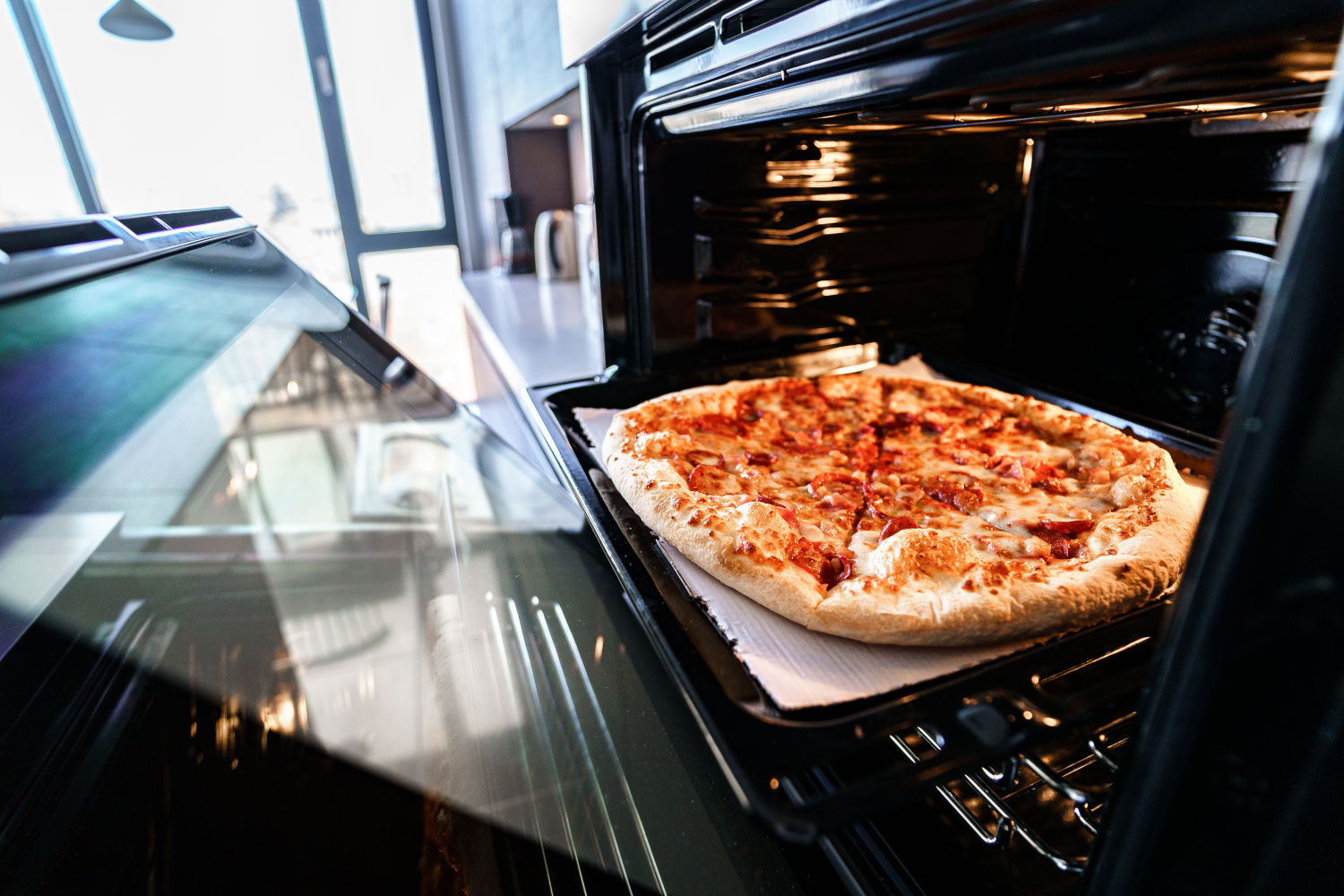
6. Top and bake. Preheat your oven to its highest setting (usually 500–550°F) for at least 30 minutes - an hour is even better if you have a stone or steel. Less is more with toppings; overloading makes pizza soggy. A thin layer of sauce, a moderate amount of cheese, and a few toppings is the sweet spot. Bake until the crust is golden-brown and the cheese is bubbly with spots of char, about 8–12 minutes on a baking sheet, less on a preheated stone or steel.
That's it. That's genuinely all it takes to make pizza at home that's better than most delivery.
Understanding Your Ingredients (It's Simpler Than You Think)
Pizza dough is just four essential ingredients - flour, water, salt, and yeast. But each one plays a specific role, and understanding what they do will help you troubleshoot problems and eventually start tweaking recipes to your taste.
Flour
Flour is the backbone of your dough. The protein content of your flour determines how much gluten it can develop, which in turn affects whether your crust is tender or chewy, crispy or pillowy.
For your first few pizzas, all-purpose flour is totally fine - it's forgiving, widely available, and makes a perfectly tasty crust. As you progress, you might start experimenting with bread flour (higher protein, more chew), 00 flour (the fine Italian milled flour used for Neapolitan pizza), or specific brands. The complete flour guide breaks down which flour works best for every pizza style and oven type - but don't let that stop you from starting with whatever's in your pantry right now.
Water
Water seems like the least interesting ingredient, but the amount of water relative to flour - the hydration - is arguably the single biggest lever you have over your pizza's texture. Lower hydration (55–60%) gives you a stiffer, easier-to-handle dough that produces a crispier, more cracker-like crust. Higher hydration (65–75%) produces a softer, more open crumb with bigger bubbles, but the dough is stickier and harder to work with.
The recipe above sits at 62%, which is a great starting point - workable for beginners, with enough moisture to develop good flavor and structure. When you're ready to push the envelope, the guide to pizza dough hydration covers everything from technique adjustments to flour absorption differences.
Salt
Salt does three things: it flavors the dough (unsalted pizza dough is genuinely unpleasant), it tightens the gluten network for better structure, and it controls fermentation speed by slowing yeast activity. Most pizza doughs use 2–3% salt by baker's percentage. The recipe above uses 2.5%, which is a solid middle ground.
Yeast
Yeast is the living organism that makes your dough rise by consuming sugars and producing CO₂ gas. The type, amount, and treatment of yeast all matter.
For beginners, instant dry yeast (sometimes labeled "rapid rise" or "bread machine yeast") is the easiest to work with - you can mix it directly into your flour without any blooming or activation step. Active dry yeast works too but should be dissolved in warm water first to wake it up.
The amount of yeast you use directly interacts with how long and at what temperature your dough ferments - which brings us to the most important concept in pizza dough that most beginners overlook.
There's a deep dive on yeast types, brands, and amounts on the blog if you want the full picture.
Time and Temperature: The "Secret Ingredients" in Great Pizza
This is the concept that changed everything for me, and it's the one most beginners skip right past: time and temperature aren't just logistics - they're ingredients. They transform the flavor, texture, and digestibility of your dough every bit as much as flour and water do.
Same recipe. Same technique. Ferment it for 4 hours on the counter versus 48 hours in the fridge, and you get two completely different pizzas. Not subtly different. Obviously different.
What Happens During Fermentation
When dough ferments, two things are happening simultaneously. First, the yeast is eating sugars and producing CO₂, which makes the dough rise and creates the bubble structure in your crust. Second - and this is the part that matters most for flavor - enzymes in the flour are slowly breaking down starches into simpler sugars and proteins into amino acids. These byproducts are what give well-fermented dough its complex, slightly tangy, deeply savory flavor that you simply cannot shortcut.
Room Temperature vs. Cold Fermentation
A same-day dough that rises at room temperature in 4–6 hours will taste good. But if you plan ahead and put that same dough in the fridge, something magical happens. The cold slows the yeast down to a crawl while the enzymes keep working, which means you get all that flavor development without the dough over-proofing and collapsing.
Cold fermentation is the single biggest upgrade you can make to your homemade pizza. A 24-hour cold ferment produces noticeably better flavor. At 48–72 hours, you're in genuinely special territory - complex, nuanced crust with a subtle tanginess and incredible depth that no amount of fancy flour or expensive gear can replicate.
The trade-off is simply planning ahead. Instead of mixing dough the day you want pizza, you mix it the day before (or two days before). The actual hands-on time is identical. I wrote an entire guide on how to cold ferment pizza dough and why you should try it that walks through timing, yeast adjustments, and troubleshooting.
The PizzaLogic calculator handles all of this for you automatically - tell it when you want to bake, and it adjusts yeast amounts and gives you a complete fermentation schedule with step-by-step timing.
The Yeast-Time-Temperature Relationship
Here's the practical takeaway: more time at colder temperatures = less yeast + better flavor. This is why the same-day recipe above uses more yeast than a multi-day recipe would. If you were doing a 72-hour cold ferment, you might use only a tiny pinch of yeast - sometimes as little as 0.05% - because the dough has days to slowly rise.
Getting this balance right is one of the trickiest parts of pizza-making, and it's exactly why tools like the PizzaLogic calculator exist. It calibrates yeast amounts for you based on your chosen fermentation time and temperature, so you never end up with under- or over-proofed dough.
Choosing a Pizza Style
One of the best things about making pizza at home is that you're not locked into one style. Once you understand the basics of dough, you can explore a whole world of pizza styles, each with its own character.
Neapolitan
The original. Soft, slightly charred, with a puffy, leopard-spotted cornicione (the raised rim). Neapolitan pizza uses a very simple dough - flour, water, salt, yeast - and traditionally bakes at extremely high temperatures (800°F+) for just 60–90 seconds. At home, you can get a good approximation with a pizza steel and the broiler trick (more on that later) or an outdoor pizza oven.
New York Style
Foldable, chewy, with a crispy undercarriage and a slight chew from the bread flour and the touch of olive oil and sugar in the dough. New York style is probably the most forgiving style for beginners - the dough is sturdy, the hydration is moderate, and it bakes well in a standard home oven.
Detroit Style
Thick, airy, and baked in a well-oiled pan with cheese pushed all the way to the edges so it caramelizes against the steel. Detroit style is incredibly beginner-friendly because the pan does most of the shaping work for you - no launching or stretching required. It requires dedicated rectangular steel pans for authentic results (more on equipment below).
Sicilian / Grandma Style
Thick, focaccia-like, with a pillowy crumb and a crispy olive-oil-fried bottom. Like Detroit, it's a pan pizza that's very forgiving for beginners. The dough typically gets a longer ferment and higher hydration for that airy, open texture.
Bar / Tavern Style
Thin, crispy, party-cut into squares. Think Midwest bar pizza - the kind you eat without thinking about it until the whole pie is gone. A lower hydration dough rolled thin (yes, rolling is fine here) with a buttery, cracker-like crunch.
Chicago Deep Dish
A thick, buttery crust pressed into a deep round pan, layered with cheese on the bottom, then toppings, then sauce on top. It's almost more of a savory pie than a traditional pizza, and it's a fun project that impresses at dinner parties.
Essential Tools and Equipment
I've covered the true essentials - oven, mixing bowl, kitchen scale. But as you get deeper into pizza-making, a few more tools make a real difference. Here's what's worth buying, roughly in order of impact.
High Impact (Buy These Early)
A kitchen scale ($10–15). Yeah, I've said this already. I'll keep saying it. This is the best money you'll spend on pizza.
A bench scraper ($5–8). An inexpensive flat metal or plastic blade that makes dividing dough, cleaning your work surface, and handling sticky dough vastly easier. Once you have one, you'll wonder how you ever baked without it.
Dough proofing containers ($15–25). Clear, straight-sided containers with lids (like Cambro rounds or even simple deli containers) make it easy to track your dough's rise, keep it from drying out, and portion individual dough balls. Much better than the "oiled bowl with plastic wrap" situation.
An instant-read thermometer ($15–20). Useful for checking water temperature (important for yeast viability) and your oven's actual temperature, which is often wildly different from what the dial says.
Game Changers (When You're Ready to Level Up)
A pizza steel ($60–100). This is the single best upgrade you can make to your home oven setup. It's not just hotter than a stone - it transfers heat faster. Steel conducts thermal energy about 18 times more efficiently than ceramic, which means the bottom of your pizza gets an intense blast of heat the instant it makes contact. That rapid energy transfer is what creates the oven spring (the dough puffing up dramatically in the first seconds of baking) and the crispy, charred bottom you're chasing. A stone gets you partway there. A steel gets you there. Preheat it on your highest oven setting for a full hour, then use the broiler trick (switch to broil right before baking) to blast the top with radiant heat. There's a complete guide to pizza steels on the blog covering thickness, placement, seasoning, and baking technique.
A pizza peel ($15–35). A flat paddle for sliding pizzas onto and off of a hot stone or steel. If you're using a stone or steel, a peel is essentially mandatory.
When I first upgraded from a standard baking sheet to a pizza stone, I was so excited about the crispier crust that I completely underestimated the "launching" part. My first attempt? The dough stuck to the peel, folded in half on impact, and became an unplanned calzone (sorry Laura!). My second attempt? Same thing. I salvaged both as calzones and they tasted fine, but let me save you the heartbreak: the launch is where beginners fail, and it's almost always a sticking problem.
Here's what I learned the hard way. A wooden or composite peel works best for launching because the raw dough slides off more easily than on metal. Dust it generously with semolina (or a mix of semolina and flour - semolina alone works better than flour alone because the coarse grains act like tiny ball bearings). Build your pizza on the peel, and then - this is the critical part - give the peel a little shake before you add sauce. Just a gentle back-and-forth jiggle to confirm the dough is sliding freely. If it's not moving, lift the edge and throw more semolina underneath. Do the shake test again after you've sauced and topped it, right before you open the oven. If it slides, you're good. If it doesn't, fix it now before you're standing in front of a 550°F oven with a stuck pizza and a sinking feeling.
Once you've launched, a separate perforated metal peel is ideal for retrieving and turning pizzas mid-bake - the thin edge slides under the crust easily, and the perforations let excess flour fall through.
A pizza stone ($25–50). If a steel is outside your budget, a pizza stone is the next best thing. It's a thick slab of ceramic or cordierite that retains heat and mimics the floor of a brick oven. It won't conduct heat quite as aggressively as steel, but it's still a massive improvement over a bare oven rack or baking sheet. Just be careful - stones can crack from thermal shock, so always preheat them in the oven rather than putting a cold stone into a hot oven.
Detroit and Grandma-style pans ($20–35). If you're interested in Detroit-style pizza, you need the right pans - heavy-gauge steel or blue steel rectangular pans. Lloyd Pans is the gold standard, and their 10×14" Detroit pan is the classic size (they also make a smaller 8×10" that's great for solo pizza nights). The heavy steel creates that signature caramelized cheese edge that makes Detroit pizza so irresistible. For Sicilian and Grandma-style pies, their 12×12" square pan is the one to get - perfect for thick, focaccia-style pizza with a crispy olive-oil-fried bottom.
A precision scale ($20–30). Your $15 kitchen scale handles flour and water just fine, but yeast measurements for long fermentation recipes can be tiny - sometimes a fraction of a gram. A precision scale that reads to 0.01g lets you nail those measurements instead of guessing.
Nice to Have
An outdoor pizza oven ($300–600+). Brands like Ooni and Gozney make portable gas or wood-fired ovens that reach 800–950°F, which is the range you need for authentic Neapolitan pizza in 60–90 seconds. These are amazing but absolutely not necessary - plenty of award-winning home pizza is made in standard kitchen ovens. Think of these as a destination, not a starting point.
An infrared thermometer ($15–25). A point-and-shoot thermometer that lets you check the actual surface temperature of your stone, steel, or oven floor. Very useful for dialing in bake times and knowing when your setup is truly ready.
A dough docker ($8–12). A spiked roller that pokes tiny holes in thin-crust doughs (bar/tavern style, especially) to prevent large bubbles from forming during baking. Not essential for most styles, but important for cracker-thin crusts.
Toppings, Sauce, and Assembly
The dough is the foundation, but let's talk about what goes on top.
Sauce
For most pizza styles, a simple uncooked sauce is all you need - and it's better than a cooked sauce for pizza because the oven does the cooking for you. Crush a can of quality whole San Marzano tomatoes by hand (or blend briefly for a smoother consistency), add a pinch of salt, and that's it. You can add dried oregano, a clove of garlic, or a drizzle of olive oil, but great canned tomatoes really don't need much help.
Spread the sauce thinly and evenly. One of the most common beginner mistakes is using too much sauce, which makes the center of the pizza soggy. About 2–3 tablespoons per 12-inch pizza is a good starting point.
Cheese
Low-moisture mozzarella is the workhorse cheese for most American pizza styles - New York, Detroit, bar style, you name it. It melts beautifully, browns well, and doesn't release too much moisture. Buy it in blocks and shred or cube it yourself. The pre-shredded bags are coated in potato starch and cellulose to prevent clumping, which also prevents it from melting properly. You'll notice the difference immediately - block mozzarella gets that gorgeous, stretchy, slightly browned melt that the bagged stuff just can't match. It takes 30 seconds with a box grater. Do it.
Fresh mozzarella (the soft stuff packed in water) is traditional for Neapolitan pizza, but it releases a lot of liquid. Tear it into pieces, let it drain on paper towels for 15–20 minutes before topping, and apply it sparingly.
For Detroit style, the classic move is cubed brick cheese (or a mix of brick and low-moisture mozzarella) pushed all the way to the edges of the pan so it fries against the steel.
The Golden Rule of Toppings
Less is more. It's tempting to pile everything on, but overloaded pizza doesn't bake properly - the crust gets soggy, the toppings steam instead of roast, and the whole thing becomes a floppy mess. Two or three toppings, applied with restraint, will always produce a better pizza than the kitchen-sink approach.
A few practical tips: pre-cook watery vegetables (mushrooms, bell peppers, spinach) before topping. Add delicate ingredients like fresh basil or arugula after baking. For cup-and-char pepperoni (the kind that curls into little crispy cups with pools of rendered fat), look for natural-casing pepperoni and make sure your oven is good and hot.
Baking: Getting the Most Out of Your Home Oven
Your oven is probably the biggest limiting factor in home pizza, but there are tricks to maximize what you've got.
Preheat Longer Than You Think
Most people preheat their oven for 10–15 minutes and call it good. For pizza, that's not enough. Your oven may reach its target air temperature quickly, but the walls, rack, and especially your baking surface (stone or steel) need much longer to fully saturate with heat. Preheat for at least 45 minutes to an hour at your oven's highest temperature. This is not optional if you want a crispy bottom.
Rack Position Matters
For most home oven pizza setups, place your stone or steel on the upper-middle rack - about 6–8 inches from the broiler element. This gives you a good balance between bottom heat (from the preheated surface) and top heat (from proximity to the broiler).
The Broiler Trick
This is the home pizza game-changer. Once your stone or steel is thoroughly preheated, switch your oven from bake to broil just before you launch the pizza. The overhead broiler element cranks out intense radiant heat from above, which blisters and chars the crust in a way that mimics a much hotter oven. Combined with the stored heat in a steel, you can bake a pizza in 4–6 minutes with legitimate char and leopard-spotting.
Different Surfaces, Different Approaches
If you're using a baking sheet (inverted, preheated): Expect a 10–12 minute bake time. The crust won't get as crispy as a stone or steel, but it'll still be good. Brush the sheet with a little oil for extra crispness.
If you're using a cast iron skillet: Great for pan-style pizzas. Build your pizza directly in the oiled, cold skillet, then transfer to a preheated oven. The heavy iron gives excellent heat transfer and a beautifully crispy bottom.
If you're using a pizza screen: A perforated metal disc that you build the pizza on and place directly on the oven rack. Common in pizzerias for high-volume output. Produces a very crispy bottom.
Leveling Up: Where to Go From Here
Once you've nailed the basics and made a few batches of same-day dough, here's the path toward making truly exceptional pizza at home.
Try a Cold Ferment
This is step one. Take your same-day recipe, reduce the yeast by about two-thirds, and put the dough in the fridge for 24–48 hours instead of letting it rise at room temperature. The flavor difference is unmistakable. The cold fermentation guide has the full walkthrough, or just use the PizzaLogic calculator and select a "Tomorrow Dinner" or "In 2 Days" timeline - it adjusts everything for you.
Upgrade Your Flour
Once you've gotten comfortable with all-purpose flour, try bread flour for New York style (more chew and structure) or Tipo 00 flour for Neapolitan (finer grind, more extensible). The flour guide will help you match flour to style and oven type.
Explore Preferments
A preferment is a portion of the dough's flour and water mixed with a small amount of yeast and fermented separately for 8–24 hours before being incorporated into the final dough. It's a technique borrowed from artisan bread baking, and it adds layers of flavor complexity that you can't achieve with a straight dough.
The two most common preferments for pizza are poolish (equal parts flour and water, very wet, produces a light, open crumb) and biga (stiffer, drier, produces more complex flavor and a chewier texture). There's a guide to preferments for pizza dough on the PizzaLogic blog.
Push Your Hydration
As you get more comfortable handling dough, try bumping your hydration up by 2–3% at a time. Higher hydration doughs are stickier and harder to shape, but they produce airier, more open crumbs with bigger bubbles.
Experiment with Beer in Your Dough
For an easy flavor boost - especially in same-day doughs - try replacing the water with beer. The malt sugars improve browning, the carbonation adds lightness, and you get fermented flavor complexity without the wait. I go deeper on this in the guide to beer in pizza dough.
Invest in a Pizza Steel
If you haven't already, a baking steel plus the broiler trick is the closest you'll get to a professional pizza oven without actually buying one. It's a transformative upgrade.
Batch and Freeze
Once you've got a dough recipe you love, make a double or triple batch and freeze the extras. Properly frozen dough balls keep for 2–3 months and thaw beautifully with a little planning. It's like having homemade pizza on demand.
Troubleshooting Common Problems
My dough is too sticky to work with. The number-one beginner complaint. Usually it means the dough needs more kneading time, or you're working with a higher hydration than you're used to. Resist the urge to dump flour on it - wet hands and a bench scraper are your friends. The guide on why pizza dough gets sticky covers the six most common causes and fixes.
My dough springs back when I try to stretch it. The gluten is too tight. Let the dough ball rest at room temperature for 15–30 more minutes and try again. Patience solves this problem almost every time.
My dough over-proofed and collapsed. Too much yeast for the fermentation time/temperature, or the dough sat at room temperature too long. The PizzaLogic calculator calibrates yeast amounts precisely to avoid this. If you want to understand the limits better, my guide on how long pizza dough lasts in the fridge covers what to expect and when to toss it.
My pizza stuck to the peel. Welcome to the club. (Ask me about my "accidental calzone" phase.) Use semolina instead of flour on the peel, always do the shake test before you add sauce, and work quickly once the toppings go on - moisture is the enemy. If it's already stuck, try sliding a bench scraper or thin spatula underneath to free it. And if all else fails, fold it in half and call it a calzone. Seriously. Nobody will complain.
My pizza bottom is soggy. Either the oven or baking surface wasn't hot enough, you used too much sauce or too many wet toppings, or you left the pizza sitting on the peel too long before launching (the moisture soaked through). Preheat longer, use less sauce, and work quickly once the dough hits the peel.
My pizza bottom burns before the top is done. Your baking surface is too close to the heat source, or your oven runs hot. Move the stone/steel up a rack position and consider rotating the pizza mid-bake.
Now Go Make Pizza
Your first pizza will not be perfect. Mine certainly wasn't - my second and third weren't either (see: accidental calzones). But here's the thing I wish someone had told me when I started: you don't need to master everything in this guide before you make great pizza at home. Pick up a kitchen scale, try the same-day recipe, and just do it. The details - cold ferments, preferments, steel vs. stone - those are fun to explore later, once you're hooked. And you will be.
Every batch teaches you something. Every failure still tastes pretty good. Welcome to the rabbit hole.
Want to take the guesswork out of recipe scaling, yeast calculations, and fermentation timing? The PizzaLogic Pizza Dough Calculator generates precise recipes for any style, size, and timeline - so you can focus on the fun part. It's free, and it's the reason I started all of this.