
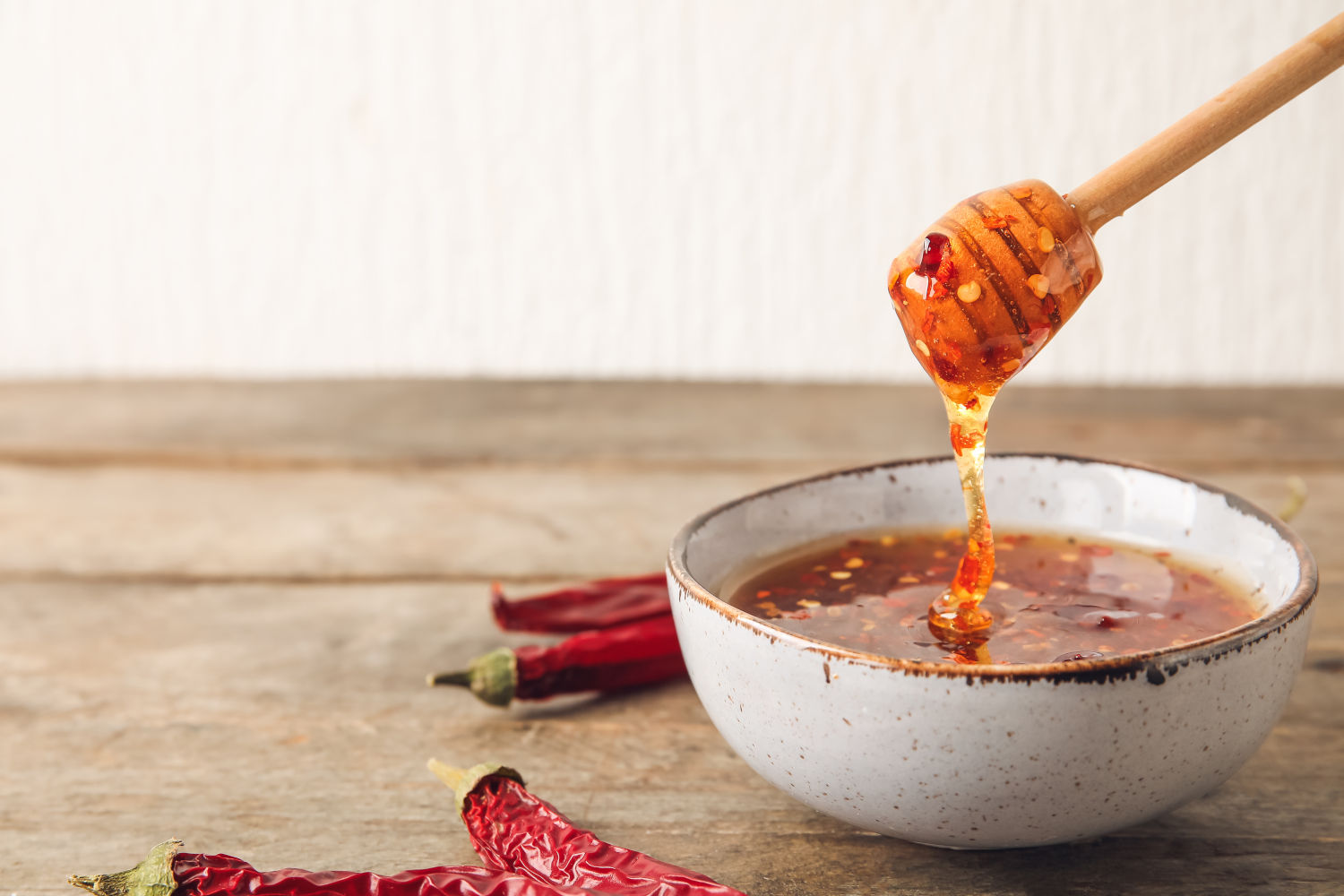
Drizzling sweet and spicy honey over a freshly baked pizza has become a staple of modern pizza making. It cuts right through the rich, salty fat of cured meats and balances the creaminess of fresh cheeses in a way that nothing else quite does. If you're chasing pizzeria-quality results at home, learning how to make hot honey is one of the highest-impact upgrades you can make.
The best part? You don't need to spend a premium on specialty squeeze bottles. Making your own homemade hot honey takes about ten minutes, costs a fraction of the store-bought stuff, and lets you control the heat level to suit your exact taste. You can also go in directions that commercial brands don't - smoky chipotle honey, fruity habanero honey, or a slow cold-infused version that preserves every bit of raw honey's character.
The Three Elements of Good Hot Honey
You only need three ingredients to make hot honey sauce that rivals the bottled stuff. It's less about technique and more about understanding how these flavors interact.
1. The Honey
You want something decent, but don't waste your expensive raw local honey here. Simmering honey on the stove cooks off most of the delicate floral notes and enzymes that make raw honey special. A standard clover or wildflower honey from the grocery store is the perfect blank canvas - neutral enough to let the chili flavor come through, sweet enough to create that signature contrast.
That said, the type of honey does make a subtle difference. Clover is the most neutral and lets the peppers do the talking. Wildflower has a slightly more complex flavor that adds depth. Orange blossom honey adds a citrusy note that pairs particularly well with habanero-based hot honey. Experiment if you want, but don't overthink it - any decent honey will work.
2. The Heat
This is where it gets fun, because different peppers give you completely different results. Here's a breakdown of the most common options, roughly ordered from mildest to hottest:
Crushed red pepper flakes (15,000-30,000 Scoville Heat Units) are the easiest starting point. They infuse predictably, they're cheap, and you already have them in your spice cabinet. The heat is straightforward and familiar - no surprises. This is what most commercial hot honey brands use as a base.
Fresno or jalapeño peppers (2,500-10,000 SHU) are actually milder than red pepper flakes, but they bring a fresh, bright, almost grassy flavor that dried flakes don't have. Use these sliced thin if you want a more subtle heat with more pepper flavor.
Calabrian chilies (25,000-40,000 SHU) are the Italian choice, and for good reason. They have a slightly fruity, almost sun-dried tomato quality to them that makes the resulting honey feel like it was born for pizza. You can find them jarred in oil at most Italian specialty stores or well-stocked grocery stores. Drain them before adding to the honey.
Cayenne (30,000-50,000 SHU) brings clean, direct heat without a lot of additional flavor complexity. If you just want to make your honey hotter and keep it simple, ground cayenne is a reliable way to do it. It also dissolves into the honey completely, so there's nothing to strain.
Chipotle peppers (2,500-8,000 SHU) aren't particularly hot, but they're included here because they bring something no other pepper does: smoke. Dried chipotles (or canned chipotles in adobo) create a honey that's deeply smoky and complex. It's a different animal from standard hot honey, and it's incredible on pizza with barbecue sauce or smoked meats.
Habanero peppers (100,000-350,000 SHU) are where things get serious. They're roughly ten times hotter than red pepper flakes, but the heat comes with a tropical, almost fruity quality that's genuinely delicious if you can handle the fire. Use them sparingly - half a habanero per cup of honey is a reasonable starting point, and you can always add more.
A general rule: you can always make honey hotter, but you can't take heat away. Start conservative with any new pepper variety, taste after infusing, and adjust from there.
3. The Acid (The Not-So-Secret Ingredient)
If you just mix chilies and honey, the result tastes flat. It's sweet, it's hot, but it lacks dimension. A splash of acid is what turns homemade hot honey into something that tastes like the real deal. Apple cider vinegar is the classic choice - just a teaspoon or two per half cup of honey. It brightens the whole profile and creates a bridge between the sweet and the spicy.
White vinegar works too if that's what you have. Some people use a squeeze of fresh lemon juice. The point is just to cut through the cloying one-note sweetness and add a little tension to the flavor.
Two Methods: Hot Infusion vs. Cold Infusion
There are two ways to infuse honey with chili heat, and each has its advantages.
Hot Infusion (Quick Method - Ready in 15 Minutes)
This is the standard approach and the one I use most often for pizza night. You gently warm the honey with peppers over low heat, which speeds up the extraction of capsaicin and flavor compounds. The honey is ready to use almost immediately.
The tradeoff is that heating honey above about 118°F starts breaking down some of the enzymes and beneficial compounds in raw honey. If you're using grocery store honey (which is already pasteurized), this doesn't really matter. If you're using raw honey and care about preserving its properties, consider the cold method instead.
Cold Infusion (Slow Method - 5-7 Days)
For this approach, you simply combine honey and dried chili peppers in a jar, seal it, and let it sit at room temperature for five to seven days. Shake or stir it once a day. The capsaicin extracts slowly into the honey without any heat applied.
Cold infusion produces a more mellow, rounded heat compared to the quick method. The flavor integrates more gradually, and the honey retains all the qualities of its raw state. The downside is obvious - you need to plan ahead. This isn't a pizza-night-impulse kind of thing.
One important note on food safety: use dried peppers or pepper flakes for cold infusions. Fresh peppers contain moisture that can introduce bacteria into the honey and potentially cause fermentation over time. Dried ingredients keep the honey's naturally low moisture content intact, which is what makes it shelf-stable.
The Go-To Recipe: Classic Hot Honey (Hot Infusion)
This is the baseline recipe. It makes enough for several pizzas and scales easily.
Ingredients:
- 1/2 cup honey
- 2 teaspoons crushed red pepper flakes (add a third teaspoon if you like more heat)
- 1 teaspoon apple cider vinegar
Instructions:
- Combine the honey and red pepper flakes in a small saucepan over medium-low heat.
- Watch for tiny bubbles at the edges of the honey. Once you see them, hold that temperature for about 5 minutes. Stir occasionally. You do not want a rolling boil - that will alter the honey's texture and can create a burnt, caramelized flavor that doesn't work here.
- Remove from heat. Stir in the apple cider vinegar.
- Let it cool and steep for 10-15 minutes. The honey will continue to extract heat from the peppers as it cools.
- Strain through a fine mesh strainer into a glass jar or squeeze bottle if you want a smooth, clean drizzle. Or leave the flakes in for a more rustic look and a little extra lingering heat.
That's it. Sealed in a jar at room temperature, this will keep for months. The honey's low moisture and acidity make it naturally resistant to spoilage when made with dried peppers.
Variations Worth Trying
Once you've nailed the basic recipe, these variations are worth experimenting with. Each one creates a different flavor profile that works better with certain pizza styles and toppings.
Smoky Chipotle Honey
Replace the red pepper flakes with 1-2 dried chipotle peppers, roughly chopped (or 1 tablespoon of chipotles in adobo sauce, mashed). Follow the same hot infusion method. The result is a deeply smoky honey that's phenomenal on pizza with Italian sausage, caramelized onions, or anything with a barbecue lean. The heat is mild, so this is a great option if you want flavor complexity without too much burn.
Habanero-Citrus Honey
Use half a habanero pepper, seeds removed and thinly sliced, plus a 2-inch strip of orange zest. Infuse using the hot method. The habanero's natural fruity quality gets amplified by the citrus, creating a hot honey that's bright and aromatic. Fair warning - this one is significantly hotter than the standard recipe. It pairs especially well with white pizzas topped with ricotta or goat cheese.
Be sure to remove the orange zest after infusing. Citrus peel contains moisture that can cause fermentation if left in long-term. If you plan to use the honey within a week or two, it's fine. For longer storage, strain everything out.
Calabrian Chili Honey
Use 2-3 Calabrian chili peppers (drained of their oil) in place of the red pepper flakes. Roughly chop them before adding to the honey. The slightly fruity, sun-dried character of Calabrian chilies creates what tastes like the most authentically Italian hot honey you'll ever have. This is the one I reach for on a classic Margherita or anything with soppressata.
Cold-Infused Raw Honey
Combine 1/2 cup of raw honey with 1 tablespoon of crushed red pepper flakes in a clean glass jar. Seal, place in a cool dark spot, and let it sit for 5-7 days, giving it a shake once daily. Strain when it reaches your desired heat level. This is the gentlest approach and produces a honey with a smoother, more integrated heat. It takes patience, but it's worth it if you use high-quality raw honey and want to keep its character intact.
Dialing In the Heat Level
Getting the spice level right is the part that trips people up the most. Here are some guidelines that will save you from batches that are either barely warm or face-meltingly hot.
Start with less pepper than you think you need. You can always infuse longer, add more chili, or supplement with cayenne powder. You can't take heat away.
Taste the honey warm, but know it will taste hotter cold. Warm honey coats your mouth differently and the heat perception is slightly dulled. When the honey cools to room temperature, the spice level will seem a bit more intense. Account for that when you're testing your batch.
The heat builds over time. Even after you strain the peppers out, the capsaicin continues to distribute through the honey over the next day or two. A batch that seems mild right after straining may have a noticeable kick by tomorrow.
If your batch is too mild: Gently reheat the honey and add more chili. Let it infuse for another 5 minutes. Alternatively, stir in a pinch of ground cayenne for an immediate heat boost without needing to re-infuse.
If your batch is too hot: Add more plain honey to dilute it down. There's no other fix. This is why starting conservative is the smarter play.
If you want consistent results every time: Weigh your ingredients rather than eyeballing. Two teaspoons of red pepper flakes from one jar can be noticeably different from another brand. Measuring by weight (roughly 3-4 grams for the standard recipe) eliminates that variability.
Storing Your Hot Honey
Hot honey made with dried peppers and stored in a sealed glass jar at room temperature will keep for three to six months easily, and often much longer. Honey is naturally antimicrobial due to its low moisture content and acidic pH (around 3.9), so bacteria have a hard time gaining a foothold.
A few storage tips:
- Glass jars or squeeze bottles are both fine. Squeeze bottles are more practical for drizzling on pizza.
- Keep it out of direct sunlight and away from heat sources like the stove. Room temperature (64-75°F) is ideal.
- Don't refrigerate it. Cold temperatures cause honey to thicken and crystallize, which makes it harder to drizzle. If that happens, a brief warm water bath will bring it back.
- If you used fresh peppers, refrigerate the honey and use it within a couple of weeks. Fresh ingredients introduce moisture that can cause fermentation. You'll know something's gone wrong if you see bubbles or the honey smells sour or yeasty.
- Always use a clean, dry spoon or just pour directly from the bottle. Introducing water or food particles into the jar is the fastest way to cause spoilage.
Using Hot Honey on Pizza
If you're here, you probably already know the answer to "what do I put this on?" But just in case, here are the combinations that work best.
The classic pepperoni. This is the combination that started the whole hot honey pizza movement. The honey pools inside crispy pepperoni cups, creating the ultimate sweet, salty, and spicy bite. If you only try one combination, make it this one. Check out the full hot honey pizza recipe for the complete build.
White pizza with ricotta. A base of garlic, olive oil, mozzarella, and big dollops of fresh ricotta is practically made for a spicy honey drizzle. The cool creaminess of the ricotta against the warm honey is a great contrast.
Sausage and onion. The fennel in Italian sausage and the sharp bite of red onion balance naturally against the sticky sweetness.
Fig and Gorgonzola. A more upscale pairing - thinly sliced figs, funky Gorgonzola, and a drizzle of hot honey on a plain mozzarella base. Elegant and surprisingly easy.
Margherita. Sometimes simple is best. Fresh mozzarella, San Marzano tomato sauce, torn basil, and a light drizzle of hot honey. The honey doesn't overpower - it just adds a subtle extra dimension.
Whatever you put it on, remember the golden rule: drizzle after the oven, never before. Honey is mostly sugar, and sugar burns fast at pizza oven temperatures. Your hot honey is a finishing condiment. Build the pizza, bake it until the crust is golden and the cheese is bubbling, pull it out, and drizzle while it's still hot so the honey flows and the aromatic chili oils release. The full hot honey pizza post goes into a lot more detail on timing, dough choices, topping pairings, and even a hot honey pizza dough recipe that bakes the sweet heat right into the crust.
Beyond Pizza
Once you've made a batch, you'll probably start putting it on everything. That's normal. Here are a few non-pizza uses that are worth trying: fried chicken, biscuits, cheese boards (especially with sharp cheddar or aged Gouda), grilled peaches, roasted Brussels sprouts, and stirred into a spicy margarita. It goes on anything where sweet, salty, and spicy intersect.
Making hot honey at home is one of those things that feels disproportionately rewarding for how little effort it takes. Ten minutes, three ingredients, and you've got a condiment that transforms pizza night. Use the PizzaLogic dough calculator to get your dough dialed in, make a batch of hot honey while the dough is cold-fermenting, and you're set.