
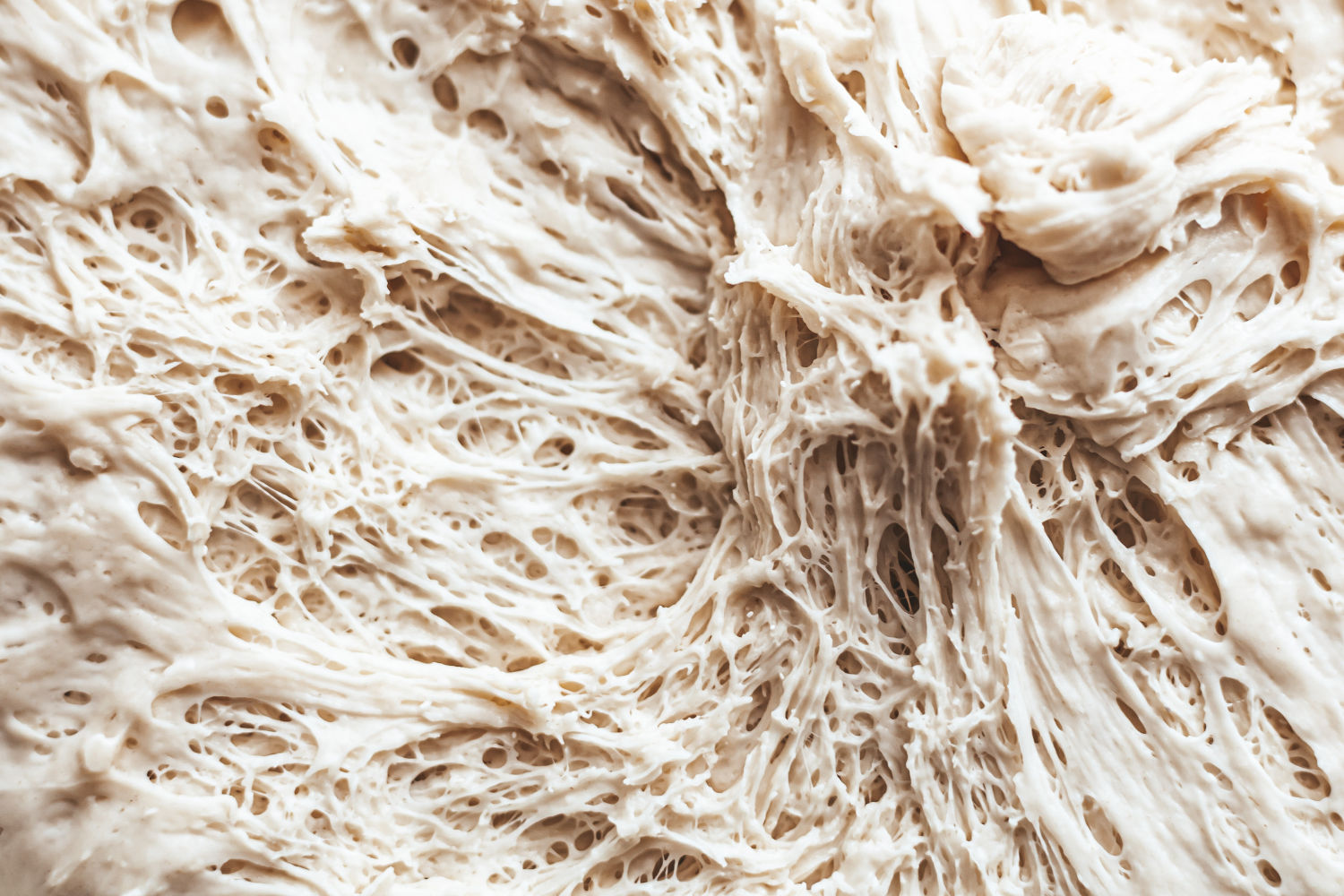
Ever wondered how those top-tier pizzerias get a crust that's impossibly airy, deeply flavorful, and perfectly charred? The secret isn't just a fancy oven - it's what happens before the dough ever sees heat. It's a humble lump of flour, water, and a tiny pinch of yeast called a biga.
If you've been making same-day pizza dough and feeling like something's missing, biga is probably the answer. It takes a little planning ahead, but the difference in flavor and texture is night and day. Here's everything you need to know.
What Exactly Is a Biga?
A biga is a type of Italian pre-ferment - essentially a head start on your dough that you mix up 16–24 hours before you plan to bake. The term itself comes from the Latin word for a two-horse Roman chariot, which is a fitting image: the biga is the engine that drives your dough to its final, matured state.
What makes biga different from other pre-ferments like poolish is its hydration level. Where poolish is loose and batter-like (typically around 100% hydration), biga is stiff and crumbly, usually sitting around 44–50% hydration.
That low hydration matters more than you'd think. The drier environment forces the yeast to work slowly and produces different fermentation byproducts than a wet pre-ferment. Specifically, the stiff, cool conditions favor a type of lactic acid bacteria (called heterofermentative LAB) that produces more acetic acid - the compound responsible for sharper, nuttier, more complex flavors. A wetter, warmer pre-ferment like poolish tends to produce more lactic acid, which gives a milder, creamier, yogurt-like flavor. Neither is better or worse - they're just different tools for different results. PizzaBlab has an excellent deep dive on fermentation science and acid production if you want the full picture.
If you want to go deeper on how biga stacks up against poolish in terms of practical handling and texture differences, check out my full guide: Pre-Fermented Pizza Dough Techniques Explained.
Why Bother With the Extra Step?
Fair question. Here's the honest answer: biga adds 5–10 minutes of actual work to your process. The rest is just waiting. And what you get back is significant.
Better flavor. The long, slow fermentation develops complex organic acids and alcohols that give the crust depth. Think nutty, slightly tangy, with a sweetness you'd never get from a same-day dough. It's the difference between a supermarket baguette and one from a proper bakery. Those flavors come from enzymes (amylases and proteases) that spend hours breaking down starches into simple sugars and softening proteins - reactions that simply don't have time to happen in a quick-rise dough. The unconsumed sugars left behind also contribute to better browning through the Maillard reaction when the crust hits a hot oven.
Stronger structure. During those hours of fermentation, the flour is hydrating and the gluten network is quietly developing on its own. But because the hydration is so low, the protease enzymes work in a restrained way - they soften the dough and increase extensibility without breaking the structure down entirely. When you incorporate the biga into your final dough, you're starting with a much stronger foundation. That translates to better oven spring and those big, open bubbles in the cornicione (the puffy rim) that everyone's chasing.
Easier digestion. Extended fermentation gives enzymes time to break down complex starches and proteins into simpler, more easily absorbed forms. A lot of people who feel bloated after eating pizza find that long-fermented doughs sit much lighter. There's a reason traditional Neapolitan pizza has always relied on time rather than shortcuts.
More forgiveness. One underrated advantage of biga over poolish: it's more stable. The low hydration acts as a buffer against temperature swings - if your kitchen gets a few degrees warmer than planned, a biga won't run away on you the way a liquid pre-ferment can. The usability window is wider, so you've got more margin for error with timing, which is reassuring when you're first learning the technique.
What You'll Need
The ingredient list is short, but quality matters here since there's nowhere to hide.
Flour: You want something with decent protein content - 12% or higher, and ideally with a high W index (a measure of flour strength, 300W+ is ideal for long ferments). Italian "00" flour like Caputo Tipo 00 (the red bag, Cuoco or Pizzeria) is the classic choice. A strong bread flour works great too. The higher protein gives the gluten network enough strength to hold up through a long ferment without getting slack - if you use a weak flour, the enzymatic activity during those 18+ hours will degrade the structure faster than it can develop. For more on choosing the right flour, see my post on the best flour for pizza dough.
Yeast: Instant dry yeast (IDY) is the easiest to work with since you can mix it right into the water without blooming. You'll use a very small amount - around 0.3% of your flour weight for IDY, or about 1% if using fresh compressed yeast. That tiny dose keeps fermentation slow and controlled. If you prefer active dry yeast (ADY), use about 0.5% and rehydrate it in lukewarm water (~100°F) first. My guide to pizza yeast covers the differences in detail.
Water: Filtered or bottled if your tap water is heavily chlorinated. Chlorine can inhibit yeast activity, and when you're working with such small amounts of yeast, every little bit of help counts. Moderately hard water (50–150 ppm mineral content) is actually ideal - the minerals help strengthen gluten and support robust fermentation. Very soft water can make the dough slack and sticky, while very hard water can make it tough. If you're not sure about your water, bottled spring water is a safe bet. Temperature matters too - more on that below.
How to Make Biga: Step by Step
Mix It (But Don't Knead It)
This is where most people go wrong on their first attempt. Your instinct will be to knead the biga into a smooth, cohesive ball. Resist that urge.
Dissolve your yeast in the water, then pour it over the flour in a large bowl. Mix with your hands or a fork until there's no dry flour left - and then stop. What you're looking for is a shaggy, crumbly mass with a texture somewhere between coarse breadcrumbs and popcorn. Small clumps held together loosely.
Why so rough? That crumbly texture means more surface area exposed to air, which the yeast needs to do its thing. A tightly kneaded ball would trap the yeast in an anaerobic environment too early and can also trap heat, causing it to ferment too fast and lose its characteristic aroma.
Let It Ferment (16–24 Hours)
Put your crumbles in a tall container with a lid (or cover the bowl with plastic wrap - poke a couple of small holes so it can breathe) and leave it alone. An oiled container encourages the biga to rise upward rather than spreading out, which makes it easier to gauge progress.
The ideal temperature is around 60–65°F (16–18°C), which is cooler than most kitchens. If your house runs warm - say 72°F or above - give the biga about an hour at room temperature to get started, then move it to the fridge. It'll happily ferment in the fridge for up to 24 hours.
How do you know it's ready? A properly matured biga should show roughly a 20% increase in volume - the chunks should look puffed and expanded, but not dramatically risen. If it's fully doubled, it's likely gone past its peak. The aroma should be pleasant - think yogurt or fresh hay, maybe a touch of sourdough tang. If it smells aggressively like alcohol or vinegar, it's gone too far (more on rescuing that below).
Integrate Into Your Final Dough
Mixing a stiff, cold biga into a smooth dough takes a little technique. Here's the approach that works best:
Tear the biga into small pieces - roughly the size of gnocchi - and drop them into your mixing bowl. Add the remaining water and your salt, then mix or squeeze everything together until the biga pieces dissolve into the liquid. It'll look like a mess for a minute, and that's fine.
Pro tip: Some bakers let the torn biga pieces soak in the remaining water for 20–30 minutes before mixing. This softens the stiff pre-ferment and lets it break down into a milky consistency, which makes integration much smoother - especially if you're mixing by hand.
A note on salt timing: add the salt with the water during integration, but make sure it doesn't come into direct contact with the remaining yeast if you're adding more. Salt inhibits yeast activity, and adding it too early or directly onto the yeast can slow down fermentation more than you want.
Once the biga has broken down into the water, add the rest of your flour and mix until it comes together. From here, you can knead by hand, use the slap-and-fold method, or let your stand mixer do the work. If you're using a stand mixer (like a KitchenAid), stick to the lowest speed for 15–20 minutes to avoid overheating the dough - you want to keep the final dough temperature below about 78°F (26°C).
If you're working with a higher hydration dough (65%+) and don't have a stand mixer, slap-and-fold is the way to go. It builds gluten strength surprisingly fast without needing any equipment.
How to know you're done mixing: Try the windowpane test. Pull off a small piece of dough, let it rest for a minute, then gently stretch it between your fingers. If you can stretch it thin enough to see light through it without it tearing, your gluten is properly developed. If it rips easily, give it a few more minutes of kneading or another round of folds and a 20-minute rest.
Bulk Ferment, Ball, and Proof
After integration, let the dough bulk ferment (the puntata) in a covered container - anywhere from 30 minutes at room temperature to 24 hours in the fridge, depending on your schedule. Then divide into balls (staglio), typically 250–280g for a 12-inch pizza. The balls need a final proof (appretto) at room temperature for 2–4 hours before you bake. Don't skip this - cold dough balls straight from the fridge won't stretch properly.
Getting Your Water Temperature Right
Here's a trick that professional pizzaiolos use to get consistent results regardless of the weather or season. It's sometimes called the "rule of 55":
55 – (Room Temp °F) – (Flour Temp °F) = Target Water Temp °F
So if your kitchen is 72°F and your flour is sitting at 70°F, your target water temp is about 55 – 72 – 70... which is obviously negative, meaning you want your water as cold as possible. In practice, this means pulling water from the fridge or even adding a couple of ice cubes.
If you're using a stand mixer, factor in the friction from the machine too - a typical home stand mixer adds 2–5°F to the dough during mixing, which means you may need even colder water than the formula suggests.
The point is to control the initial dough temperature so fermentation starts at a predictable pace. You're aiming for the biga to finish mixing at around 66–70°F (19–21°C). In summer, this matters a lot. In a cool basement kitchen in winter, you might actually want slightly warm water.
This formula varies by source - some Italian bakers use 55°C as the constant (131°F) for metric calculations. The underlying principle is the same: control your dough temperature by adjusting the one variable you can easily change. The MasterBiga guide has a good explanation of how professionals apply this in practice.
A Home Oven Tip: Diastatic Malt
If you're baking in a standard home oven (maxing out at around 500–550°F), you may notice your biga pizza crust comes out paler than you'd like. That's because biga's long fermentation lets the yeast consume most of the available sugars - the same sugars responsible for browning.
The fix is diastatic malt powder - an enzymatic ingredient made from sprouted barley that converts starch back into sugars, feeding the yeast and promoting much better Maillard browning at lower temperatures. Use 0.5% to 1% of your total flour weight. A little goes a long way - too much makes the dough sticky and the crust gummy. This is most useful with unmalted flours like Italian Tipo 00; most American bread flours are already malted, so check the label. PizzaBlab's guide to diastatic malt is the best resource on dosage and usage.
The PizzaLogic calculator has a diastatic malt field built in, so you can dial in the exact amount for your recipe.
If you're also baking in a home oven, 1–2% olive oil in the final dough can help prevent the crust from drying out during the longer bake times (5–7 minutes at 500°F vs. 60–90 seconds in a proper pizza oven). It also acts as a lubricant for the gluten, helping it stretch further.
Troubleshooting Common Issues
The dough snaps back when you try to stretch it. Almost always a temperature or timing issue, not a biga problem. If your dough balls have been in the fridge, they need at least 2 hours (sometimes up to 4) at room temperature before you try to open them. Cold gluten is tight gluten. You're waiting for the interior of the ball to reach at least 65°F - during that time, protease enzymes are still working, gently relaxing the protein chains and making the dough more extensible. If it's still fighting you, let it rest another 20 minutes under a damp towel and try again. Also consider your flour: using a very high protein flour (14%+) for a style that doesn't need it can make the dough overly elastic.
The biga smells like nail polish remover or strong vinegar. It over-fermented - either it got too warm or sat too long. A slightly boozy smell is normal, but if it's genuinely unpleasant, the yeast has produced too much acetic acid or ethanol. The acidity will also have degraded the gluten to the point where it can't hold gas well. You can still use it in a pinch by mixing it into a larger batch of fresh dough as a flavor additive (maybe 20–30% of the total flour weight), but don't rely on it as your primary pre-ferment for structure.
There's no rise at all after 18 hours. Check your yeast - it might be expired or dead. If you're unsure, proof a small amount in lukewarm water with a pinch of sugar; if you don't see bubbles within 10 minutes, toss it. Also check your water temperature: if you used hot water, you may have killed the yeast on contact. Instant yeast is forgiving, but anything above 120°F will do damage. Another culprit: heavily chlorinated water. Try bottled next time.
Lumps of biga in the finished dough. Once they're in there, they're very hard to get out - they're compacted, partially hydrated flour with limited gluten development. Prevention is the cure: tear the biga into small enough pieces, and consider the soaking method mentioned above. Make sure the biga fully dissolves in the water before you add the remaining flour.
A Sample Schedule: Monday to Thursday
One of the best things about biga is that it fits neatly into a weeknight routine. Here's a realistic timeline for a Thursday pizza night:
Monday, 8:00 PM - Mix the biga (45% hydration, 0.3% IDY). Cover and store at cool room temp or in the fridge.
Tuesday, 4:00 PM - Tear the biga into pieces, integrate with remaining water, salt, and flour to reach 65–70% total hydration. Knead until smooth.
Tuesday, 5:00 PM - Cover and place in the fridge for cold bulk fermentation (around 38°F).
Wednesday, 5:00 PM - Divide into balls. Return to the fridge for another 18–24 hours.
Thursday, 3:00 PM - Pull balls from fridge. Let them come to room temp for 2–4 hours.
Thursday, 6:00 PM - Stretch, top, and bake.
This "double fermentation" approach (pre-ferment + cold-fermented final dough) maximizes flavor development and produces a dough that's extremely easy to handle and stretch by bake day.
Let PizzaLogic Do the Math
The trickiest part of working with biga isn't the technique - it's getting the ratios right. How much of your total flour should go into the biga? How does that change your final dough hydration? What if you want to adjust the recipe for 6 dough balls instead of 4?
That's exactly what the PizzaLogic dough calculator is built for. Plug in your target hydration, number of dough balls, and ball weight, and it handles the baker's math for you - including pre-ferment ratios, yeast calculations adjusted for temperature and time, and even diastatic malt amounts. No spreadsheets, no guesswork.
Start Simple, Then Experiment
If this is your first time making biga, keep it straightforward: 50% of your total flour in the biga, 45% hydration, a tiny pinch of instant yeast, 18 hours at cool room temperature. Integrate that into a final dough at 65% total hydration and see how it goes.
Once you've got the basics down, you can start playing with longer fermentation times, different flour blends, or pushing the hydration higher. Every batch teaches you something. That first biga pizza, even if it's a little rough around the edges, is going to taste noticeably better than anything you've made with same-day dough.